
Political Polarization and the Retail Exclusion Crisis: A Deep Dive
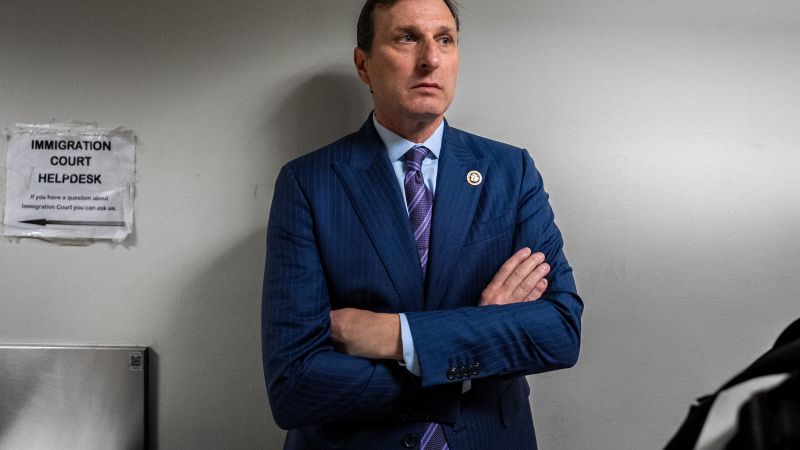
The recent incident involving U.S. Congressman Dan Goldman and Brooklyn’s Poetica Coffee, where service was publicly denied to the legislator, underscores a critical trend: the increasing encroachment of political discourse into private commercial spheres. This event, amplified by digital platforms, serves as a potent case study for businesses navigating the volatile intersection of brand identity, public policy, and operational risk, particularly when perceived associations with foreign policy stances become a catalyst for exclusionary actions.
The establishment’s documented refusal, disseminated via social media, transformed a private commercial interaction into a public political statement. This strategic choice invited immediate and widespread scrutiny, forcing a re-evaluation of how businesses position themselves amidst intense political climates and the inherent vulnerabilities of aligning with specific advocacy groups.
Institutional Ramifications: Expressive Rights vs. Public Accommodation
Poetica Coffee’s stated rationale for denying service—linking it to the Congressman’s financial associations with the American Israel Public Affairs Committee (AIPAC)—reflects the heightened intensity and specific ideological fault lines of the current political cycle. This action compels a crucial debate regarding the evolving role of small businesses: are they intended as neutral public spaces, or do they possess the latitude to exercise expressive rights through the selective denial of service?
The Department of Justice’s subsequent inquiry into the incident signals significant regulatory stress on the boundaries between political expression and public accommodation law. This intervention underscores the complex legal challenge of balancing a private entity’s right to operate with fundamental principles of non-discrimination in public-facing commerce, potentially setting new legal precedents.
Strategic Risks and Volatile Brand Management
The rapid, albeit temporary, deletion of Poetica Coffee’s social media presence following the viral nature of the incident exemplifies the precariousness of modern brand management. Businesses that adopt overtly political stances, especially through exclusionary acts, face the risk of immediate, high-velocity reputational damage that can rapidly escalate from local market dynamics to national controversy.
For all stakeholders, this event serves as a stark reminder of the fragility of the consumer-business contract in an increasingly polarized environment. When political ideology dictates operational decisions, the resultant exposure can lead to swift and potentially irreversible shifts in market viability, consumer trust, and public perception.
The Erosion of Neutrality in Everyday Commerce
The Congressman’s account of a civil exchange preceding the public refusal highlights a critical disconnect between individual human interactions and institutional policy. This dichotomy suggests that pressure to conform to specific, often externally driven, political narratives can supersede standard customer service protocols. Such friction disrupts the expected functionality and accessibility of public-facing commercial establishments.
The broader consequence for the retail sector is a potential shift toward more guarded and less overtly political public-facing strategies. As businesses strive to cater to diverse consumer bases, the calculated cost of overt political signaling increasingly risks outweighing any perceived benefits of aligning with particular advocacy groups, potentially leading to a retreat from public political engagement.
Systemic Consequences for Public Discourse and Governance
The weaponization of social media as a tool for political enforcement generates a potent feedback loop that incentivizes performative acts of exclusion. Documenting and broadcasting such events transforms isolated incidents into measurable metrics of ideological commitment. This cultivates a climate where excluding political figures or their perceived allies becomes a normalized form of political activism, rather than an anomaly in customer service.
This evolving landscape poses significant challenges for elected officials, who must navigate public spaces while anticipating the risk of targeted exclusion based on legislative actions or financial affiliations. The resulting tension necessitates a broader societal discussion regarding the permissible limits of political expression within the public square and the attendant responsibilities of commercial entities operating within it.
Future Market Trajectories and Legal Frameworks
The ongoing federal scrutiny of this incident is poised to establish critical precedents for future disputes at the nexus of commerce and political expression. The outcome of these investigations will critically influence the extent to which private businesses can legally enact discriminatory practices based on political affiliation or perceived legislative support.
Ultimately, the incident at Poetica Coffee transcends a simple local dispute; it serves as a significant symptom of a broader structural shift reshaping the American retail and political landscapes. The convergence of digital activism, ideological polarization, and traditional business operations ensures that such conflicts will remain a dominant factor in the strategic planning and risk assessment for both political actors and commercial enterprises navigating the contemporary public square.
Photo by MabelAmber on Pixabay.