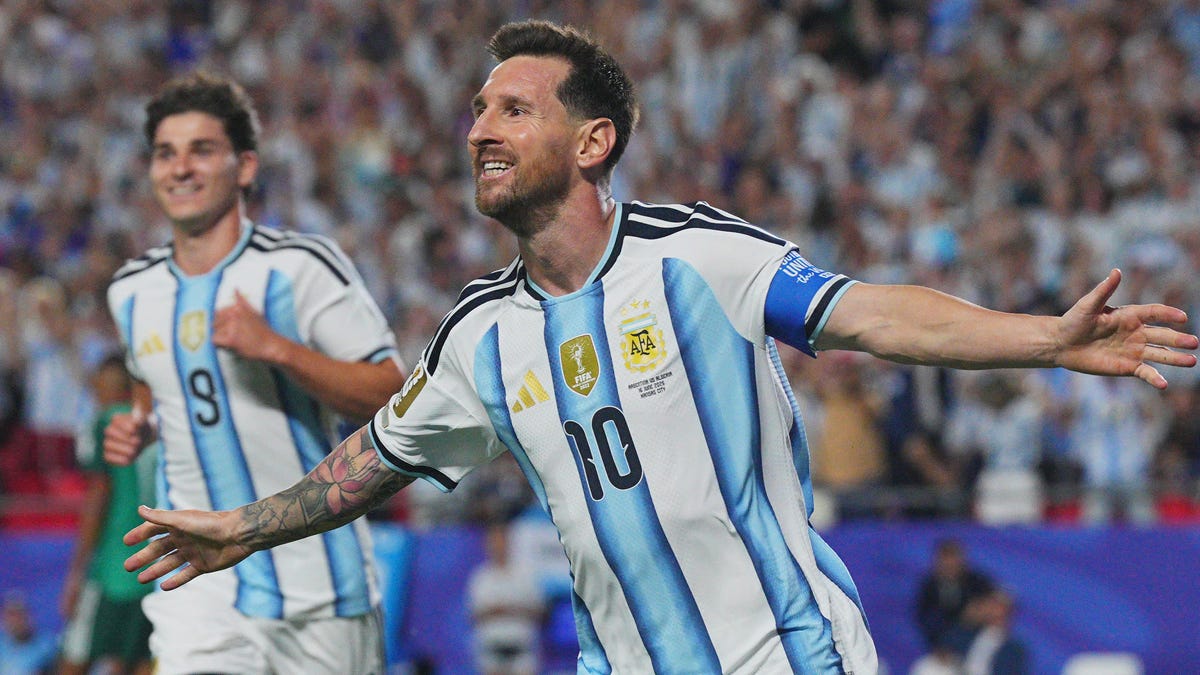
The Day 12 encounter between Argentina and Austria at the 2026 World Cup serves as a high-stakes study in tactical asymmetry. Entering the Arlington fixture following a 3-0 dispatching of Algeria, Lionel Scaloni’s side functions as a statistical juggernaut. Central to this narrative is Lionel Messi, whose opening hat trick leveled the all-time men’s World Cup scoring record at 16 goals. Beyond the milestone, Messi’s multifaceted scoring profile—spanning set-pieces and transition play—forces a defensive dilution that benefits Argentina’s secondary attackers, justifying their -190 market favoritism.
Strategic Posturing and Low-Block Resistance
Austria enters the match with three points after a 3-1 victory over Jordan, a result bolstered by a late own goal. Given the expanded 48-team format, technical staff likely view a draw (+310) as a functional victory, securing the four-point threshold typically required for Round of 32 qualification. This incentive structure dictates a conservative low-block posture. By compressing central passing lanes, Austria aims to force Argentina into wide, low-probability crosses, hoping to neutralize the spatial intelligence of Messi and Julian Alvarez through sheer defensive density.
Physiological Cadence and Fragmented Match Flow
A significant variable in Argentina’s performance is the impact of FIFA-mandated water breaks on match cadence. Scaloni’s public critiques regarding these pauses highlight a structural disadvantage for high-possession teams. For a side that relies on compounding fatigue to break down defensive structures, regulatory intervals act as a tactical ‘hard reset.’ These breaks provide Austria with artificial recovery periods, mitigating the cardiovascular toll of chasing the ball and allowing for sideline adjustments that disrupt Argentina’s rhythmic continuity.
Institutional Governance and Environmental Logistics
The match takes place at AT&T Stadium, operating under the temporary ‘Dallas Stadium’ moniker to satisfy FIFA’s ‘Clean Site’ commercial exclusivity mandates. This suppression of local naming rights reflects the governing body’s total control over the operational environment. Furthermore, the transition from Kansas City’s natural grass to Arlington’s temporary turf system introduces minor variables in ball velocity and player traction. Argentina’s choice to maintain a Kansas City base while commuting to Texas minimizes environmental volatility, ensuring recovery protocols remain standardized despite the travel requirements.
Predictive Modeling and Group Trajectory
While Austria proved opportunistic against Jordan, their reliance on forced errors is unlikely to yield results against an Argentinian midfield designed for high-pressure evasion. The betting market’s lean toward the Albiceleste (+500 for an Austria win) underscores a skepticism regarding Austria’s offensive production. For Argentina, the pursuit of individual records—specifically Messi’s 17th World Cup goal—aligns with collective goals, ensuring the squad maintains high intensity even if a knockout berth is mathematically secured before the final whistle.