
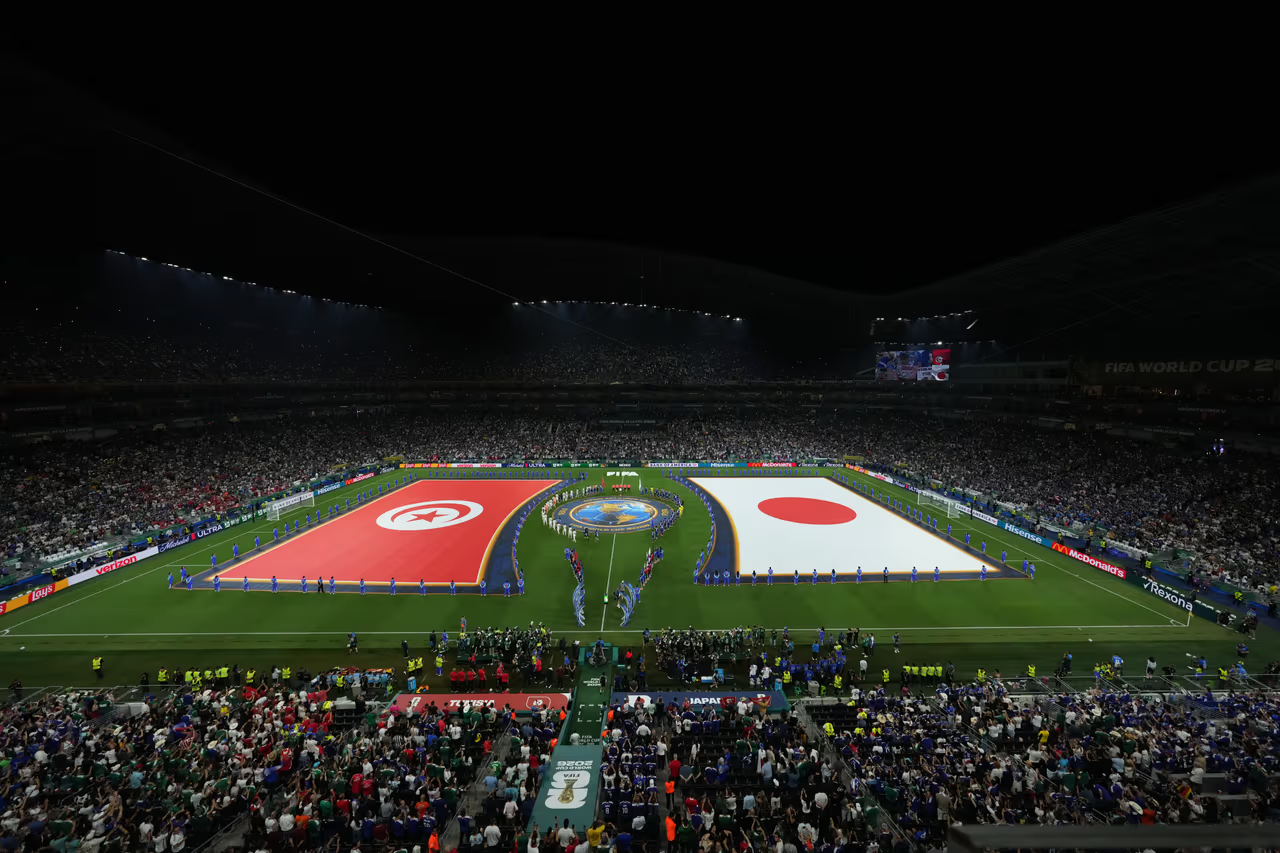
A Statistical Milestone in Football History
The 4-0 victory for Japan over Tunisia in Guadalupe, Monterrey, serves as the 1,000th match in the history of the FIFA World Cup. This milestone highlights the tournament’s evolution from its 1930 inception to the expanded 2026 format, marking a shift in the global competitive landscape.
Tactical Dominance and Group F Dynamics
This result stands as Japan’s largest margin of victory in World Cup history. By securing four points, Japan pressures the Netherlands for the top spot in Group F. The offensive synergy demonstrated by Ayase Ueda, Daichi Kamada, and Junya Itō indicates a high-level tactical maturation, critical for overcoming the group phase for the fourth consecutive cycle.
Institutional Volatility vs. Strategic Consistency
Tunisia’s elimination underscores the dangers of organizational instability. The mid-tournament managerial transition—following the inaugural match defeat—failed to stabilize the squad under Hervé Renard. Conversely, Japan’s disciplined execution highlights the long-term benefits of sustained investment in youth development and coaching continuity, moving them toward a more permanent position within the global football hierarchy.
Economic and Logistical Scaling
Hosting this landmark fixture in Monterrey exemplifies the 2026 tournament’s decentralized model. By utilizing diverse regional infrastructure, organizers maximize commercial reach. The match serves as a benchmark for the tournament’s scale, reinforcing its status as a premier engine for global sports media value and infrastructure development.

Photo by Takatoshikun on Pixabay.