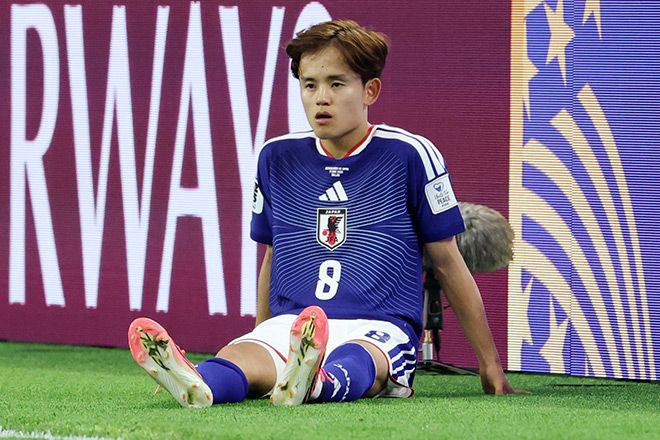
The Japanese National Team’s 2026 World Cup trajectory faces a significant operational pivot following the mid-match attrition of Takefusa Kubo. The creative catalyst sustained a left knee injury during the second half of Japan’s 2-2 draw against the Netherlands in Texas. This incident has necessitated an immediate systemic recalibration by the technical staff, shifting the squad’s offensive dependency toward Daichi Kamada and Junya Ito ahead of the critical encounter with Tunisia.
Systemic Recalibration: From Playmaking to Pragmatism
Kubo’s absence removes the primary engine of Japan’s creative transition. While Kubo served as a fluid playmaker capable of unbalancing low blocks, the integration of Kamada and Ito suggests a transition toward a more structured, perhaps direct, tactical framework. Kamada offers superior spatial intelligence and defensive connectivity, while Ito provides verticality and crossing precision. This is not a direct personnel replacement but a fundamental shift in how Japan intends to penetrate defensive third structures.
The JFA technical department now faces a management paradox: stabilizing the midfield without sacrificing the vertical threat that characterized their performance against UEFA opposition. The reliance on European-based veterans indicates a strategic preference for players accustomed to high-intensity physical duels, a necessity given the aggressive nature of the Texas fixture and the upcoming physical challenges in the North American climate.
Digital Volatility and the Failure of Moderation Frameworks
The injury has precipitated a secondary crisis in the digital sphere, specifically a concentrated wave of Japanese-language hostility directed at Dutch defender Denzel Dumfries. This surge highlights the persistent friction between global sporting events and decentralized moderation. Despite FIFA’s stated commitments to player protection, the Texas incident demonstrates that existing algorithmic safeguards remain insufficient against nationalistic sentiment and rapid-onset fan toxicity.
Conversely, the emergence of a self-policing faction within the Japanese digital community offers a compelling study of internal cultural dynamics. By condemning the abuse, these fans are attempting to mitigate long-term reputational damage to Japan’s international sporting identity. This internal divide reflects a broader conflict in the modern era: the tension between competitive emotion and the adherence to global standards of digital conduct.
Institutional Implications and Medical Contingency
The JFA’s medical protocols are now under intense scrutiny. While the objective remains to return Kubo to the pitch for later tournament phases, the immediate priority is points acquisition. The dual-track management of Kubo’s rehabilitation and the squad’s tactical evolution represents a high-stakes stress test for Japan’s depth. From a commercial perspective, Kubo’s absence also impacts tournament engagement metrics within the Asian market, underscoring the systemic vulnerability of sporting institutions to the health of individual star assets.
As Japan moves toward the Tunisia match, the success of this transition will define their tournament legacy. The 2-2 draw proved Japan can compete with the elite; however, their survival now depends on structural robustness rather than individual brilliance. The Texas match serves as a definitive case study in the unpredictability of tournament football and the necessity of deep-roster versatility.