Statistical Insulation: Net Run Rate as a Competitive Buffer
The current T20 World Cup group stage has crystallized a mathematical divide that dictates the strategic ceiling for both contenders. Australia’s Net Run Rate (NRR) of +3.25 provides significant statistical insulation, effectively safeguarding their qualification trajectory against localized performance fluctuations. Conversely, South Africa’s -3.25 NRR represents a structural deficit, necessitating high-margin victories rather than mere points accumulation to ensure tournament viability.
In a ‘Group of Death’ featuring a high-performing Indian side, this 6.5-point NRR swing fundamentally recalibrates the risk-reward calculus. For the Proteas, the middle overs are no longer just about strike rotation; they are high-leverage windows where aggressive statistical gains must be pursued to offset their negative standing. This pressure forces a tactical aggression that Australia—buoyed by their cushion—can choose to exploit through controlled counter-attacks.
Institutional Reintegration: The Veteran Pivot
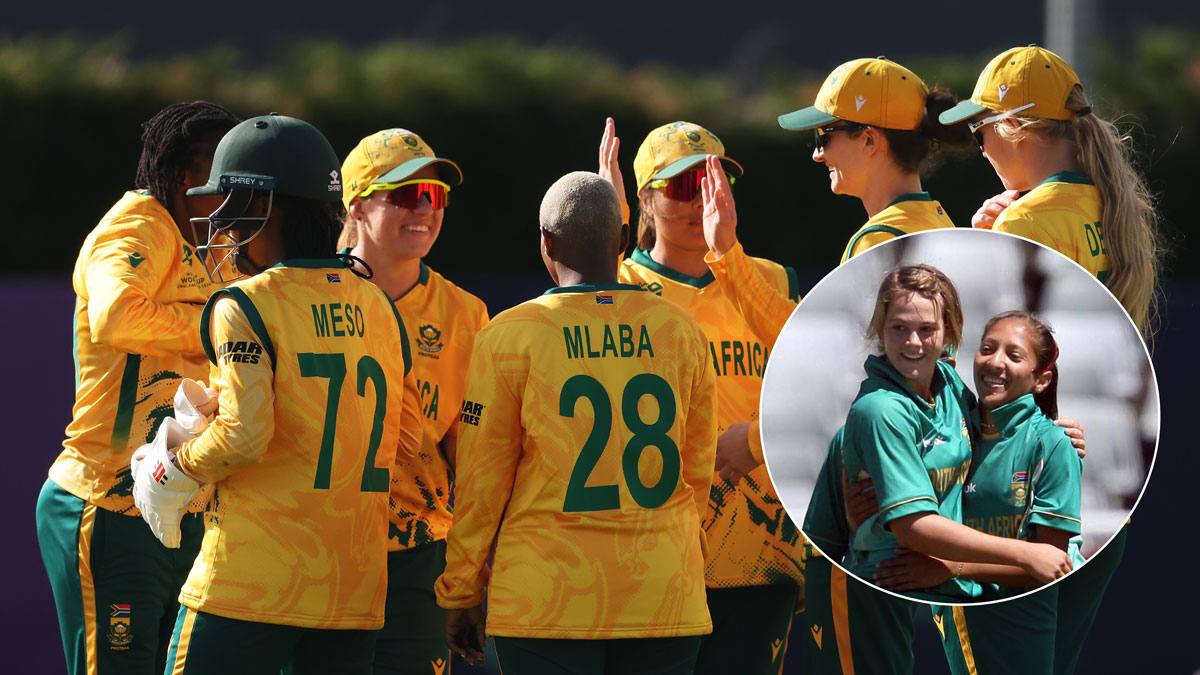
Cricket South Africa’s decision to reverse the international retirements of Dane van Niekerk and Shabnim Ismail marks a decisive shift from long-term developmental cycles toward immediate win-now exigency. Reintroducing Ismail provides a psychological edge in the powerplay, reclaiming an aggressive identity that defined their trajectory toward three consecutive global finals. This personnel pivot suggests the South African hierarchy views the current window as the definitive peak for their golden generation.
The return of Van Niekerk adds leadership density, alleviating the tactical burden on Laura Wolvaardt. This dual-captaincy dynamic allows for a more nuanced management of field placements and bowling rotations, though it simultaneously increases the institutional pressure to justify bypassing younger talent in favor of proven, albeit returning, veterans.
The Molineux Doctrine: Heuristic vs. Data-Driven Leadership
Australia’s recent victory at Old Trafford underscored an operational flexibility termed the ‘Molineux Doctrine.’ Under Sophie Molineux, Australia has transitioned toward a leadership style rooted in intuitive match-ups and ‘gut feel,’ contrasting with the rigid, data-centric frameworks of modern T20 coaching. This allowed the side to pivot seamlessly to a spin-dominant defensive posture once the Manchester surface was identified as conducive to turn.
Complementing this is a non-negotiable batting philosophy: maintaining a high scoring rate regardless of wicket fall. This commitment to ‘taking the game on’ is a deliberate strategy to demoralize opposition bowling units before they can establish rhythm, ensuring Australia remains ahead of the DLS par and NRR requirements even during collapses.
Technical Leverage: The Litchfield Integration
Phoebe Litchfield has evolved into Australia’s primary tactical cornerstone in the middle order. Her ‘game smarts’—specifically the ability to manipulate unconventional field placements—provides performance leverage that stabilizes the innings. Her presence grants the top order the license to take extreme risks, knowing the middle order possesses the technical proficiency to either consolidate or accelerate based on match context.
Psychological Precedents and Environmental Variables
The memory of the 2024 Dubai semi-final, where South Africa ended Australia’s three-peat ambitions, remains the central psychological narrative. That defeat dismantled the myth of Australian invincibility, transforming South Africa from an underdog into a peer competitor. However, Australia’s superior reading of environmental variables at Old Trafford suggests a regained edge. Their ability to stifle South Africa’s strike rotation on a slow surface highlights a technical gap in the Proteas’ middle order that remains an exploit for elite spin attacks.
Commercial and Tournament Implications
The stakes extend beyond the pitch to the commercial viability of the knockout stages. Broadcasters and stakeholders favor the ‘dynasty’ narrative of a dominant Australia, yet a South African exit due to NRR would represent a loss of competitive balance. The failure of the Proteas to progress would likely trigger an institutional audit of their reliance on veteran returns, whereas an Australian victory reinforces the systemic dominance of their domestic talent pipeline.