The Escalating Economics of Elite Relief Pitching
The acquisition cost for elite, high-leverage relief pitching in MLB has surged, often pricing out even aggressive contenders. The theoretical package required to secure a talent like Mason Miller—frequently cited as requiring a top-tier prospect tandem plus additional organizational depth—highlights a market correction. Front offices now view elite relievers with sub-1.00 ERAs and strikeout rates exceeding 50% as premium assets, comparable to top-of-the-rotation starters.
This capital expenditure is not merely about short-term bullpen stabilization; it is an analytical hedge against volatility. Organizations are increasingly calculating the ‘Value-Over-Replacement’ (VORP) of a high-leverage reliever against the multi-year control of a high-ceiling prospect. Consequently, teams are becoming more disciplined, refusing to compromise long-term depth for marginal, albeit immediate, gains.
Structural Constraints and Prospect Valuation
The New York Yankees’ recent roster management illustrates the friction between immediate performance voids and long-term developmental strategy. By retaining prospects like George Lombard Jr. despite clear shortstop volatility, the front office is signaling a prioritization of internal pipeline growth over reactive, deadline-driven acquisitions. This defensive posture is becoming industry standard as prospect valuation models evolve to better predict long-term WAR contributions.
The scarcity of elite talent at the trade deadline creates a natural seller’s market. In such environments, the marginal utility of a single impact player often fails to outweigh the systemic risk of depleting a deep prospect pool. This institutional caution explains the frequent refusal to trade high-ceiling players, even when rumors suggest significant interest from competing organizations.
The Washington Nationals: A Study in Strategic Transition
The Washington Nationals exemplify an organization navigating the ‘rebuild-to-contention’ inflection point. By maintaining a near .500 record in June, the team has complicated the traditional ‘seller’ narrative. President of baseball operations Paul Toboni’s focus on collective cultural alignment serves as a strategic cornerstone, ensuring the organization does not deviate from its long-term roadmap due to early-season success.
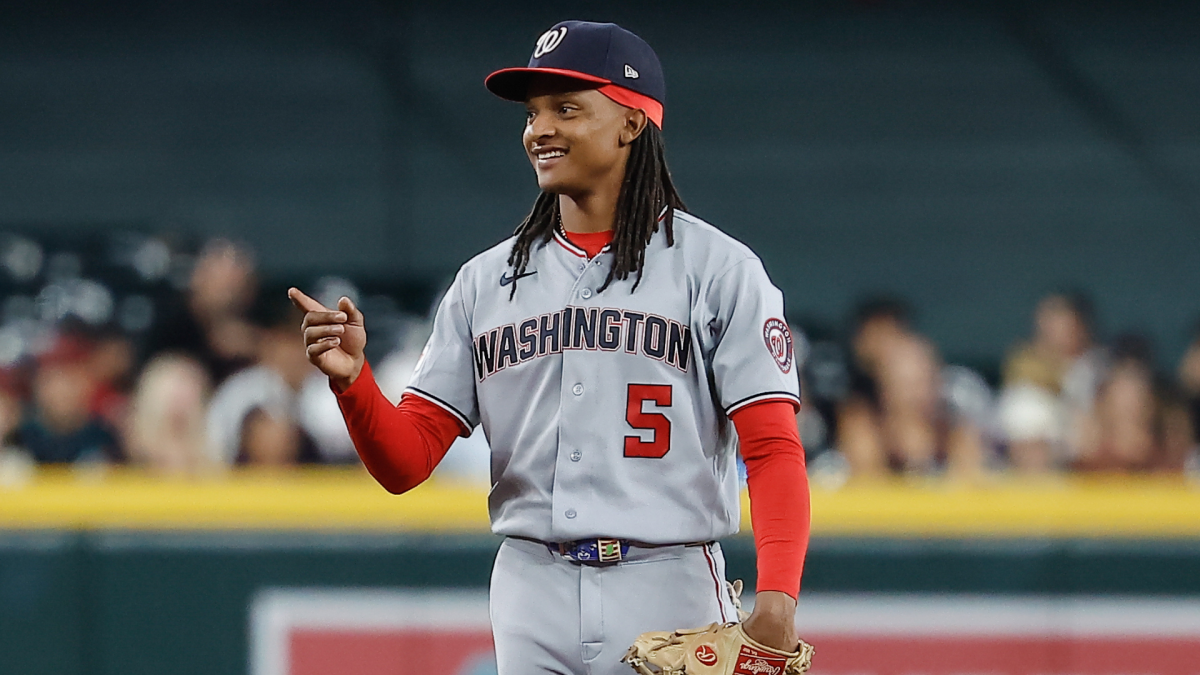
The emergence of a core centered on CJ Abrams, boasting a .905 OPS, presents a dual-track strategy. The Nationals must balance the urge to accelerate their competitive window against the mandate to ensure that every roster move contributes to a sustained championship trajectory rather than a fleeting, one-season run.
The Data-Driven Future of Front Office Operations
Modern front office decision-making is underpinned by advanced metrics that quantify the risk-adjusted value of trade targets. While data provides the necessary framework for negotiation, the ‘human element’—scouting intuition and cultural fit—remains the final arbiter. The tension between quantitative metrics and qualitative assessment defines modern baseball strategy, turning trade deadlines into high-stakes exercises in long-term institutional sustainability.