Institutional Renaissance: Ending the 40-Year Hiatus
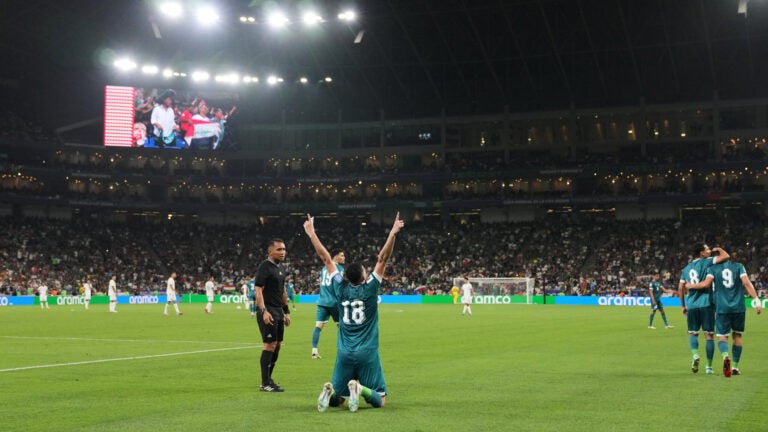
Iraq’s qualification for the 2026 FIFA World Cup represents a tectonic shift in the nation’s sporting infrastructure, terminating a four-decade absence from football’s premier stage. This milestone is not merely a byproduct of the tournament’s expansion to 48 teams; it is the culmination of a strategic overhaul within the Iraqi Football Association (IFA) to navigate domestic volatility and leverage global talent pipelines.
Since their last appearance in 1986, Iraqi football has been a mirror of the nation’s broader challenges. However, by securing a berth in the North American finals, the ‘Lions of Mesopotamia’ have signaled a restoration of their status as an elite AFC power, transforming from a regional contender into a globally integrated athletic program.
The Transcontinental Scouting Model: Leveraging the Diaspora
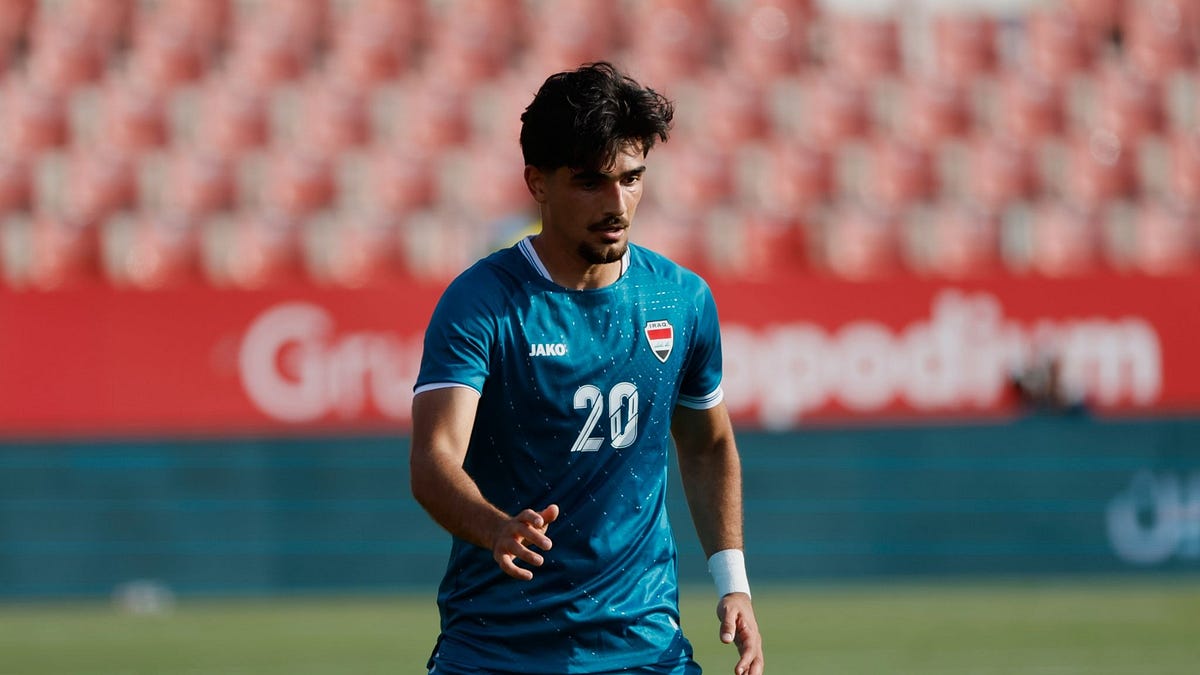
A cornerstone of the 2026 campaign is the IFA’s pivot toward a ‘transcontinental scouting model.’ Head coach Graham Arnold has presided over a roster that synthesizes domestic grit with the technical discipline of European academies, particularly those in Sweden and the United States. This strategic reliance on the diaspora addresses the historical gap in infrastructure by ‘importing’ elite training standards via dual-national athletes.
Key figures like Aimar Sher and Rebin Sulaka illustrate this trend. Sher’s tactical versatility, developed in the Swedish Allsvenskan, and Sulaka’s multi-jurisdictional defensive experience provide a sophisticated backbone to the squad. Furthermore, the administrative precision required to secure Nashville SC’s Ahmed Qasem via a one-time FIFA switch in early 2026 highlights a new era of bureaucratic competency within the IFA, ensuring high-ceiling talent is captured ahead of major tournament cycles.
Administrative Friction and Geopolitical Logistics
The journey to the finals has been punctuated by ‘administrative friction,’ most notably during the team’s arrival in North America. The detention of personnel at Chicago’s O’Hare International Airport underscores the persistent logistical hurdles faced by delegations from geopolitically sensitive regions. These incidents serve as a litmus test for FIFA’s promise of ‘streamlined entry’ for the expanded tournament, requiring high-level diplomatic intervention to protect the team’s professional focus.
Sociological Impact: Football as a Meritocratic Microcosm
The 2026 roster offers a profound sociological narrative of post-conflict state-building. With a 15% Christian representation—including players from the suburb of Ankawa—the squad serves as a meritocratic microcosm of a pluralistic Iraq. In a nation where Christians comprise less than 1% of the population, the football pitch has emerged as a rare sanctuary where performance transcends sectarian divides, projecting a unified national identity to a global audience.
Psychological Leverage: Survival and Professional Resilience
The individual histories of players like striker Aymen Hussein infuse the team with a unique ‘psychological leverage.’ Hussein’s career, shadowed by the 2008 killing of his father by Al-Qaeda and the 2014 abduction of his brother, epitomizes the extreme resilience of this generation. For the Lions of Mesopotamia, these narratives of survival are professionalized into high-intensity on-field performance, creating a competitive profile characterized by exceptional mental fortitude.
Tactical Outlook: Navigating Group I Dynamics
Ranked 57th globally, Iraq faces a rigorous tactical challenge in Group I against Norway, France, and Senegal. The opener at Boston Stadium against Norway is pivotal; success depends on neutralizing UEFA-grade physicality while exploiting the transition speed of forwards like Ahmed Qasem. The 48-team format, allowing the best third-place finishers to advance to the Round of 32, alters the risk-reward calculus, incentivizing a disciplined, points-focused strategy to ensure a historic advancement beyond the group stage.
Conclusion: Establishing a Sustainable Pipeline
Iraq’s 2026 campaign is an inflection point for the country’s sports media and commercial viability. As veterans like Hassanin Mubarak document this evolution, the global visibility on networks like FOX and Telemundo creates unprecedented opportunities for international sponsorship. The goal is no longer just participation, but the establishment of a sustainable institutional framework that ensures the Lions of Mesopotamia remain a permanent fixture on the world stage.