The 2026 NBA Finals at Madison Square Garden transcends a mere championship series; it represents a high-stakes convergence of cultural capital, political signaling, and sophisticated institutional branding. As the New York Knicks hosted the San Antonio Spurs for Games 3 and 4, the arena’s “Celebrity Row” operated not just as a seating area but as a strategic asset, actively reinforcing MSG’s enduring status as a global epicenter of influence, despite the franchise’s long championship drought. This phenomenon vividly demonstrates how Madison Square Garden Sports Corp. meticulously leverages proximity to power and cultural prominence to sustain premium valuation and formidable market relevance.
The Strategic Architecture of Celebrity Row
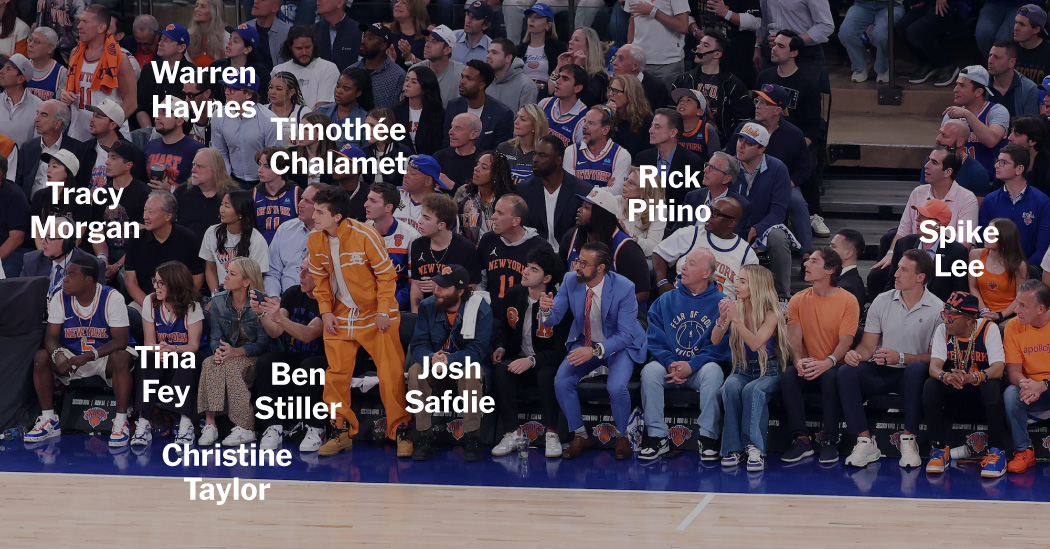
The consistent presence of perennial figures like Spike Lee and Ben Stiller provides a crucial layer of brand continuity. These figures bridge the chasm between the team’s historical competitive struggles and its current resurgence, transforming from mere spectators into integral components of the televised product. Their recognizable human element serves as a narrative anchor for New York basketball, while their long-term commitment to the franchise acts as powerful social proof, bolstering the Knicks’ brand equity even amidst operational underperformance.
Conversely, the deliberate inclusion of newer cultural icons such as Timothée Chalamet and Taylor Swift during Game 4 strategically expands the NBA’s demographic reach. By attracting figures with vast, diverse global followings, the league and arena operator engineer a powerful cross-pollination of audiences, transcending traditional sports fandom. This calculated alignment dramatically elevates the Finals’ media value, as the presence of such influencers generates organic social media impressions that substantially augment official broadcast metrics.
Furthermore, the operational decision to feature these celebrities prominently on the Jumbotron exemplifies a sophisticated management of public sentiment and arena hierarchy. While immediate crowd reactions (cheers or boos) offer a direct feedback loop, the very act of public display fundamentally reinforces the arena’s stratified value proposition. For high-net-worth individuals, this visibility is paramount, transforming game attendance into a platform for status signaling and the conspicuous exercise of influence.
Political Capital and the Optics of Attendance
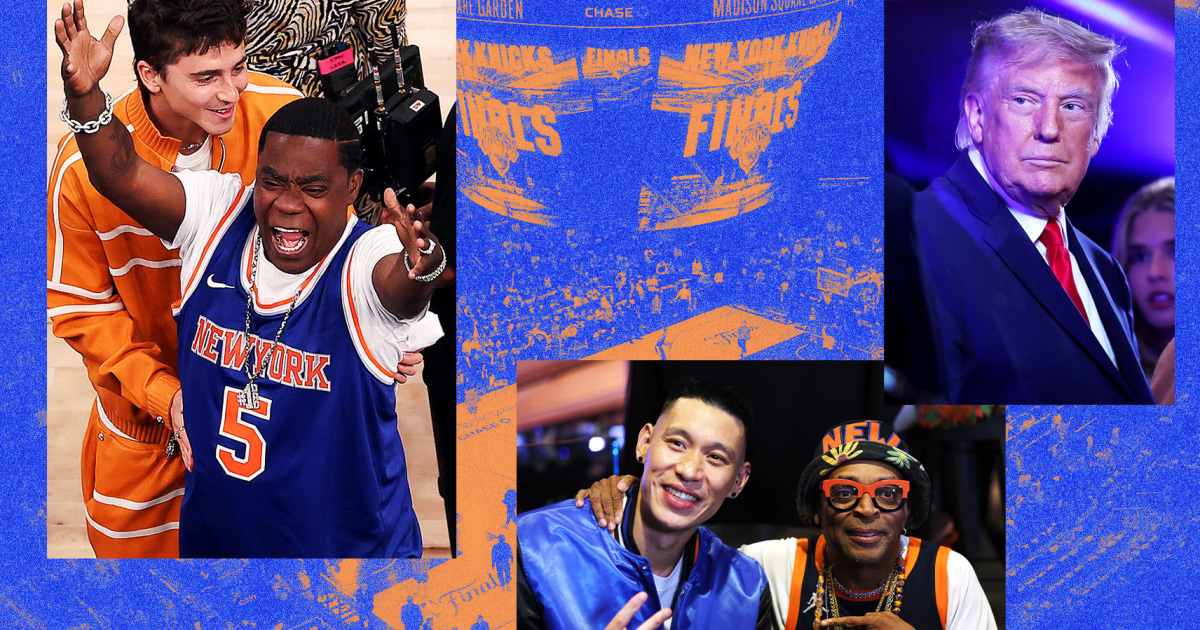
The attendance of President Donald Trump and Mayor Zohran Mamdani at Game 3 starkly highlighted the profound intersection of professional sports and political theater. Trump’s strategic positioning in a luxury suite contrasted sharply with Mamdani’s more accessible seating, creating a potent visual representation of divergent political personas and ideological leanings. This precise spatial distribution within the arena served as a microcosm of broader socioeconomic dynamics, where seating choice itself becomes a calculated maneuver in public relations and brand cultivation.
For political figures, the NBA Finals at Madison Square Garden offer an unparalleled opportunity to engage with a concentrated demographic of voters and donors within a high-energy, media-saturated environment. The arena thus transforms into a semi-neutral ground where political capital can be demonstrably displayed or subtly accrued through association with popular culture. The joint presence of a former president and a sitting mayor unequivocally underscores MSG’s role as a preeminent site for civic and political visibility within the expansive New York metropolitan area.
The institutional implications of such high-profile political attendance are profoundly significant for the NBA’s government relations and public policy agenda. When key political stakeholders actively participate in the league’s flagship events, it unequivocally reinforces the NBA’s position as a vital cultural and economic institution. This cultivated proximity offers potent leverage in future negotiations concerning arena subsidies, municipal tax incentives, or broader regulatory frameworks critically impacting the sports and entertainment industry.
Economic Impact and Luxury Market Dynamics
The 2026 Finals, marking MSG’s first championship series since 1999, generated unprecedented scarcity value for premium tickets and hospitality services. This scarcity profoundly amplifies secondary market pricing, with celebrity attendance further inflating perceived exclusivity. For MSG, the consistent ability to attract “boldface names” is a foundational driver of its premium pricing strategy for luxury suites and courtside seating, directly influencing revenue streams.
The arena’s financial performance during the Finals is inextricably linked to its sustained capacity to project this aura of prestige. The visible presence of figures like Jay-Z, DJ Khaled, and Derek Jeter at Game 3 robustly reinforces the narrative of the Garden as the quintessential destination for the global elite. This, in turn, magnetically attracts corporate sponsors prepared to pay a substantial premium to associate their brands with the high-status environment meticulously cultivated by the arena’s management.
Moreover, the operational logistics inherent in hosting such a concentrated assembly of high-profile individuals necessitate substantial investments in bespoke security, elevated hospitality, and specialized concierge services. These considerable costs are strategically amortized by the long-term brand equity accrued through flawlessly executed events. MSG’s demonstrable capacity to seamlessly manage the complex needs of celebrities and political leaders while simultaneously delivering a superior experience for the general public distinguishes it as a core competency among global venues.
Media Rights and Global Brand Positioning
The dynamic visual data emanating from Celebrity Row forms a critical pillar of the NBA’s global media strategy. As the league aggressively seeks to expand its international footprint, the iconic image of a star-studded Madison Square Garden serves as an extraordinarily powerful marketing instrument. It deftly positions the NBA not merely as a sports league but as a sophisticated lifestyle and entertainment conglomerate positioned at the very nexus of global culture.
Specifically, the presence of global icons like Taylor Swift at Game 4 furnishes the NBA with invaluable leverage in negotiating media rights across regions where basketball may not command primary sporting interest. The exceptional crossover appeal of these celebrities enables the league to penetrate new demographics, reaching audiences primarily driven by broader entertainment and celebrity culture. This nuanced strategy is absolutely essential for driving sustainable long-term revenue growth within an increasingly fragmented and competitive media landscape.
Furthermore, the narrative of the Knicks-Spurs rivalry, expertly punctuated by the visible attendance of legendary figures such as John McEnroe and Michael J. Fox, meticulously imbues the broadcast with profound historical depth. This continuity is a fundamental element of the NBA’s brand storytelling, effectively linking the current generation of stars with the revered legends of the past. By assiduously maintaining these intergenerational connections, the league guarantees its brand remains profoundly relevant and resonant across diverse fan cohorts.
Institutional Resilience and the Epicenter Narrative
Despite decades without a championship, Madison Square Garden persistently maintains its designation as the ‘epicenter of the basketball world.’ This remarkable resilience fundamentally testifies to the strength of the MSG brand, demonstrating its unique capacity to decouple arena value and experiential prestige from the direct competitive performance of its tenant team. The 2026 Finals unequivocally crystallize this strategic success, where the event’s inherent significance ultimately eclipses the outcome of any single game.
The Spurs’ 115-111 victory in Game 3, narrowing the Knicks’ series lead to 2-1, immediately injected a heightened level of competitive tension, which strategically amplified anticipation for Game 4. Such series volatility proves highly advantageous for both the arena and the league, as it inherently extends the series duration and maximizes the number of high-revenue home games. Maintaining a consistently high-status environment, even in the face of a home loss, stands as a critical pillar of MSG’s institutional stability and brand promise.
Operational Complexity and Stakeholder Engagement
Effectively managing an event of this magnitude demands navigating a complex, multi-layered web of stakeholders, encompassing local law enforcement, specialized private security firms, and intricate talent agencies. The inherent exposure for these diverse entities is extraordinarily high, as any operational misstep would be severely magnified by the concentrated presence of so many high-profile individuals. The flawlessly executed logistics of Games 3 and 4 at MSG robustly reaffirm the venue’s impeccable reputation for operational excellence—a paramount factor in attracting subsequent high-value events.
For the attending celebrities and political figures, their individual exposure is equally significant and invariably strategic. Their presence at the game functions as a potent form of public endorsement, with their reactions to game events subjected to intense scrutiny by both traditional and social media. The decision to attend is frequently a meticulously calculated one, designed to align their personal brands with the elevated prestige and electrifying excitement inherently associated with the NBA Finals.
The expansive downstream economic effects of this elite attendance reverberate throughout the local economy, invigorating sectors from luxury hotels to high-end restaurants and premium transportation services. This substantial influx of affluent and influential individuals into Manhattan for the Finals delivers a significant, measurable economic boost to the city. Ultimately, this dynamic reinforces Madison Square Garden’s indispensable role as a principal driver of New York City’s economic dynamism and cultural vitality.
Conclusion: The Enduring MSG Model and Its Global Blueprint
The 2026 NBA Finals unequivocally stand as a definitive case study in the efficacy of the MSG model for sports and entertainment management. By assiduously prioritizing the cultivation of a high-status, celebrity-driven experiential environment, the arena has not only maintained but strengthened its formidable position as a global leader, effectively decoupling its success from the competitive fluctuations of its primary tenant. This highly replicable model, emphasizing event as spectacle, is poised to become a blueprint for other premier venues aiming to maximize their commercial and cultural impact globally.
As the historic series between the Knicks and the Spurs unfolds, the media’s and public’s attention will remain equally bifurcated: keenly focused both on the elite faces in the courtside crowd and on the athletic prowess displayed by the players on the court. This pervasive dual focus is the quintessential hallmark of the modern NBA—a league where the game itself serves as but one component of a far grander cultural, commercial, and political spectacle. The strategic, artful deployment of Celebrity Row at Madison Square Garden powerfully underscores the enduring influence of the New York market and the Garden’s unique, indelible position in the global imagination.