US Unseals Indictment Against Raul Castro for 1996 Aircraft Shoot-Down
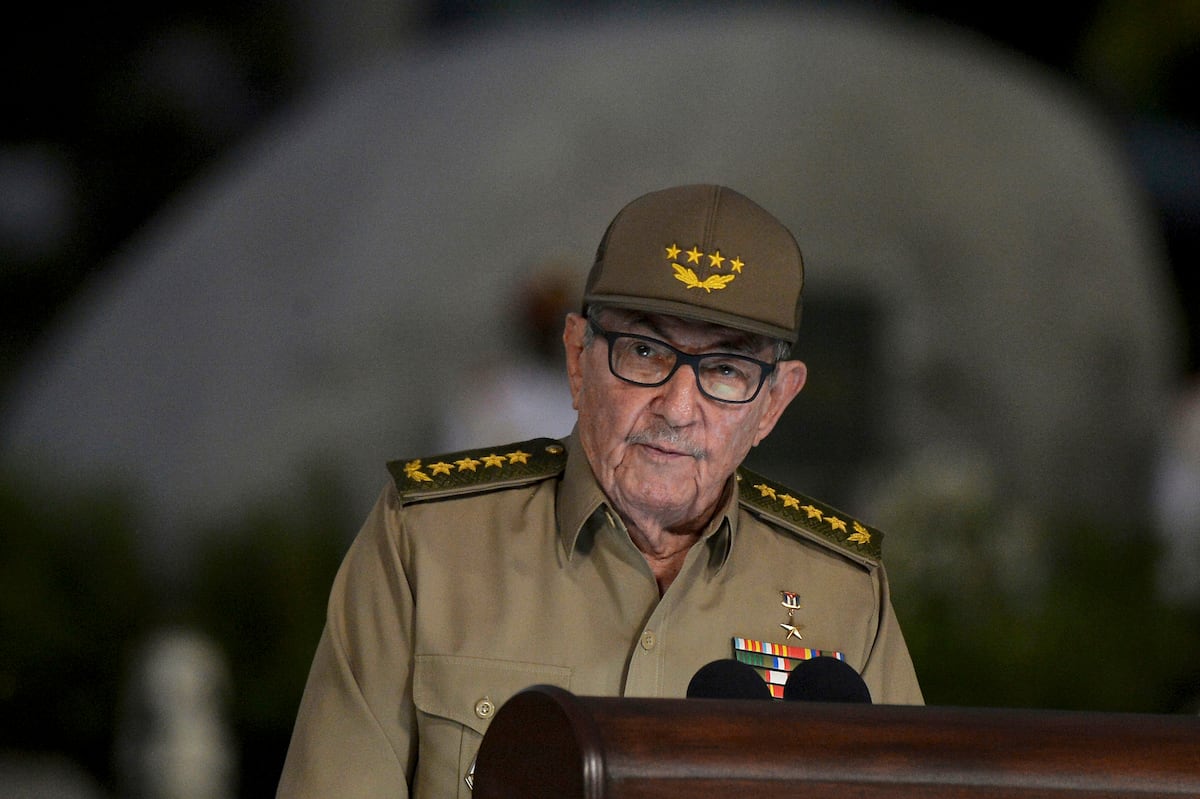
The U.S. Department of Justice has unsealed a superseding indictment charging Raul Modesto Castro Ruz, alongside five co-defendants, for their alleged roles in the February 24, 1996, shoot-down of two unarmed civilian aircraft operated by Brothers to the Rescue (BTTR) over international waters. This legal action signifies a substantial escalation in U.S. efforts to hold Cuban officials accountable for past actions, with direct implications for diplomatic relations and potential future U.S. policy towards Cuba.
The indictment names Lorenzo Alberto Perez‑Perez, Emilio José Palacio Blanco, José Fidel Gual Barzaga, Raul Simanca Cardenas, and Luis Raul Gonzalez‑Pardo Rodriguez as co-defendants, alleged to have been associated with the Cuban regime at the time of the incident. The charges detail their purported involvement in the destruction of the BTTR aircraft, which resulted in the deaths of four individuals, framing the event as a deliberate act of aggression with profound legal and political ramifications under international law.
This legal maneuver, situated within a broader geopolitical context of increased U.S. pressure on Cuba, highlights a strategic decision to leverage international legal frameworks for foreign policy objectives. The timing underscores a deliberate narrative battle over historical interpretations and national sovereignty, with the U.S. positioning the event as a violation of international norms and Cuban leadership emphasizing anti-imperialist sentiment.
The indictment’s focus on Raul Castro, a former president, and his alleged involvement in a decades-old incident signals a sustained commitment by U.S. justice authorities to pursue accountability for grave actions. This challenges the established political order in Cuba and creates avenues for increased international legal pressure, potentially impacting the operational capacity and strategic planning of the Cuban government.
The U.S. Secretary of State’s invocation of May 20, 1902, juxtaposed with Cuban President Miguel Díaz-Canel’s framing of the same date, illustrates deep-seated historical grievances and competing national narratives. The indictment of Castro thus functions as a potent symbol within this ongoing ideological contest, aiming to influence perceptions and Cuba’s future trajectory.
The U.S. Department of Justice’s strategy of unsealing a superseding indictment indicates a deliberate effort to construct a comprehensive case directly linking senior leadership to the 1996 shoot-down. This approach aims to maximize legal and political pressure on the current Cuban administration, potentially impacting its international standing and foreign policy capacity.
Operational implications for Cuba’s defense and intelligence apparatus are significant. Past actions are subjected to renewed legal scrutiny under international law, potentially prompting internal reviews of operational protocols and heightening awareness of legal liabilities for future actions at command levels.
Financially, the indictment could indirectly impact Cuba’s ability to secure international investment or engage in certain financial transactions due to increased perceived risk by entities. This adds another layer of economic pressure, potentially influencing capital movement into and out of the country.
The competitive landscape for influence in Latin America is affected as the U.S. demonstrates a willingness to employ robust legal and diplomatic tools against the Cuban regime. This signals to regional actors and potential adversaries the U.S. commitment to enforcing its objectives, potentially altering regional power dynamics.
The pursuit of charges against a former head of state for a past event signifies a shift towards a more assertive, legally driven U.S. foreign policy, aiming to corner the Cuban political structure and potentially force concessions or accelerate calls for regime change.
The indictment’s exposure of alleged Cuban regime actions on the international stage reinforces a specific narrative about the government’s nature, potentially influencing global public opinion and diplomatic stances, and leading to increased international scrutiny of Cuba’s human rights record.
The leverage gained by the U.S. is multi-faceted, encompassing legal, diplomatic, and reputational dimensions, providing a basis for sustained international pressure and potentially rallying allied nations in condemning the alleged actions and demanding accountability.
Consequences for stakeholders, including the Cuban government, its citizens, and the international community, are substantial. For Cuba, it represents an intensified legal and political challenge. For Cuban citizens, it may prolong hardships or offer a glimmer of hope for future change.
The U.S. strategy of consistent legal and diplomatic pressure aims to weaken the Cuban regime’s hold on power and create conditions favorable to U.S. foreign policy objectives, potentially eroding the regime’s legitimacy domestically and internationally.
This indictment reflects a broader U.S. foreign policy doctrine prioritizing international law and human rights, suggesting a commitment to challenging authoritarian regimes and promoting democratic values through legal means.
Capital movement implications are subtle but present; increased legal uncertainty and political risk could deter foreign investment, exacerbating existing economic challenges within Cuba and limiting development prospects.
Competitive implications extend to the ideological struggle between democratic and authoritarian governance models, with the U.S. using legal instruments to challenge a socialist regime and asserting its role in enforcing international justice.
The historical context of U.S.-Cuba relations, marked by decades of tension, provides a backdrop where the 1996 shoot-down, a pivotal moment, is re-examined through U.S. criminal law, signifying an effort to impose a definitive legal judgment on unresolved grievances.
The indictment’s operational framework suggests a meticulous reconstruction of events and clear identification of individuals allegedly responsible, crucial for establishing a strong legal case and demonstrating U.S. commitment to investigation and prosecution.
The institutional depth of the U.S. Department of Justice’s action highlights the legal system’s capacity for extraterritorial jurisdiction in serious international crimes, demonstrating a commitment to upholding international law and holding individuals accountable regardless of position or nationality.
The strategic decision-making process likely involved deliberation on diplomatic fallout and long-term implications, suggesting a belief that pursuing accountability outweighs potential increased tensions.
The U.S. performance leverage lies in its ability to achieve foreign policy objectives through sustained legal and diplomatic pressure, influencing Cuba’s internal political dynamics and international posture to achieve favorable outcomes.
The indictment amplifies the Cuban regime’s exposure to international legal challenges, potentially leading to increased scrutiny from international bodies and a critical examination of its human rights record.
Stakeholder implications are profound, affecting the Cuban populace, government, U.S. administration, and international legal community, each facing varying impacts and responses.
Capital movement dynamics could be influenced as financial institutions and investors reassess exposure to Cuba due to heightened legal risks, potentially leading to a contraction of capital inflows and straining economic resources.
The U.S.’s competitive positioning in Latin America is strengthened by this assertive legal stance, signaling a commitment to international norms and challenging perceived injustices, potentially enhancing its influence among regional partners.
Strategic implications for Cuba involve navigating a complex legal and diplomatic environment, potentially requiring recalibration of foreign policy and defense strategies to address legal accusations and political pressures.
Operational considerations for Cuba include managing internal dissent, reinforcing security, and potentially seeking new alliances to counter intensified U.S. pressure.
Cuba’s institutional response will be critical in determining the trajectory of this confrontation, with its ability to present a unified and credible defense being paramount.
The historical continuity of U.S.-Cuba animosity is underscored, demonstrating that past conflicts continue to shape present-day geopolitical strategies and legal actions.
Structural pressures on the Cuban regime are compounded, creating a more challenging environment for governance and international engagement.
The distribution of advantage favors the U.S. in its ability to initiate and pursue legal action, while Cuba faces the challenge of defending against accusations and mitigating political and economic fallout.
Plausible evolution scenarios suggest a prolonged period of legal and diplomatic friction, potentially leading to further isolation of the Cuban regime and increased calls for internal reform.