
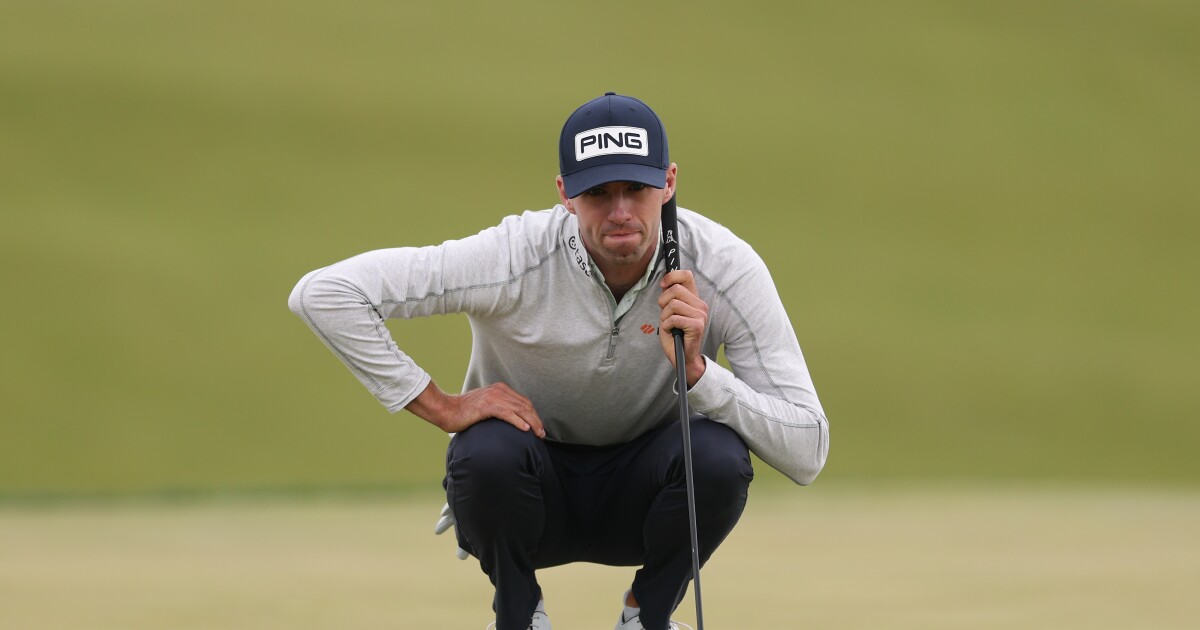
The 2026 PGA Championship at Aronimink Golf Club has evolved from a standard major into a high-stakes study in strategic attrition. Alex Smalley, a 29-year-old Duke University alumnus, has emerged as the archetype for this shift. By leveraging a technical profile that prioritizes stability over the high-variance power game of the modern PGA TOUR, Smalley is demonstrating how methodical development translates into competitive leverage during extreme course conditions.
The Institutional Profile: Stability as a Differentiator
Smalley’s professional trajectory avoids the volatile peaks of amateur standouts, opting instead for a disciplined accumulation of skill. His foundation at Duke University emphasized a ‘patience-over-power’ mentality—a style of play that becomes a defensive necessity when major championship setups target psychological and physical endurance. Since turning professional in 2019, Smalley has refined a game built on mid-range iron accuracy and a high performance floor, allowing him to capitalize on the errors of more aggressive competitors as the field’s margins for error collapse.
Meteorological Volatility and Agronomic Risk
The environmental factors at Newtown Square have become the primary catalyst for the tournament’s escalating difficulty. With wind gusts projected to reach 26 MPH during critical rounds, the physics of ball flight and green-side control are fundamentally altered. This atmospheric turbulence coincides with a critical juncture for the PGA of America regarding green maintenance; without supplemental irrigation, the desiccated surfaces risk becoming unplayable ‘skating rinks.’ For a player like Smalley, these conditions represent a strategic opening: the firmness of the greens rewards his controlled trajectory and minimizes the advantage of long-hitters who struggle with rollout management.
Historical Context and Regional Familiarity
Smalley’s performance trend in majors suggests a distinct comfort with punishing Northeast layouts. His T-23 finish at Oak Hill in 2023 and a T-28 at Quail Hollow in 2025 serve as precursors to his current form. As a native of Rochester, New York, Smalley possesses an inherent understanding of regional agronomy—specifically how heavy air and fast, firm surfaces interact. This regional familiarity provides a subtle competitive edge over international peers less accustomed to the nuances of American Northeast golf, positioning him for a potential career-defining result in his traditional prime.
Stakeholder Impact and the Meritocratic Narrative
The rise of a ‘grinder’ like Smalley provides a compelling narrative for sponsors and broadcast partners, emphasizing a meritocracy that resonates with golf purists. Beyond individual branding, Smalley’s success validates collegiate programs as vital talent incubators. From a financial perspective, a high-tier finish at Aronimink carries compounding benefits, securing FedEx Cup positioning and world ranking points that ensure eligibility for high-purse events. As the tournament concludes, the ability of the PGA of America to balance fair play with extreme difficulty will define the championship’s legacy, with Smalley serving as the primary protagonist in this test of strategic foresight.

Photo by wal_172619 on Pixabay.