
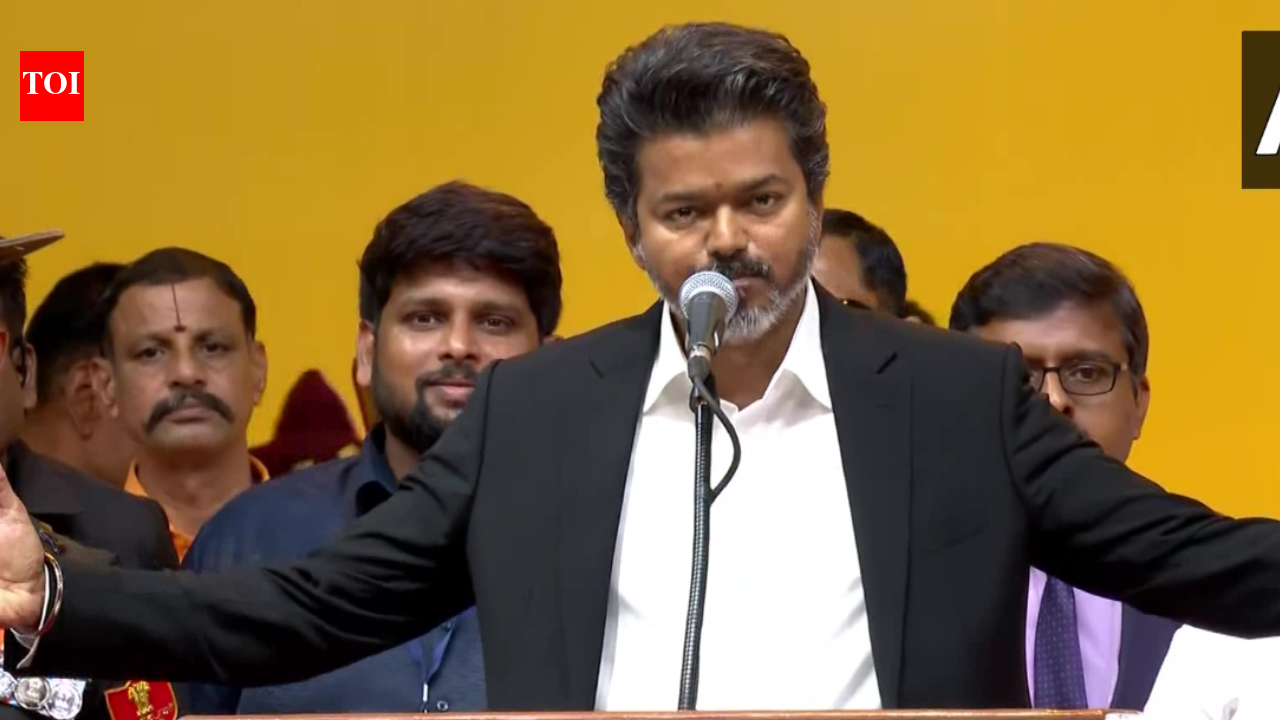
A Structural Realignment in Tamil Nadu Governance
The inauguration of C Joseph Vijay as Chief Minister formally concludes a half-century of political duopoly defined by the Dravida Munnetra Kazhagam (DMK) and the All India Anna Dravida Munnetra Kazhagam (AIADMK). This transition marks a departure from entrenched party machines, centralizing power under the Tamizhaga Vettri Kazhagam (TVK).
Following the May 4 electoral results, where TVK emerged as the largest party in the 234-member assembly, the mandate signals an appetite for systemic administrative change. As Tamil Nadu remains a pivotal node in global electronics manufacturing and high-tech supply chains, this shift necessitates a recalibration of policy frameworks that have anchored state governance for decades.
Coalition Arithmetic and Legislative Challenges
Securing the required 120-seat majority demanded intricate negotiations. TVK’s initial 107 seats were bolstered by Congress, CPI, and CPM support to reach 116, necessitating further alliances. The final consolidation materialized through the backing of the Viduthalai Chiruthaigal Katchi (VCK) and the Indian Union Muslim League (IUML). This coalition-dependent structure underscores the fragmented legislative landscape and the inherent volatility facing the new administration.
Institutional Stability and Market Confidence
Governor Rajendra Vishwanath Arlekar has mandated a vote of confidence by May 13. This procedural hurdle acts as a stress test for the administration’s ability to maintain coalition discipline. Given Tamil Nadu’s status as a hub for major multinational electronics manufacturing, market stability remains sensitive to political shifts. Investors are closely monitoring how the government balances its populist electoral promises with the state’s rigorous economic and industrial requirements.
Historical Context and Economic Outlook
The collapse of the DMK-AIADMK hegemony represents a paradigm shift in Tamil Nadu’s political history. While the previous power-alternation cycle provided administrative predictability, the emergence of the TVK introduces a period of transition. The administration’s long-term success will hinge on its capacity to manage fiscal policy, labor relations, and infrastructure investment without disrupting the continuity of state services.
Legislative gridlock remains a primary risk; should the VCK or IUML withdraw support, the administration’s capacity to execute key policy initiatives would be immediately compromised. The upcoming confidence vote serves as the first empirical indicator of the TVK’s governing efficacy in a complex multi-party environment.

Photo by Yeskay1211 on Pixabay.