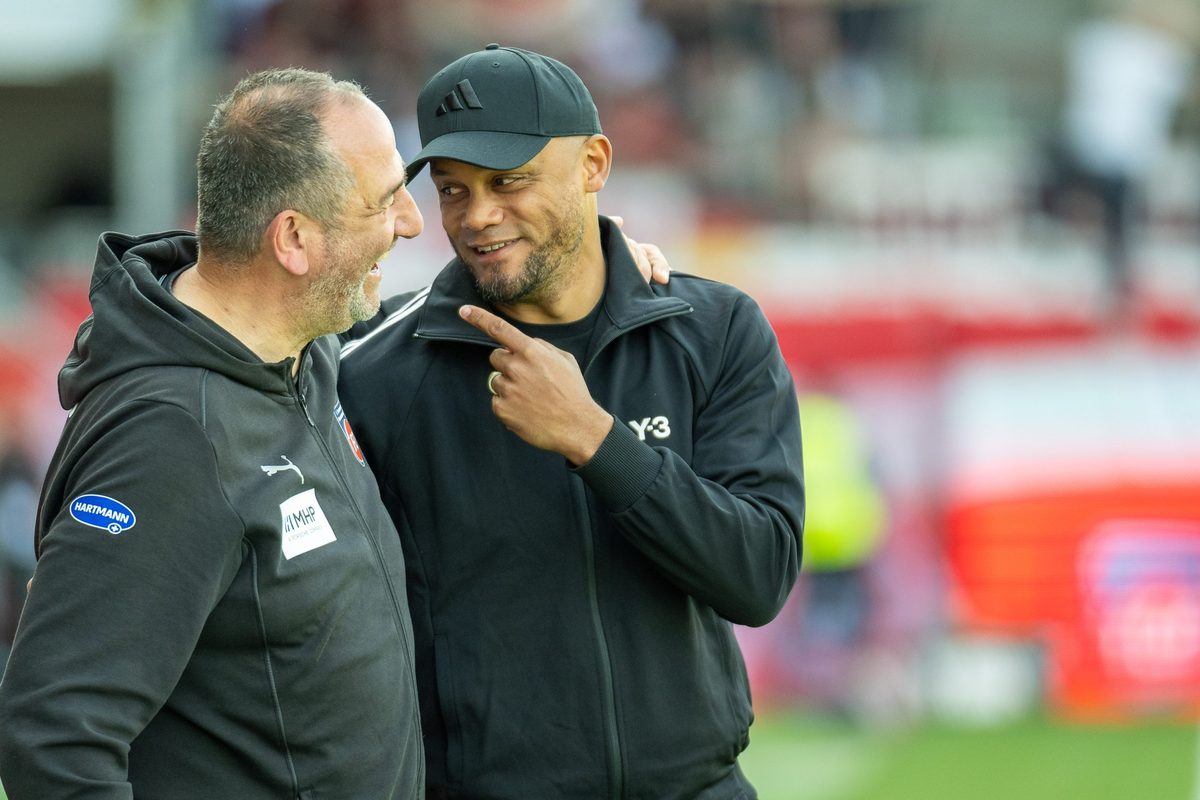
The Bundesliga encounter between FC Bayern Munich and 1. FC Heidenheim functions as a premier demonstration of elite squad load management and the mitigation of performance variance. Situated between grueling Champions League fixtures, this match necessitates a strategic pivot. Head coach Vincent Kompany’s implementation of seven changes to the starting XI is a calculated risk-reward maneuver designed to preserve high-value assets while maintaining domestic dominance through structural depth.
The Financialization of the Odds Boost
The sports wagering market has reacted to this fixture with significant volatility, evidenced by ODDSET’s escalation of home win odds from 1.21 to a boosted 20.0. This represents a sophisticated customer acquisition strategy, using Bayern’s historical home win probability as a loss-leader. By artificially inflating the value, the platform shifts the risk-benefit ratio to capture market share, banking on the statistical likelihood of a Bayern victory regardless of personnel rotation.
This pricing strategy institutionalizes a high-value entry point for new participants, intentionally ignoring the stochastic nature of a heavily rotated lineup. It underscores how elite football serves as a financial instrument for betting operators to drive platform engagement. The market’s willingness to offer such a boost reflects institutional confidence in Bayern’s organizational floor, where even a secondary unit possesses a decisive competitive advantage over bottom-tier opposition.
Operational Depth and Tactical Reconfiguration
Following the high-variance 4-5 result in Paris, Kompany’s selection prioritize physiological recovery over tactical continuity. Resting core pillars such as Manuel Neuer and Harry Kane is an exercise in injury prevention, facilitated by significant capital investment in squad depth. The inclusion of Jonas Urbig and a defensive core of Kim, Tah, and Ito suggests a transition toward aerial dominance and physical robustness, specifically tailored to neutralize Heidenheim’s set-piece reliance.
The midfield deployment of Leon Goretzka and Konrad Laimer indicates a shift toward a high-intensity, industrial press. This configuration is designed to disrupt Heidenheim’s defensive transitions and prevent the visitors from establishing a low-block rhythm. By utilizing fresh legs, Bayern aims to overwhelm an opponent that lacks the rotational flexibility to match such physiological output.
The Ndiaye Factor: Youth as Tactical Capital
Starting 18-year-old Bara Sapoko Ndiaye for a second consecutive match signals a shift in Bayern’s long-term development philosophy. In an era of hyper-inflated transfer valuations, the internal promotion of academy talent serves as a hedge against market volatility. Ndiaye’s integration provides a unique synergy, where his high-volume pressing complements the technical proficiency of Jamal Musiala, creating a multi-dimensional attacking threat.
From a scouting perspective, Ndiaye acts as an unpredictable variable. His movement patterns lack the extensive data sets associated with established stars, complicating Heidenheim’s defensive preparation. This lack of familiarity is a strategic asset, allowing Kompany to exploit defensive lapses while accelerating the maturation of a high-ceiling prospect.
Heidenheim’s Asymmetric Challenge
Frank Schmidt’s characterization of the match as an ‘ultimate underdog’ scenario highlights the stark economic disparities within the Bundesliga. For Heidenheim, the challenge is psychological as much as tactical. Schmidt’s rejection of the ‘motivation dip’ theory acknowledges Bayern’s internal culture of hyper-competitiveness. Heidenheim’s survival strategy relies on extreme defensive discipline and the clinical exploitation of the few transition opportunities conceded by Bayern’s rotated backline.
Strategic Synthesis
The Bayern vs. Heidenheim fixture transcends a standard league match; it is a case study in how global footballing powers navigate multi-front demands. The heavy rotation, youth integration, and aggressive market response all point to a club operating at peak strategic efficiency. As the season progresses, the success of these rotational periods will define Bayern’s ability to sustain an elite performance ceiling across all competitions.