Rayo Vallecano Navigates Operational Hurdles and Competitive Resurgence
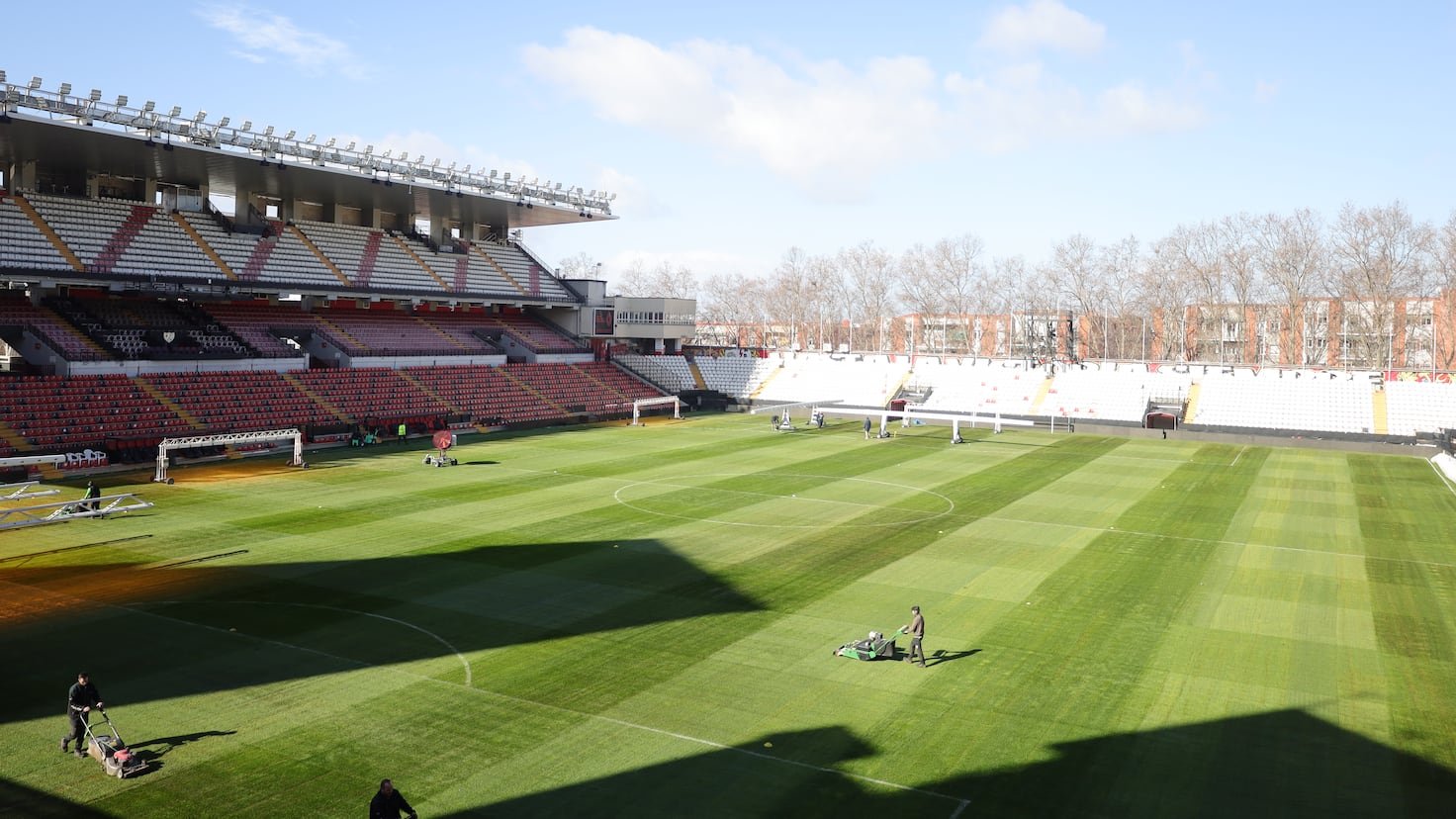
Rayo Vallecano’s return to Vallecas after a 35-day hiatus represents a crucial re-affirmation of operational stability, following a period defined by acute logistical and infrastructural challenges. This prolonged absence, necessitated by vital pitch replacement and compounded by adverse weather, critically underscores the intricate dependencies between sports infrastructure, competitive scheduling, and club financial health within elite leagues. The economic repercussions extend beyond immediate foregone matchday revenues and concession losses, encompassing escalated operational overheads for temporary venue sourcing and potential erosion of long-term fan engagement and sponsorship valuations.
These operational complexities were critically exacerbated by the eleventh-hour postponement of a scheduled fixture against Oviedo, occurring barely four hours before kick-off. Such disruptive events create profound ripple effects, jeopardizing meticulous team preparations, incurring unforeseen travel and accommodation costs for both clubs, and severely impacting supporter trust and matchday experience. For a club operating within the tight margins of LaLiga, managing these unpredictable variables becomes a rigorous test of organizational agility, crisis communication, and efficient resource allocation, where fixture congestion directly imperils player welfare and competitive trajectory.
Further compounding these financial and strategic vulnerabilities, the club was forced to relocate its high-profile derby against Atlético to Butarque. This temporary exile, while ensuring fixture continuity, imposed distinct financial penalties through modified revenue-sharing agreements and elevated logistical overheads. Crucially, it diluted the intrinsic home-field advantage, impacting player psychology, fan atmosphere, and the traditional commercial leverage derived from proprietary stadium operations. The absence from their primary commercial infrastructure during a significant derby fixture can substantially curtail matchday income streams and potentially compromise future commercial partnership negotiations.
Despite navigating this adverse operational environment, Rayo Vallecano has engineered a notable competitive resurgence. Leveraging a decisive 3-0 victory against Atlético and a resilient 1-1 draw against Betis, this shift in performance trajectory—especially following a prolonged absence from Vallecas—signals a significant tactical adaptation and psychological fortification under coach Iñigo Pérez. The capacity to secure positive results amidst such challenges evidences robust team morale, astute strategic adjustments, and a transformative leadership that converts potential disadvantages into catalysts for heightened competitive focus.
The draw against Betis was further defined by a refereeing controversy where the Comité Técnico de Árbitros (CTA) ultimately validated Rayo Vallecano’s position. This institutional vindication of a contentious decision carries a profound psychological resonance, reinforcing perceptions of fairness, enhancing team confidence, and potentially influencing subsequent officiating dynamics. Such rulings, beyond their immediate match impact, contribute to the broader discourse on officiating integrity and transparency within LaLiga, shaping stakeholder perceptions of competitive equity and club brand equity.
Consequently, the return to Vallecas transcends a mere fixture; it signifies a symbolic and strategic re-establishment of the club’s profound connection with its foundational support base. The widely articulated sentiment that ‘the neighborhood was eager for football’ underscores this deep community engagement, which directly translates into a palpable home advantage. This intrinsic link influences heightened player motivation, cultivates an intimidating crowd atmosphere for opponents, and demonstrably elevates on-field performance. For Rayo, harnessing this revitalized energy from the stands becomes a critical strategic asset, converting emotional capital into tangible competitive points and bolstering their LaLiga campaign.
Athletic Bilbao’s Strategic Balancing Act Amidst Dual Competition Demands
Athletic Bilbao confronts this Rayo Vallecano fixture embroiled in a critical strategic conundrum: meticulously balancing immediate LaLiga aspirations against the profound significance of a Copa del Rey semi-final second leg, scheduled just four days later. This archetypal dual-competition scenario demands exceptional squad management, acute tactical prioritization, and transparent communication from the coaching staff. Coach Ernesto Valverde’s unequivocal public declaration to prioritize the Liga fixture reflects a calculated risk-management strategy, designed to sustain competitive momentum across both prestigious competitions while psychologically preparing the squad.
Valverde’s explicit declaration that ‘the priority is Vallecas’ functions as a pivotal strategic communication, meticulously engineered to command the squad’s immediate focus and mitigate any subconscious distraction from the impending cup tie. This public stance is vital for fostering singular concentration, proactively preventing player complacency, and safeguarding against the inadvertent conservation of energy. Such definitive pronouncements are instrumental in shaping team psychology and guaranteeing sustained competitive intensity, particularly when a higher-profile fixture is on the immediate institutional horizon.
Athletic arrives in Vallecas fortified by a three-match winning streak in LaLiga against Levante, Oviedo, and Elche—a run that has significantly propelled their league standing and amplified team confidence. This robust positive momentum is a tangible competitive asset, conferring a psychological edge and profoundly reinforcing the squad’s belief in its tactical efficacy. The pursuit of a fourth consecutive league win, an accomplishment last registered over a year ago (between November and December 2024, highlighting its rarity), critically underscores the inherent difficulty and profound significance of sustaining such consistency within the fiercely competitive LaLiga environment.
The attainment of a fourth consecutive LaLiga victory transcends mere point accumulation; it represents a pivotal strategic objective capable of generating significant psychological and tactical leverage. Such a sustained winning streak unequivocally signals strong team cohesion, disciplined tactical execution, and an ingrained winning mentality—all invaluable transferable assets for the high-stakes environment of a cup semi-final. The psychological uplift derived from consistent league success directly translates into enhanced confidence, mental fortitude, and resilience when confronting a crucial knockout fixture, powerfully reinforcing the ‘victories breed victories’ principle.
The Copa del Rey semi-final, with Athletic currently trailing 0-1 from the first leg at San Mamés, looms as an institutional imperative and a monumental competitive challenge. A victory in Vallecas would serve as the ‘best endorsement’—a critical psychological and performance validation—for attempting to overturn this deficit in Anoeta, providing a tangible morale boost and affirming the team’s current trajectory. The intricate strategic interplay between these two competitions dictates that performance in one directly influences the psychological and tactical landscape of the other, forging a complex web of interconnected incentives and formidable pressures for the entire club.
Valverde’s recent challenges with player availability, specifically a period ‘little more than fifteen days ago’ characterized by the absence of a ‘good number of his most important footballers,’ vividly underscore the dynamic and often precarious nature of elite squad management. The current full availability of key players represents a crucial operational improvement, endowing the coach with significantly enhanced tactical flexibility, strategic depth, and the ability to dictate match tempo. This fortified squad strength is a critical determinant in effectively navigating the exacting demands of a dual-competition schedule, enabling judicious strategic rotation and optimal player deployment across both high-stakes league and cup engagements.
Interconnected Dynamics: Market Positioning and Stakeholder Implications
The confluence of Rayo Vallecano’s operational recovery and Athletic Bilbao’s high-stakes strategic prioritization creates a nexus of profound strategic and reputational significance, reverberating across market positioning and stakeholder engagement within LaLiga. For Rayo, the successful navigation of pervasive stadium disruptions and the judicious leveraging of recent positive results are instrumental in fortifying brand resilience and enhancing appeal to prospective investors and sponsors. The compelling narrative of overcoming adversity and deeply reconnecting with a passionate fanbase intrinsically strengthens their unique market identity within the highly competitive football landscape.
The institutional validation from the CTA concerning the refereeing controversy also contributes tangibly to Rayo’s market perception and reputational capital. Such rulings, while specific to individual incidents, profoundly influence a club’s reputation for fair play, directly impacting fan trust and shaping media narratives. Within a league where competitive integrity is a paramount value, a favorable institutional decision subtly yet powerfully enhances a club’s standing, reinforcing its commitment to sporting principles and attracting positive attention from a diverse array of stakeholders.
For Athletic Bilbao, the strategic management of dual-competition demands directly correlates with their institutional reputation, global brand visibility, and financial outlook. Advancing to the Copa del Rey final would not only unlock substantial prize money and broadcast revenues but also dramatically elevate the club’s profile on national and potentially international stages. This competitive success functions as a powerful magnet for attracting elite talent, fortifying commercial partnerships, and significantly augmenting fan engagement—all critical pillars contributing to long-term financial sustainability and enduring competitive advantage.
Valverde’s public pronouncements regarding match prioritization represent a critical facet of comprehensive stakeholder management, adeptly addressing fervent fan expectations, intense media scrutiny, and intricate player motivation. Within an institutional context where the Copa del Rey embodies profound historical and cultural significance for Athletic, the nuanced and effective communication of strategic choices is paramount for maintaining club unity and fostering unwavering support. The demonstrable ability to skillfully manage these diverse expectations while consistently delivering results on the pitch is a defining hallmark of effective leadership in professional sports, directly amplifying the club’s brand equity and reinforcing its enduring legacy.
The distinctive midday kick-off time, colloquially referred to as ‘aperitivo time,’ introduces a multi-faceted operational and commercial dimension to the fixture. While this scheduling strategically caters to specific broadcast windows and aligns with local cultural habits, it concurrently impacts matchday attendance dynamics and potentially influences player physiological performance, given the atypical timing for elite professional athletes. Clubs are thus compelled to strategically assess the intricate trade-offs: balancing enhanced commercial opportunities and broadcast reach against potential alterations in fan experience, concession revenues, and the cultivation of an optimal competitive atmosphere.
The ‘apercibidos’ situation for Rayo Vallecano, with an alarming six players on the precipice of suspension, constitutes a pressing tactical predicament and a significant risk management challenge for Iñigo Pérez. This delicate dilemma necessitates meticulous consideration of player deployment, demanding a precise balance between the immediate imperative for robust performance and the potential future forfeiture of key personnel for subsequent crucial fixtures. Such strategic decisions carry direct competitive implications, influencing initial team selection, in-game tactical adjustments, and critically impacting the strategic depth and continuity of the squad over the forthcoming weeks, thereby affecting both league survival and potential cup aspirations.
Ultimately, this fixture in Vallecas serves as a microcosm of the intricate web of operational realities, high-stakes strategic choices, and relentless competitive pressures that define modern professional football. Both Rayo Vallecano and Athletic Bilbao are navigating distinct yet equally formidable challenges and opportunities. Their performances will not only determine a crucial three points but will profoundly shape the psychological and strategic landscape for critical upcoming engagements, acting as a strategic inflection point that influences market perceptions, stakeholder confidence, and their overarching institutional trajectories.