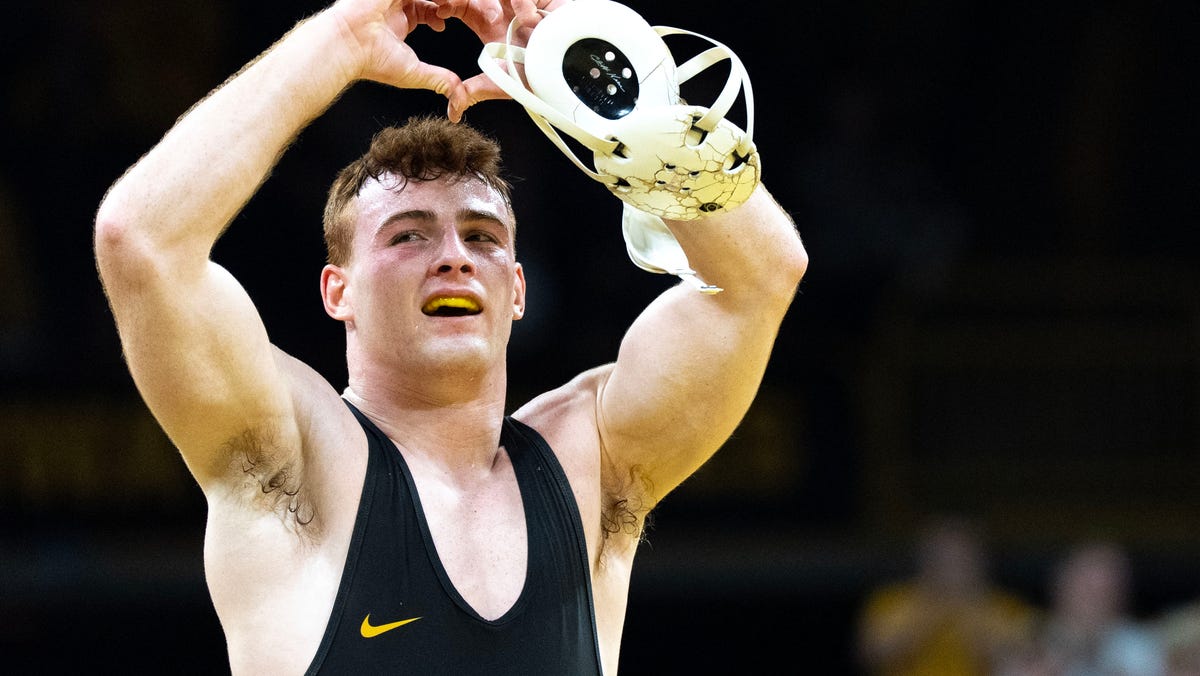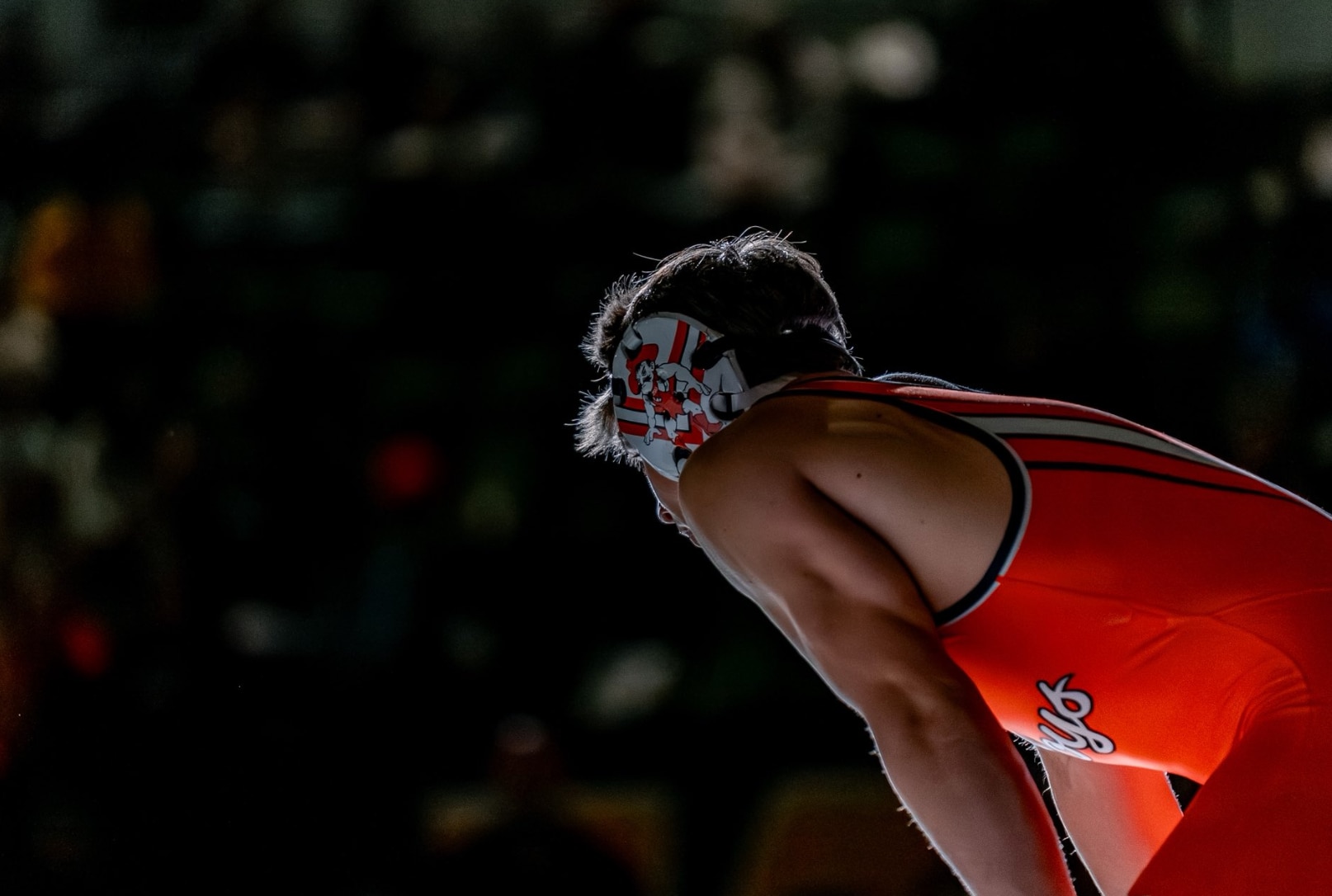
The conclusion of the 2025-26 NCAA wrestling regular season culminated in a high-leverage dual meet between the No. 7 Iowa Hawkeyes and the No. 3 Oklahoma State Cowboys, held February 22nd at the historically intense Gallagher-Iba Arena.
This contest served as a definitive performance benchmark, contrasting Oklahoma State’s 14-1 dual consistency against Iowa’s 12-5 record. The ESPN broadcast confirmed the high stakes attached to this final regular-season confrontation for postseason seeding and momentum calculus.
Divergent Talent Pipeline Manifestation: The 133-Pound Crucible
The dual’s strategic narrative was immediately established at 133 pounds. No. 6 Jax Forrest, a true freshman for Oklahoma State, secured a decisive technical fall (19-3) over two-time NCAA finalist No. 9 Drake Ayala.
This result transcends the immediate point differential. It signifies a successful capital investment strategy by the Cowboys, demonstrating immediate elite-level production from newly integrated talent against established national contenders. Conversely, Ayala’s inability to manage offensive volume exposed a critical vulnerability in Iowa’s tactical flexibility when facing high-pressure, high-volume schemes.
Performance Decay vs. Scaling Success
While Iowa demonstrated operational efficiency against lower-ranked opponents earlier (e.g., 40-0 over Bellarmine), their trajectory suggests performance decay when meeting Top 5 caliber opposition, highlighted by previous losses to Iowa State and the current deficit against OSU.
For Head Coach David Taylor, this dual functions as an essential crucible. The philosophical embrace of high-stakes competition means the focus shifts from avoiding losses to extracting immediate tactical lessons for bracket preparation, particularly in diagnosing and countering the technical advantages exhibited by OSU’s roster.
Institutional Strategy and Capital Allocation Analysis
The outcomes highlight a strategic divergence in resource allocation. Oklahoma State’s success validates a pipeline model prioritizing rapid integration of high-ceiling recruits capable of delivering wins immediately against NCAA finalists.
Iowa’s reliance on veteran finalists facing definitive defeats raises organizational questions regarding roster depth support and adaptability when faced with superior tactical execution from opponents. This imbalance impacts institutional brand equity and NIL valuation projections.
Venue Leverage and Competitive Resilience
Oklahoma State maximized the measurable performance multiplier inherent in hosting at Gallagher-Iba Arena, leveraging home-field intensity to solidify their 14-1 dual record. Iowa’s necessity to overcome travel logistics and environmental pressure demanded superior tactical execution.
The media saturation—from ESPN national coverage to localized scrutiny via the Des Moines Register—magnifies the reputational impact. For OSU, dominance reinforces championship narratives; for Iowa, the focus pivots to rapid confidence restoration and tactical recalibration before the national tournament phase commences.
Post-Season Seeding Implications
The final score directly informs the NCAA seeding matrix, where head-to-head results against ranked peers are heavily weighted for bracket placement. A decisive OSU victory solidifies their position as a primary contender with a potentially smoother path through early tournament rounds.
For Iowa, the imperative shifts to demonstrating capacity for high-level upset victories, demanding an immediate strategic pivot from scheduling comfort to tournament-level resilience. The ability of the Iowa coaching structure to rapidly adjust counter-strategies will be the primary metric for extracting long-term value from this highly scrutinized competitive encounter.