
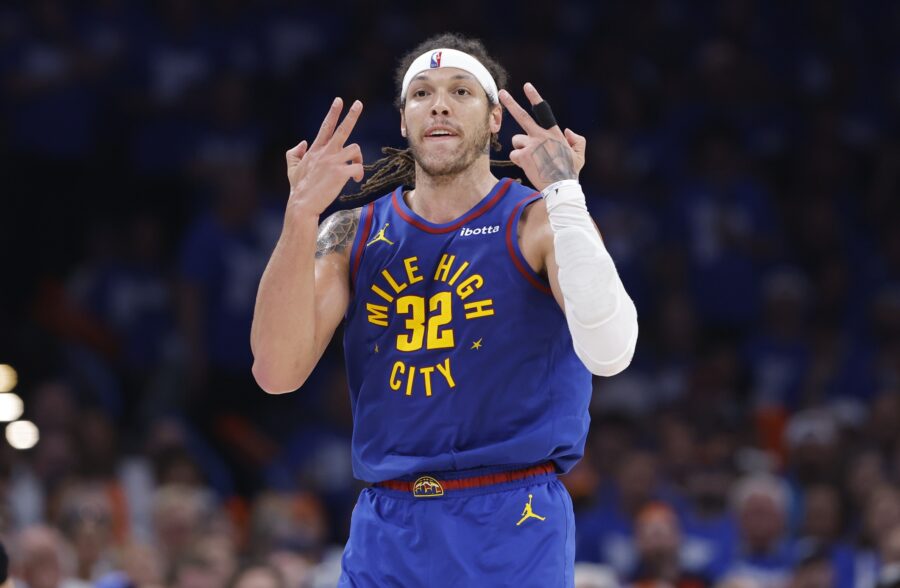
The Strategic Cost of Physical Attrition
The Denver Nuggets currently face a high-stakes personnel crisis regarding Aaron Gordon, whose recurrent left calf tightness has destabilized the team’s defensive rotation during the postseason. Gordon’s uncertain availability serves as a catalyst for a broader organizational audit: the inherent volatility of relying on high-usage defensive anchors who operate at peak physical capacity.
Coach David Adelman’s tactical challenges underscore the difficulty of managing compromised assets within a condensed playoff schedule. Balancing the immediate defensive necessity of Gordon’s versatility against the long-term risk of a soft-tissue rupture requires a precise, albeit precarious, calibration of load management and high-leverage rotational minutes.
Institutional Exposure and Roster Construction
Gordon’s absence illuminates a significant lack of depth-driven redundancy. While reserve units have provided stop-gap minutes, the physical and strategic drop-off between a starter and a specialist highlights an inefficiency in front-office capital allocation. The current frontcourt architecture lacks a high-impact contingency, exposing the team’s reliance on a singular prototype.
The underutilization of remaining depth pieces, such as Zeke Nnaji, reflects the lingering difficulty of navigating restrictive salary cap environments while maintaining competitive utility. This structural misalignment forces the coaching staff to operate within a narrow margin of error, where the loss of one starter necessitates a total systemic recalibration.
The Economics of Performance Leverage
Gordon’s role—defending elite interior threats while facilitating transition offense—is uniquely difficult to replicate. His potential physical decline presents the Nuggets with a difficult financial and strategic pivot: invest in premium multi-player depth or continue to bank on the health of a high-usage core. The former necessitates aggressive asset reallocation, while the latter risks the team’s long-term competitive viability.
Strategic Implications for the Franchise
The current situation is symptomatic of a broader evolution in professional sports, where roster flexibility is becoming as critical as top-end talent. The Nuggets’ inability to integrate a seamless replacement for Gordon suggests a design philosophy optimized for an ideal, injury-free scenario. Moving forward, the organization must prioritize a model that accounts for the inevitability of player attrition, ensuring that rotational depth acts as a buffer rather than a liability in the pursuit of long-term success.
Photo by admomediaoffice on Pixabay.