
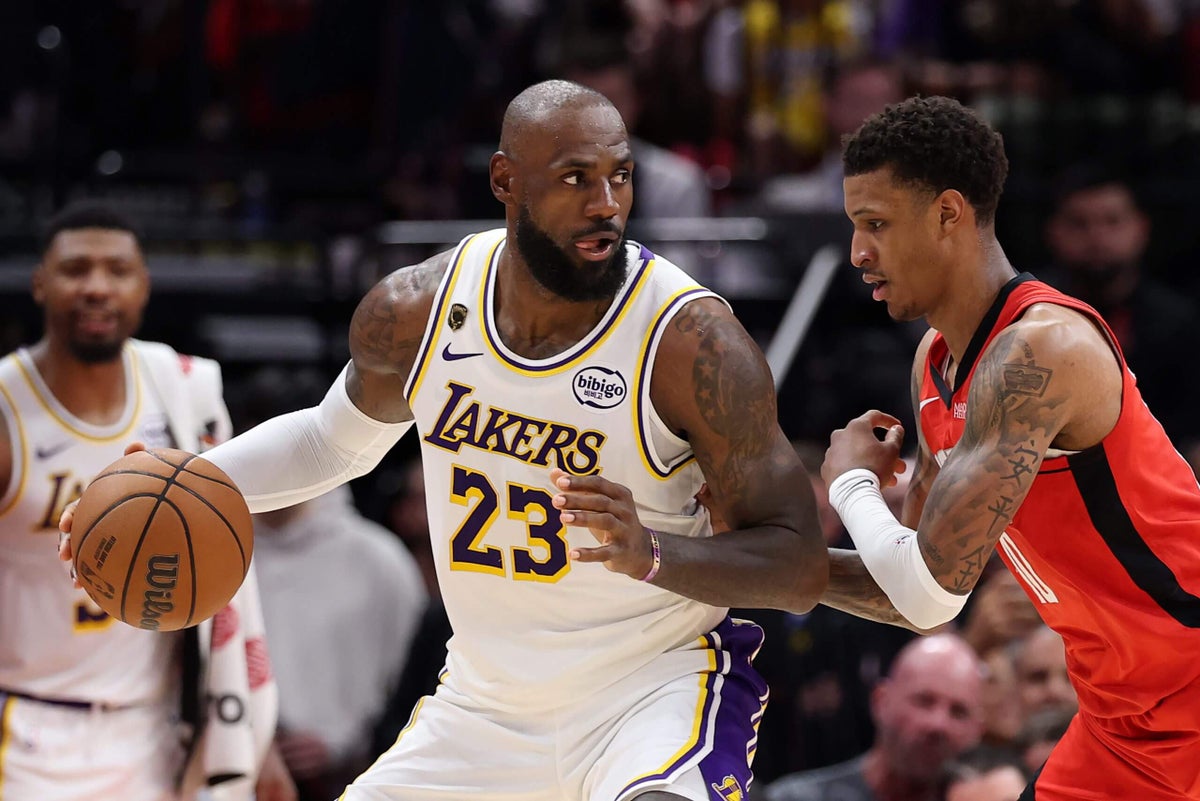
Strategic Implications of the 3-1 Series Pivot
The Los Angeles Lakers’ failure to secure a sweep in Game 4 represents more than a temporary setback; it highlights a critical shift in the operational load for their veteran roster. While a 3-1 lead remains statistically dominant, the inability to close the series early necessitates a costly reallocation of physical resources. The organizational objective—eliminating Houston to maximize recovery time before facing the Oklahoma City Thunder—has been compromised, forcing the coaching staff to navigate a high-stakes Game 5 with diminishing rest advantages.
Rest-Cycle Volatility and Athletic Durability
Game 4 provided a case study in the correlation between scheduling density and performance efficiency. As the first contest in the series played with only a 24-hour recovery window, the Lakers’ energy levels flagged, favoring the Rockets’ younger, more durable rotation. For high-usage veterans, the contraction of the recovery period from 72 to 48 hours directly impacts defensive rotation speed and transition efficiency. Houston’s first double-digit lead of the series during this specific window underscores the tactical advantage of youth in a compressed playoff calendar.
Houston’s Tactical Evolution and Psychological Momentum
The Rockets have demonstrated a consistent upward trajectory, evolving from an uncompetitive Game 1 to a dominant Game 4. This progression indicates a successful institutional adjustment to the Lakers’ defensive traps. Houston’s ability to maintain composure after a heartbreaking Game 3 loss suggests a structural stability that complicates the Lakers’ path to the semifinals. By winning the battle for psychological momentum, Houston has transformed Game 5 from a formality into a mandatory high-intensity execution test for Los Angeles.
Roster Constraints and Injury Management
The questionable status of Austin Reaves introduces significant tactical uncertainty into the Lakers’ backcourt. As a secondary playmaker, Reaves’ potential absence or limitation requires a disproportionate increase in the workload for LeBron James and Anthony Davis. This dependency accelerates fatigue, particularly in defensive schemes that rely on perimeter agility. Effective injury management is now the primary differentiator; the Lakers must balance the immediate necessity of a series-clinching win against the long-term physical requirements of a deep postseason run.
The Shadow of the Oklahoma City Thunder
Operating on a dual-track strategy, the Lakers’ front office must scout the top-seeded Oklahoma City Thunder while simultaneously managing the Rockets. This split focus introduces a margin for error that Houston has begun to exploit. The Lakers’ staff must ensure that tactical refinements developed in this series are transferable to the faster, perimeter-oriented style of the Thunder. Any further delay in closing out Houston directly erodes the preparation time required to dismantle a top seed, creating a cascading risk to the Lakers’ championship aspirations.
Market Dynamics and Performance Metrics
Betting markets and player prop valuations reflect the heightened pressure on LeBron James in close-out scenarios. Analysts note that this institutional pressure often sharpens the Lakers’ execution, serving as a high-intensity calibration for the challenges ahead. While an extended series offers financial benefits for media partners, the Lakers view every additional minute as a risk to their competitive ceiling. Game 5 demands a decisive victory to restore the team’s rest-cycle advantage and permit a full strategic pivot toward the semifinals.

Photo by admomediaoffice on Pixabay.