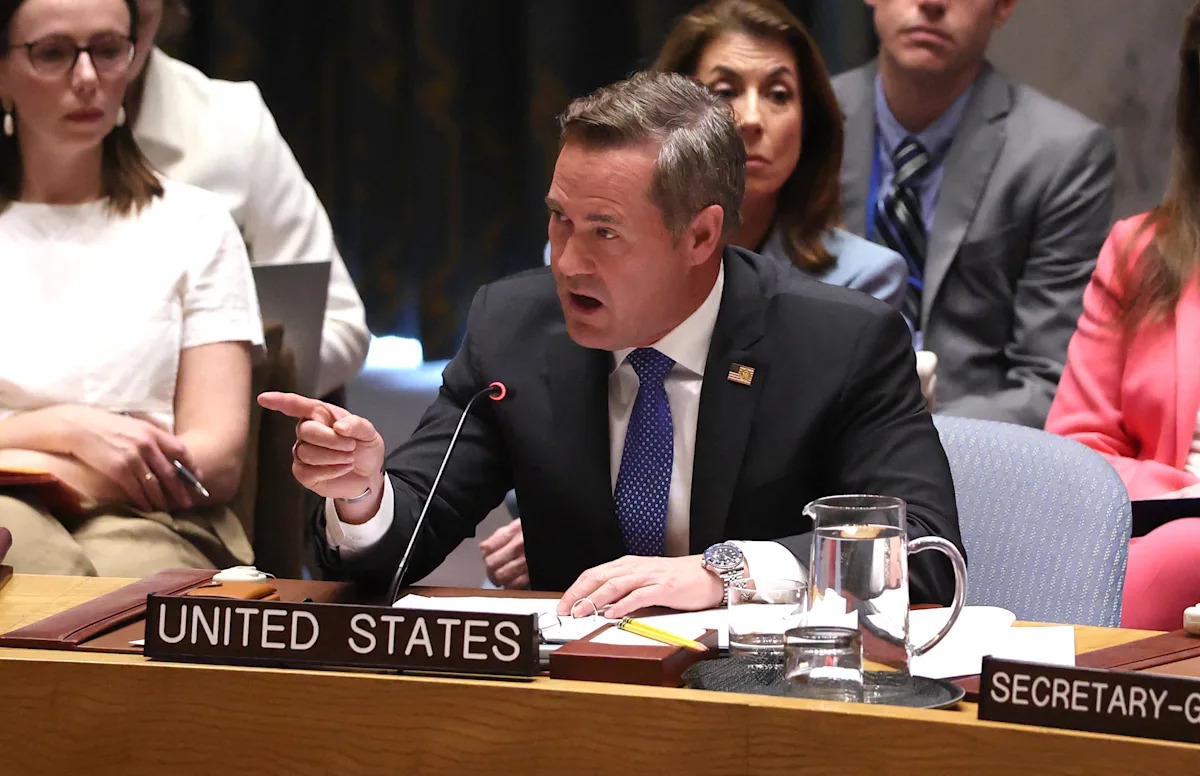
U.S. Ambassador to the United Nations Mike Waltz has articulated a significant pivot in coercive diplomacy, framing potential kinetic strikes against Iranian civilian infrastructure as a calibrated ‘escalatory ladder.’ This shift prioritizes a maximalist pressure campaign, utilizing the threat of industrial and logistical annihilation to extract immediate concessions. By positioning the destruction of power plants and transportation nodes as tactical necessities, the administration signals a departure from traditional containment in favor of strategic asset liquidation.
The Strategic Calculus of Industrial Degradation
The administration’s logic hinges on the systematic removal of Iran’s functional capacity as a bargaining chip. Waltz suggests that the degradation of Iranian air defenses has fundamentally altered the risk-reward ratio, lowering the operational cost of infrastructure-level intervention. The strategic intent is to force a binary choice upon Tehran: comprehensive diplomatic alignment or the structural dismantling of the state’s logistical foundations. This approach leverages U.S. military superiority to compress the timeline for negotiated outcomes.
The Dual-Use Doctrine and Legal Redefinition
Central to this policy is the reclassification of civilian infrastructure under the ‘dual-use’ doctrine. By asserting that power grids and bridges provide essential military utility, Waltz effectively removes these targets from the category of protected civilian objects under international law. This legal positioning is a preemptive measure to insulate the administration from allegations of war crimes, attempting to establish a new precedent for modern asymmetric conflict where the distinction between state leadership and national infrastructure is purposefully blurred.
Domestic Polarization and the Foreign Policy Mandate
The internal American political landscape reveals a stark divergence in the ethics of engagement. Recent data indicates a robust mandate for infrastructure strikes within the Republican base, viewing such measures as a necessary response to diplomatic failure. Conversely, widespread opposition among Democrats and independents reflects a collapse of the bipartisan consensus on international law. This domestic friction underscores a broader shift in the American electorate’s tolerance for high-stakes military ultimatums as primary tools of statecraft.
Institutional Atrophy at the United Nations
Waltz’s defense of unilateral kinetic threats represents a departure from the traditional role of a U.N. Ambassador, which is historically rooted in multilateralism and collective security. By prioritizing national strategic objectives over established global norms, the U.S. position risks eroding the perceived authority of the United Nations. This institutional friction forces member states to recalibrate their security postures in an environment where the protection of civilian life and property is increasingly secondary to strategic leverage.
Operational Risks and the Wednesday Deadline
The operational reality of targeting a nation’s energy security would trigger immediate systemic collapse, with unpredictable consequences for regional stability and global markets. The timing of these threats is explicitly tethered to the upcoming in-person talks in Pakistan and a looming Wednesday deadline. The use of high-visibility social media ultimatums is designed to maximize psychological pressure, yet it simultaneously creates a path-dependency. Failure to achieve a breakthrough or execute the threat could result in a significant loss of U.S. credibility, potentially forcing an escalation to maintain the integrity of the ‘escalatory ladder.’
Conclusion: The New Frontier of Coercive Diplomacy
The doctrine articulated by Mike Waltz institutionalizes the threat of total functional destruction as a legitimate tool of diplomacy. As the Wednesday deadline approaches, the international community remains focused on whether this gamble will facilitate a breakthrough in Pakistan or catalyze a regional conflict. This shift moves beyond traditional diplomatic niceties, establishing a landscape where a nation’s physical survival is directly contingent upon its adherence to the diplomatic mandates of a superpower.