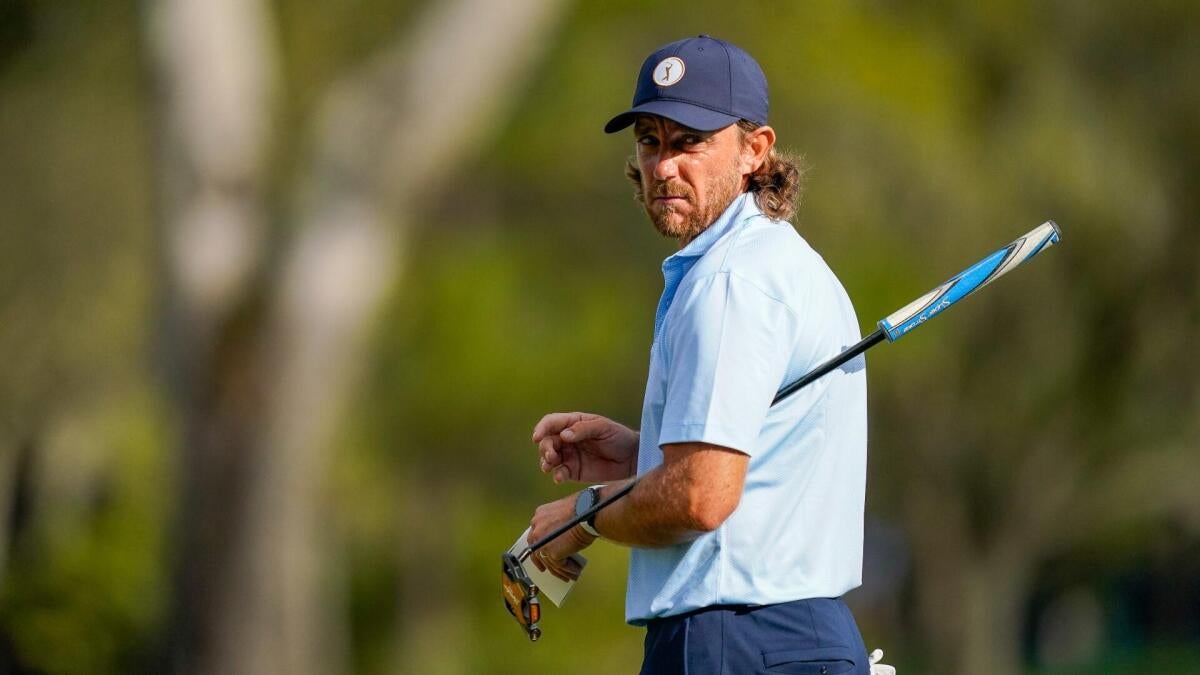
The 90th Masters at Augusta National Golf Club serves as a critical diagnostic for professional golf’s current bifurcated state, marked by a thinning competitive elite and significant shifts in institutional alignment. With a field of 91, the tournament convenes a sport grappling with structural division and industry pressures. This year’s narrative is defined not by dominance, but by an apparent opening in the competitive hierarchy, driven by the physical vulnerabilities of perennial contenders and the operational absence of top-ranked players.
The Fragility of the Competitive Tier
Augusta’s competitive landscape is shaped by the physical limitations of its most prominent figures, Rory McIlroy and Collin Morikawa. Both are entering the season’s first major managing back injuries, introducing significant volatility into their performance projections and strategic approach to the course’s demanding topography. For McIlroy, whose pursuit of the career Grand Slam remains a central storyline, these setbacks represent a substantial hurdle to maintaining the mechanical consistency required for Augusta’s specific shot-making demands.
This physical attrition among the top tier has led analysts to categorize the 2026 field as more “wide open” than in previous cycles, with estimates suggesting up to 12 golfers possess a legitimate path to the green jacket. The absence of a clear, healthy frontrunner shifts the strategic burden onto the field’s secondary tier, where health and recent competitive rhythm may outweigh historical pedigree. This environment creates a unique leverage point for players who have maintained consistent schedules and physical integrity.
World No. 1 and betting favorite Scottie Scheffler (+550) presents a different kind of operational uncertainty due to a nearly month-long competitive layoff following the birth of his son. While his statistical dominance remains the benchmark, the lack of recent tournament reps introduces “competitive rust” rarely seen in a Masters favorite. Prioritizing personal milestones over pre-major preparation tests the resilience of his form against a field of active, albeit injured, rivals.
The Attrition of the LIV Golf Contingent
A primary structural revelation of the 2026 Masters is the continued contraction of the LIV Golf League’s presence within the major championship ecosystem. Only 10 LIV members are in this year’s field, representing the smallest contingent since the league’s inception and a decline from 12 participants last year. This dwindling representation highlights the systemic challenges LIV players face in maintaining major championship eligibility as their access to traditional ranking points remains restricted.
The presence of Jon Rahm and Bryson DeChambeau (+1000 odds) provides LIV’s most credible path to a title, yet the overall reduction in numbers signals broader institutional isolation. While Carlos Ortiz and Tom McKibbin debut at the Masters, their inclusion does not offset the loss of status among other league members. This trend suggests that without formal integration or altered qualification criteria, the Saudi-backed league’s influence on golf’s most prestigious stages will continue to erode.
The failure of merger negotiations between the PGA Tour and LIV Golf backers has solidified this divide, turning the Masters into a brief and increasingly rare window of unified competition. Hopes for a true merger appear to have dissipated, leaving the sport in a state of permanent fragmentation. Consequently, the 10 LIV players carry disproportionate reputational weight, as their performance at Augusta serves as the primary metric for the circuit’s competitive relevance.
Strategic Realignment and the Return to the PGA Tour
The 2026 Masters also highlights a significant trend of strategic realignment, as prominent players migrate back toward the PGA Tour’s ecosystem. Brooks Koepka, a five-time major champion, has already returned, while 2018 Masters winner Patrick Reed has announced plans to do so this fall. These moves suggest a shift in the perceived long-term value of the Saudi-financed league versus the historical and institutional stability of the traditional tour.
Reed’s return is particularly noteworthy given his consistent performance at Augusta National, with five top-10 finishes since 2018. His perspective that the event is “more special” when playing against the full breadth of the world’s best golfers reflects a growing sentiment regarding the limitations of the fractured schedule. For players like Reed and Koepka, returning to the PGA Tour is a strategic decision likely aimed at securing long-term major championship access and restoring their positions within the sport’s primary commercial and competitive framework.
Koepka’s current standing as a +4500 longshot illustrates the volatility of his recent form, despite his historical major championship success. Having missed the cut in three of the last five years at Augusta, his status as a “major specialist” is under scrutiny. His recent performance, including a missed cut at the Houston Open, suggests his transition back to the PGA Tour has yet to yield the consistent results that previously defined his career during his peak major-winning years.
The End of the Woods-Mickelson Era
For the first time since 1994, the Masters field will include neither Tiger Woods nor Phil Mickelson, marking a profound institutional and cultural shift for Augusta National. Mickelson’s absence, attributed to a “personal health matter,” and Woods’ continued exclusion due to ongoing physical limitations, removes the two most significant commercial and historical anchors of the modern era. This vacancy leaves a vacuum in the tournament’s narrative gravity, forcing the event to rely on a new generation of stars to maintain its global viewership and market relevance.
The absence of these two icons also impacts the tournament’s operational atmosphere, as they have historically been primary drivers of gallery movement and media attention. Without their presence, the focus shifts entirely to the current competitive struggle between the PGA Tour’s established stars and the remaining LIV challengers. This transition marks the definitive end of a thirty-year era and necessitates a recalibration of how the tournament is marketed and consumed globally.
This generational turnover is further emphasized by the reliance on predictive modeling to identify new contenders. The SportsLine model, which has simulated the event 10,000 times, points toward a field where traditional favorites may be supplanted by “sleeper” candidates. The model’s success in predicting 16 previous majors lends weight to the idea that the 2026 Masters will be defined by a departure from established patterns, favoring those who can capitalize on current instability at the top of the world rankings.
Financial and Market Implications of the Odds Board
The betting market for the 2026 Masters reflects the broader uncertainty and strategic shifts within the sport. Scottie Scheffler’s position as the +550 favorite, despite his hiatus, indicates the market still views his fundamental skill set as significantly superior. However, the relatively tight odds for Rahm and DeChambeau at +1000 suggest the market anticipates high performance from top LIV representatives, despite their league’s dwindling numbers.
The +4500 valuation for Brooks Koepka is a telling indicator of shifting performance expectations. This longshot status for a five-time major winner suggests a significant loss of confidence in his ability to navigate Augusta’s specific challenges following recent struggles and missed cuts. It also highlights the market’s pivot toward players with more consistent recent form and fewer physical or operational question marks.
Furthermore, the presence of 10 to 12 potential winners, as noted by analysts, suggests a dilution of the “superstar” leverage typically dominating major championships. This parity promises a more competitive and unpredictable Sunday but lacks the singular, dominant narrative that typically drives peak engagement. The financial stakes for players are equally high, as a win at the 90th Masters carries immense weight in the ongoing battle for legacy and marketability in a divided sport.
Institutional Consequences and the Path Forward
The 90th Masters serves as a stark reminder of the institutional consequences of the PGA-LIV divide. The fact that the golf world is only “back together briefly once again” underscores the lack of a sustainable resolution to the sport’s governance crisis. The dwindling number of LIV players with major status suggests current qualification systems are effectively filtering those who chose the alternative circuit from the sport’s most prestigious stages.
This filtering effect has long-term implications for the Masters’ prestige. If the tournament continues to see a reduction in the “world’s best” golfers due to circuit affiliation, its claim as the ultimate arbiter of golfing excellence could be challenged. However, for the 2026 edition, the inclusion of 91 top players maintains the event’s status as the premier competitive benchmark, even as the sport’s underlying structures continue to fracture.
Ultimately, the 2026 Masters will be remembered as a tournament of transition. The physical toll on the elite, the strategic migration of key players, and the absence of historical icons converge to create a uniquely volatile competition. Whether this volatility results in a breakthrough for a new star or a defiant performance from an embattled veteran, the outcome will provide a definitive statement on the current balance of power in professional golf.