
The adjournment of the 2026 Idaho legislative session, finalized via the procedural mandate of sine die, represents a definitive pivot in the state’s fiscal governance. Over an 82-day period, lawmakers transitioned from the expansive tax-reduction frameworks of the previous biennium to a regime of aggressive budgetary consolidation and institutional contraction.
This session was largely dictated by the fallout of a significant revenue downturn following 2025’s $450 million tax cut package. The resulting fiscal environment necessitated a move from surplus optimization to a rigorous defense of the state’s credit position and liquidity through targeted departmental reductions.
The Calculus of Austerity: Tiered Fiscal Contraction
Early executive intervention by Governor Brad Little, which mandated a 3% spending reduction, served as the baseline for even more restrictive legislative maneuvers. The Joint Finance and Appropriations Committee (JFAC) exercised institutional hawkishness by compounding these cuts with an additional 1% reduction for the current fiscal cycle.
The cumulative 5% reduction for various state entities signifies a strategic decision to insulate the Budget Stabilization Fund against macroeconomic volatility. This tiered contraction indicates a prioritized hierarchy of state functions, where administrative overhead was liquidated to sustain core operational competencies amid shrinking revenue streams.
Strategic Reallocation: Prioritizing Carceral and Enforcement Infrastructure
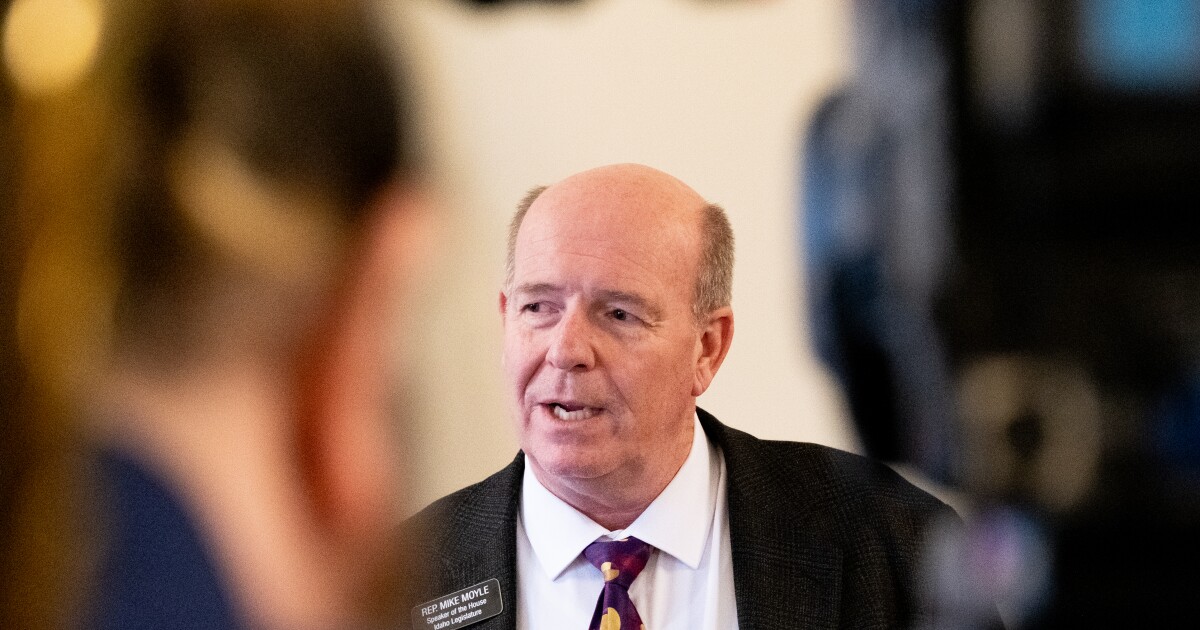
Despite the prevailing climate of austerity, the Republican leadership utilized the budgetary process to address critical institutional liabilities. House Speaker Mike Moyle spearheaded the redirection of scarce capital toward prison capacity and the retention of Idaho State Police (ISP) personnel, framing these as non-discretionary stabilizers for state growth.
The decision to augment ISP funding during a general contraction reflects a strategic focus on public safety as a prerequisite for economic stability. Furthermore, the allocation of resources for wildfire mitigation and prison overcrowding represents a pragmatic effort to preempt escalating environmental and legal liabilities that could destabilize the general fund in future cycles.
Hyper-Legislative Velocity and Administrative Bottlenecks
The 2026 session generated an unprecedented 1,018 pieces of legislation, surpassing the 2025 record of 954. This high-velocity output within an 82-day window suggests a shift toward rapid-fire policy implementation, potentially compressing the window for legal vetting and stakeholder deliberation.
As this legislative surge moves to the Governor’s desk, the executive branch faces a condensed timeline for regulatory impact analysis. The sheer volume of proposals necessitates a sophisticated level of institutional review to ensure that new mandates do not inadvertently exacerbate the session’s primary objective of fiscal consolidation.
Ideological Schisms and the Sustainability Narrative
The session’s conclusion has intensified the rhetorical divide regarding Idaho’s long-term fiscal health. Democrats, led by Senator Melissa Wintrow, have characterized the current budget shortfall as a predictable consequence of aggressive tax erosion, arguing that the 5% cuts are a symptom of a narrowed revenue base rather than prudent management.
Conversely, the Republican majority maintains that the redirection of funds constitutes a successful realignment of state priorities. This divergence highlights a fundamental disagreement over whether tax cuts remain a primary driver of economic competitiveness or a threat to the state’s institutional foundation.
Medicaid and the Risk Management of Social Mandates
The focus on Medicaid reductions remains one of the most volatile components of the 2026 fiscal strategy. As a dominant expenditure, Medicaid was targeted to reconcile the budget without further impacting general fund agencies. However, this strategic contraction carries long-term implications for rural healthcare networks and the broader insurance market, making the state’s social mandates increasingly contingent on the volatility of tax revenue.

Photo by jdblack on Pixabay.