Institutional Governance and Executive Recalibration
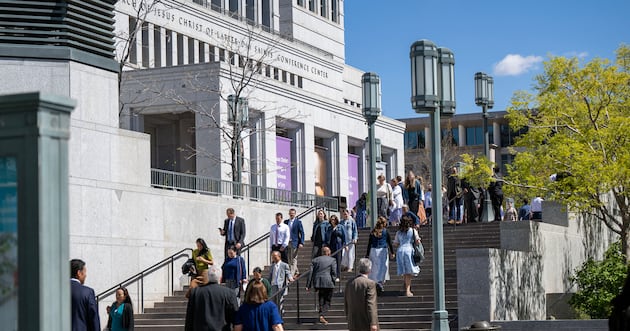
The 196th Annual General Conference of The Church of Jesus Christ of Latter-day Saints represents a calculated pivot in the institution’s global administrative trajectory. The sustaining of a new Primary General Presidency and eight General Authority Seventies signals an intentional recalibration of leadership to manage the complexities of an increasingly decentralized, international membership. This transition, presented by President D. Todd Christofferson, reinforces the Church’s reliance on structured succession to maintain institutional equilibrium during a period of demographic expansion.
The Strategic Professionalization of Auxiliary Leadership
The appointment of Rosemary K. Chibota as Primary General President underscores a preference for professionalized management within the Church’s auxiliary branches. Chibota, a 58-year-old human resources expert with a master’s in management and leadership, brings a distinct corporate skill set to a role historically viewed through an ecclesiastical lens. Her tenure as a senior executive assistant in the Quorum of the Seventy office suggests a strategic move to promote leaders with deep internal operational knowledge, bridging the gap between spiritual instruction and bureaucratic efficiency.
Geopolitical Integration and the Global South
Elevating a leader of Malawian and Zimbabwean heritage to a general presidency carries significant weight for the Church’s positioning in the Global South. As growth in traditional Western corridors stabilizes, the institution’s long-term vitality relies on its capacity to empower leaders from emerging African and Latin American markets. Chibota’s appointment, supported by counselors Nina M. Garfield and Theresa A. Collins, serves as a visible affirmation of the Church’s global identity, enhancing cultural legitimacy in regions where religious competition is high.
Common Consent as an Organizational Social Contract
The practice of ‘common consent’ was framed by Elder Patrick Kearon not as a perfunctory ritual, but as a ‘voluntary personal commitment.’ In an era of organizational skepticism, this framing transforms top-down appointments into a bottom-up act of communal endorsement. By inviting the global congregation to publically sustain leadership, the Church leverages social capital to reinforce hierarchy and mitigate internal dissent, turning the act of raising one’s hand into a public pledge of institutional loyalty.
Administrative Expansion and Regional Oversight
The addition of eight General Authority Seventies reflects the necessity of expanding the Church’s middle-management layer. These authorities serve as the essential interface between Salt Lake City headquarters and local stakes, managing the direct implementation of strategic directives. This expansion is critical for maintaining doctrinal uniformity across disparate legal and financial landscapes, ensuring that the ‘remarkable progress’ cited by President Dallin H. Oaks is supported by a robust and scalable supervisory framework.