Dual Dominance: How UConn-South Carolina Rivalry Redefines Women’s College Basketball Power
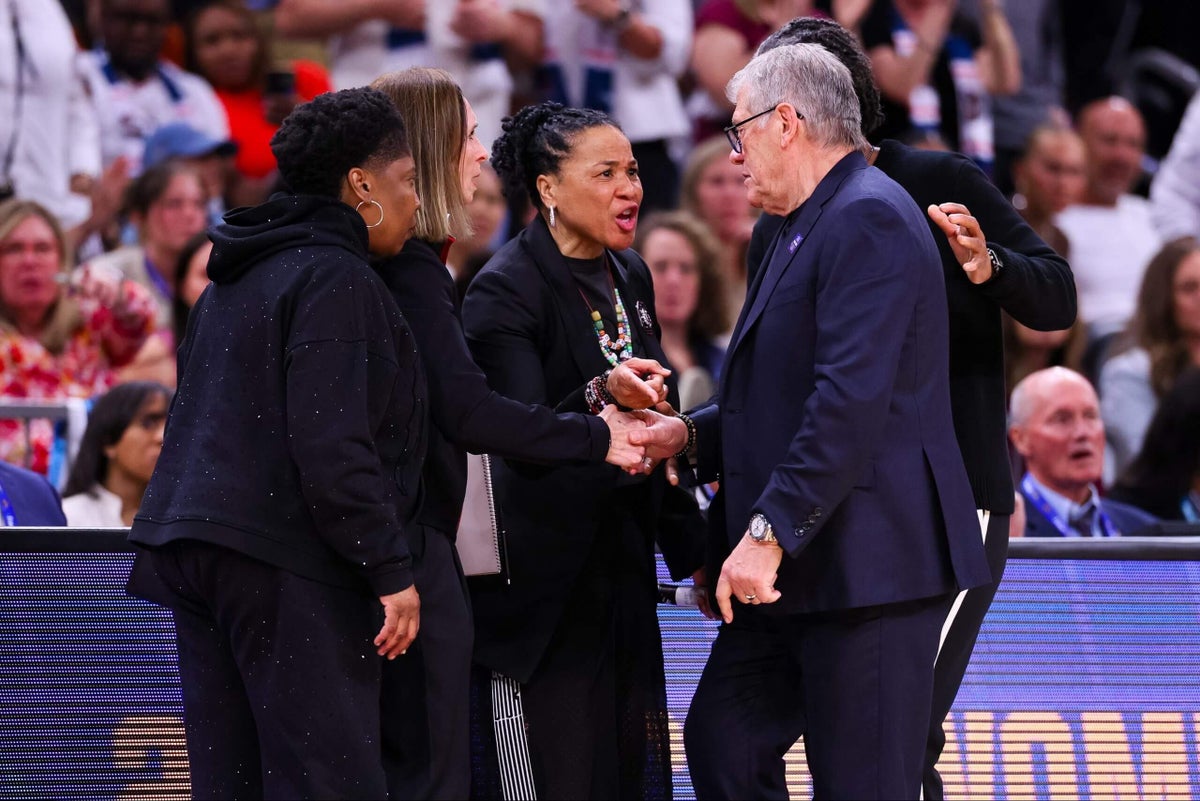
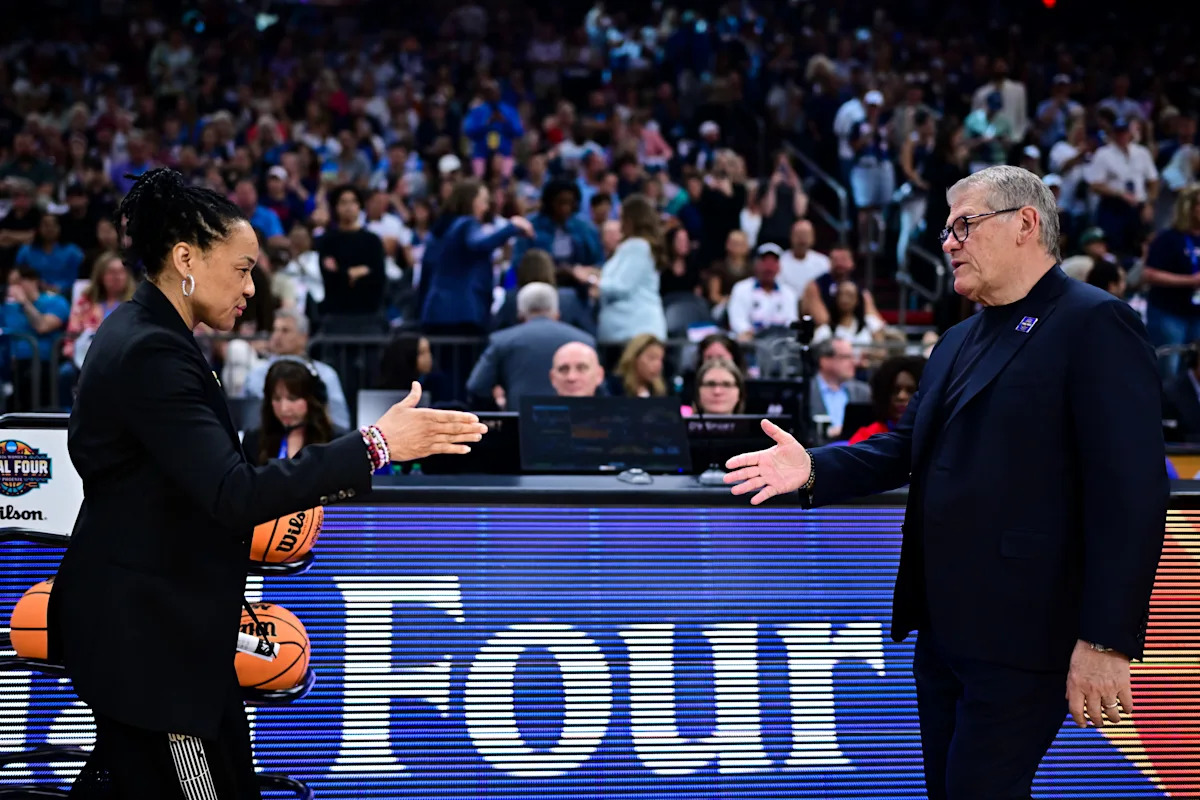
A recent high-profile confrontation between UConn coach Geno Auriemma and South Carolina coach Dawn Staley, following a national semifinal game, served as a stark public manifestation of a profound, ongoing recalibration within women’s college basketball. Auriemma’s subsequent university-issued apology, acknowledging an “emotional outburst” and an “uncalled for” reaction after UConn’s 62-48 loss to South Carolina, underscored the intense personal stakes at the sport’s highest echelons.
Initially framed as a procedural dispute over a pre-game handshake, the incident quickly transcended its superficial cause. It symbolized deeper, long-simmering tensions rooted in a fundamental shift from a singular, dominant entity to a more complex, multi-polar power structure, challenging established hierarchies.
This public exchange, far from an isolated event, highlighted the escalating competitive pressures at the pinnacle of collegiate athletics and the evolving dynamics of influence that now define success, moving beyond decades of unipolar dominance.
Erosion of Unilateral Hegemony
For nearly four decades, Geno Auriemma’s UConn program established the undisputed benchmark for excellence, dictating the sport’s terms of engagement. This sustained period of success forged a singular center of power, profoundly influencing recruitment narratives, media perception, and the strategic development of women’s college basketball globally.
This historical context of unparalleled performance is crucial for understanding the intensity of the recent interaction. It represents a direct challenge to a long-held, almost unchallenged, competitive supremacy, which had cultivated an institutional expectation of perpetual national prominence.
The ascendancy of Dawn Staley’s South Carolina program directly contests this established order. Its pursuit of a third championship in five years signals a robust and sustained competitive threat, effectively establishing a parallel axis of power within the sport. This transition transforms the competitive ecosystem from a unipolar system into one characterized by dual, highly successful hegemons.
Such a tectonic shift necessitates a comprehensive re-evaluation of strategic approaches across the entire collegiate women’s basketball landscape. The pathway to national prominence now demands navigating not just one, but multiple formidable forces, fostering a more dynamic and unpredictable environment.
Strategic Implications for Program Management and Recruitment
The documented shift in the sport’s “standard” from UConn to South Carolina carries significant strategic implications for program management, particularly in recruitment and talent acquisition. UConn’s historical success traditionally served as an unrivaled magnet for elite prospective student-athletes, promising a clear path to national championships and professional careers.
As South Carolina solidifies its position as a “fresh standard-bearer,” it intensely competes for this identical pool of top-tier talent. This intensifies recruitment battles, compelling both established and aspiring elite programs to refine their value propositions beyond mere historical accolades, emphasizing innovative coaching philosophies, bespoke player development pathways, and comprehensive institutional support.
For UConn, sustaining its competitive edge amidst this new paradigm requires strategic recalibration. This might involve pioneering advanced coaching methodologies, enhancing the holistic player experience, or innovating player brand development to differentiate itself. The challenge extends beyond winning games; it’s about maintaining the perception of being the ultimate destination for aspiring athletes, even as another program achieves comparable, or even superior, contemporary success.
Conversely, South Carolina’s ascendance provides a compelling, contemporary recruitment narrative. Showcasing recent, tangible success and a dynamic coaching style, the program effectively leverages its current momentum. This attracts athletes motivated by contributing to a burgeoning legacy rather than integrating into an established one, a distinct and powerful appeal.
The broader impact reverberates across other high-major programs, which must now contend with two exceptionally strong and well-resourced recruiting powerhouses. This necessitates a more creative, data-driven, and targeted approach to talent identification and development, potentially fostering geographically diverse recruitment strategies or a greater emphasis on player-system fit.
Operational and Financial Ramifications of Dual Hegemony
The emergence of multiple dominant programs, epitomized by the UConn-South Carolina dynamic, generates tangible operational and financial ramifications throughout the sport. Increased competitive intensity at the top tier invariably translates into heightened media interest, significantly boosting viewership figures for both regular-season matchups and marquee postseason tournaments.
Elevated viewership directly augments the value of media rights, a critical revenue stream for collegiate sports. A compelling narrative of intense rivalry between two powerhouses, rather than a single, predictable victor, cultivates a far more engaging product for broadcasters and advertisers. This competitive equilibrium can lead to more lucrative media deals for the NCAA and its member institutions, reflecting increased market demand.
Operationally, both UConn and South Carolina face escalating demands on their resources. This includes increased travel budgets, continuous facilities upgrades, and heightened investment in coaching staff, support personnel, and player welfare. The imperative to continually invest in program enhancements intensifies when confronted by an equally formidable and resourced competitor.
Furthermore, the shift in perceived “standard-bearer” directly influences donor engagement and alumni contributions. Programs consistently contending for national championships typically attract greater financial support. South Carolina’s emergence as a consistent contender diversifies the philanthropic landscape within women’s basketball, potentially reallocating or expanding capital investment across successful programs.
This competitive shift also profoundly impacts the broader market for coaching talent. The sustained success of coaches like Dawn Staley elevates their market value, potentially driving up salaries and creating a more competitive environment for securing and retaining top coaching personnel across collegiate ranks. This reflects a maturation and professionalization of career opportunities within the sport.
Media Narratives and Institutional Identity in a Bipolar Landscape
The media’s framing of this evolving competitive landscape plays a pivotal role in shaping public perception and institutional identity. The narrative has explicitly shifted from celebrating a singular dynasty to acknowledging the existence of “two dynasties”—one that “endures” and another that “surges.”
This dual-dynasty narrative generates substantially heightened interest, providing a more complex, nuanced, and engaging story for sports journalists and fans. It transcends simple win-loss records, delving into profound themes of legacy, challenge, coaching evolution, and identity, thereby enriching the overall media product and cultural discourse.
For institutions like UConn, adapting to this new media paradigm involves a strategic management of expectations and a redefinition of success within a multi-polar environment. The institutional identity, long synonymous with unchallenged supremacy, must now embrace a role within a more competitive, yet equally prestigious, landscape, focusing on sustained excellence rather than absolute dominance.
Conversely, South Carolina significantly benefits from a media narrative that underscores its ascendance and innovative, often groundbreaking, approach. This reinforces its institutional identity as a rising power, attracting new fan bases and solidifying its position among the sport’s elite—a status earned through consistent on-court performance, strategic program building, and distinctive leadership.
The public confrontation itself, while regrettable, inadvertently amplified this narrative of intense rivalry. By drawing attention to the personal stakes and competitive fire driving these programs, such moments, though controversial, often serve to heighten the drama and appeal of collegiate sports, significantly contributing to broader cultural relevance and spectator engagement.
Evolution of Coaching and Leadership Paradigms
The dynamic between Auriemma and Staley also reflects a deeper evolution in coaching and leadership paradigms within elite college sports. Auriemma’s decades of dominance established a particular model of authority and control, wherein his program frequently set the strategic and cultural agenda for the entire sport.
Staley’s success, in building a program into a “fresh standard-bearer” distinctly “in her own likeness,” represents an alternative, equally effective leadership style. This fundamentally demonstrates that multiple, diverse paths lead to sustained excellence, thereby challenging any monolithic view of how to achieve and maintain competitive advantage in collegiate athletics.
The incident, and Auriemma’s subsequent apology, can be analytically interpreted within the context of managing a monumental, long-standing legacy amidst significant competitive disruption. It starkly highlights the immense psychological and emotional pressures on coaches who have achieved unprecedented success and are now confronted by formidable, peer-level challengers.
This evolving representation of leadership can also inspire a new generation of coaches and administrators, offering diverse and contemporary role models for success. The existence of multiple “centers of power” suggests a more distributed model of influence, potentially fostering greater innovation, strategic diversity, and broader accessibility within the sport.
Ultimately, the confrontation served as a public, albeit contentious, acknowledgment of a fundamental, irreversible shift in the sport’s competitive architecture. It underscored that women’s college basketball’s highest echelons are no longer defined by a single, unchallenged authority but by a vibrant, intense rivalry between multiple, exceptionally successful programs, unequivocally signaling a transformative new era.