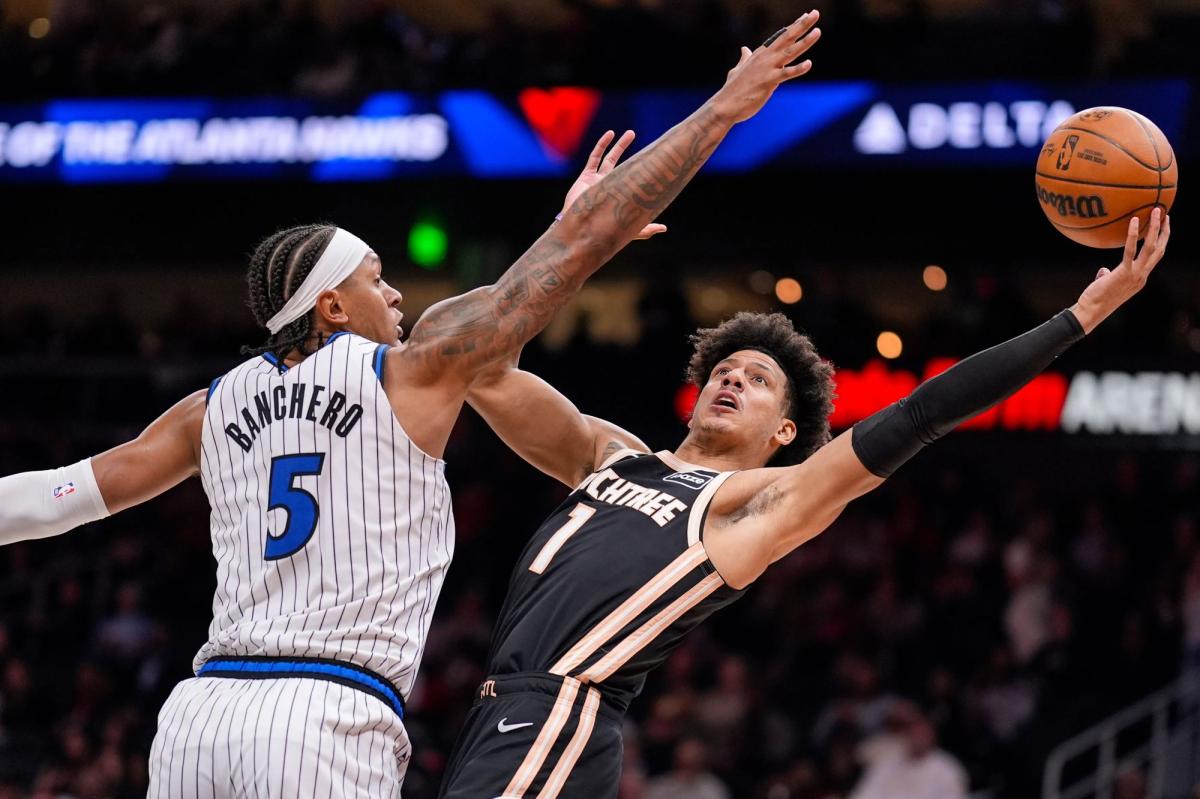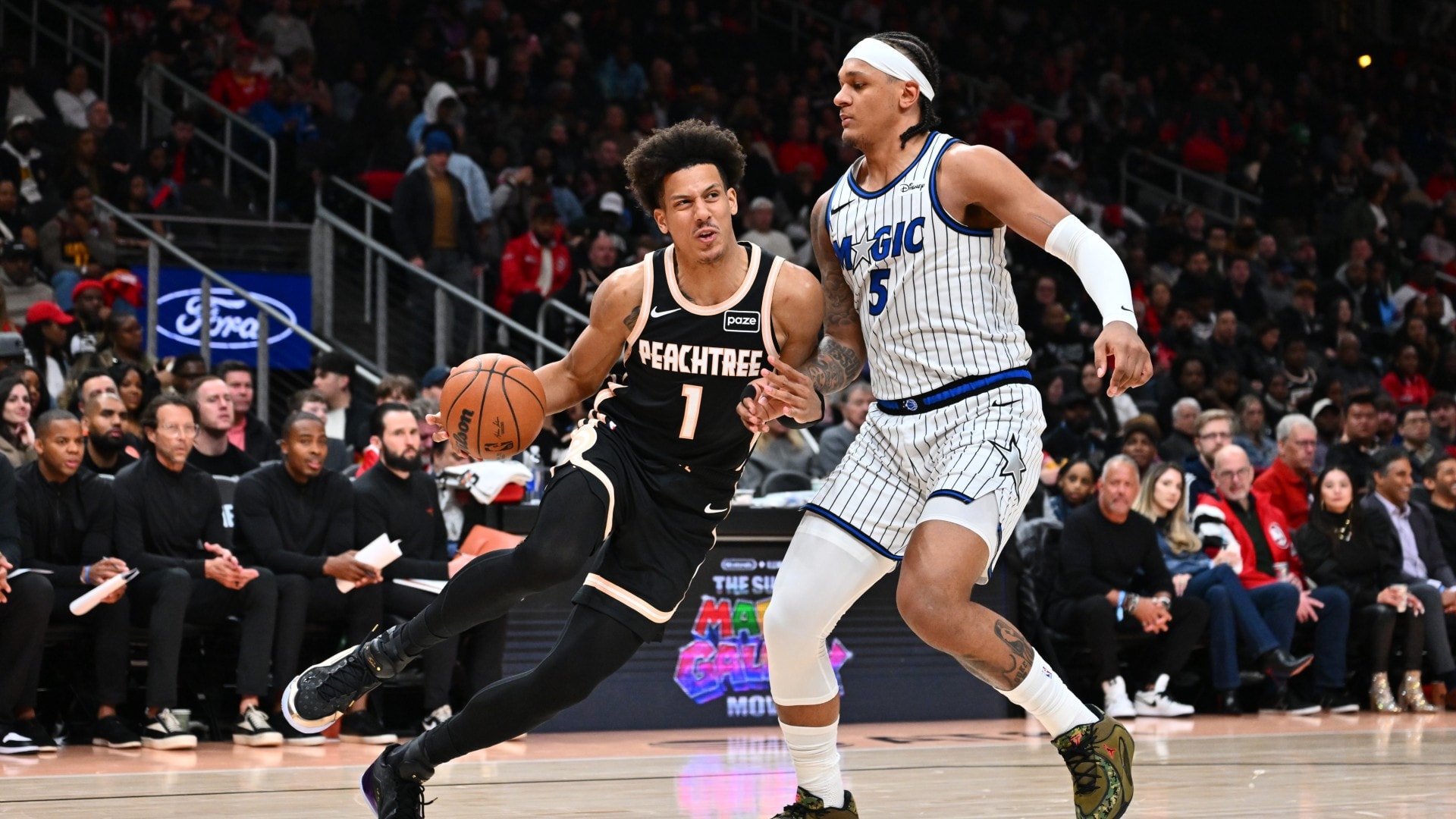
The April 1, 2026, contest between the Atlanta Hawks and Orlando Magic is a pivotal Eastern Conference matchup directly influencing playoff seeding. This game transcends regular-season importance, representing a critical juncture that could shape final standings and postseason trajectories.
Intensifying Eastern Conference Playoff Race
Atlanta, currently occupying the No. 5 seed, seeks to build on recent success, including a prior victory over Orlando. However, this win followed a seven-game winning streak by the Magic, indicating Orlando’s performance volatility. The Hawks’ upward movement suggests sustained strategic execution, while the Magic’s subsequent 2-6 record post-Atlanta loss highlights potential vulnerabilities, possibly linked to key player absences.
The competitive balance is further strained by Orlando’s proximity to the Heat, Sixers, and Hornets in the Play-In Tournament standings. This close grouping underscores the high-stakes nature of each game, where a single loss can significantly alter playoff positioning and the path to the main tournament bracket.
Franz Wagner’s Return: Strategic Impact and Integration Challenges
The anticipated return of Franz Wagner, following a lengthy absence due to a high ankle sprain and recovery complications, presents a complex strategic development for the Magic. While his presence is expected to bolster team cohesion and offensive output, a minute restriction suggests a cautious reintegration strategy, prioritizing long-term health and sustained performance over immediate full impact.
Wagner’s absence shifted offensive responsibilities to Paolo Banchero and Desmond Bane. His return necessitates adjustments in offensive schemes and player roles. Orlando’s coaching staff faces the challenge of seamlessly integrating Wagner into the rotation without disrupting existing offensive flow, while managing his physical load to prevent re-injury.
Performance Metrics and Tactical Battlegrounds
Pre-game statistics indicate comparable paces (Orlando 100.1, Atlanta 102.5) and nearly identical offensive ratings (Orlando 114.8, Atlanta 114.2), suggesting a potentially high-scoring game. Atlanta holds a slight edge in defensive rating (114.0 vs. Orlando’s 113.0), though Orlando’s defense has shown recent fluctuations.
Orlando’s defensive inconsistencies have resurfaced against stronger opponents, contrasting with their post-All-Star break defensive surge, which was partly attributed to a softer schedule. This suggests that while the team possesses structural defensive capabilities, consistent execution remains a critical factor against elite offenses like the Hawks.
Atlanta’s offensive efficiency is further evidenced by their 55.2% effective field goal percentage (eFG%) compared to Orlando’s 53.0%. Orlando holds a slight advantage in offensive rebounding percentage (O.Reb.%) at 30.4% to Atlanta’s 28.8%, potentially offering second-chance opportunities. Turnover percentages (TO%) are nearly even (Orlando 13.8%, Atlanta 13.7%), indicating disciplined ball-handling from both sides.
The free throw rate (FTR) significantly favors Atlanta (30.7%) over Orlando (23.4%). This disparity highlights the Hawks’ effectiveness in drawing fouls, a critical element in close contests and a potential area where Orlando’s defense may struggle against Atlanta’s penetration.
Betting Markets and Predictive Indicators
Oddsmakers at bet365 project the Hawks as three-point favorites with an Over/Under set at 234. This narrow spread suggests a highly competitive game, with the market anticipating a close outcome and a high-scoring affair, consistent with the teams’ offensive ratings.
The previous encounter on March 16, where Atlanta secured a 124-112 victory driven by Nickeil Alexander-Walker’s career-high 41 points, provides recent context. Despite this margin, the current three-point spread indicates a market shift, possibly factoring in Wagner’s impending return or other team dynamics not fully reflected in the prior game’s result.
Broadcast and Accessibility Landscape
The game will be available via FanDuel Sports Network Florida/Southeast regionally and NBA League Pass internationally. Streaming options through FUBO TV and local/satellite radio broadcasts ensure broad accessibility for diverse fan bases.
This multi-platform availability strategy aims to maximize viewership for critical matchups, catering to regional followers and global fans invested in the playoff narrative.
Season Series Dynamics and Historical Performance
The season series between the Hawks and Magic has been tightly contested, with Atlanta holding a narrow advantage. Previous results include an Oct. 24 win for the Hawks (111-107 in Orlando) and a Nov. 4 victory in Atlanta (scoreline not fully specified, but Hawks won). The March 16 game saw Atlanta win 124-112 in Atlanta.
These historical outcomes suggest competitive games, with Atlanta often prevailing, especially at home. Orlando’s ability to keep games close, even in defeat, indicates underlying competitive strength that could be amplified with a healthier roster.
Strategic Implications for Playoff Aspirations
For the Hawks, a victory solidifies their position as a top Eastern Conference team, potentially improving seeding for a more favorable first-round playoff matchup. Their recent performance and Alexander-Walker’s offensive surge demonstrate their capacity for high-stakes wins and reliance on individual brilliance.
For the Magic, this game is crucial for halting their recent slide and re-establishing themselves as legitimate playoff contenders. A win could provide vital momentum and confidence as Wagner reintegrates, potentially shifting their trajectory from a Play-In participant to a more secure playoff seed.
Coaching strategies regarding player rotations, defensive schemes, and offensive execution will be under intense scrutiny. Adaptability and effective utilization of player strengths will be paramount in determining the outcome of this pivotal clash.
Market Sentiment and Capital Flow
Betting odds reflect a market anticipating a close contest, with the three-point spread indicating marginal favorability for the Hawks. This sentiment is shaped by recent trends, head-to-head history, and player availability impacts. Significant odd shifts would signal evolving market perceptions, potentially driven by late-breaking news.
Ticket prices on StubHub, ranging from $18 to over $261, signify strong demand, reflecting the matchup’s importance and its appeal to both local and traveling fan bases. High ticket demand often correlates with perceived game significance and potential for exciting on-court action.
Stakeholder Impact and Performance Leverage
For players, the game offers a stage to significantly impact their team’s playoff aspirations and individual metrics. For coaches, it’s a test of strategic acumen and in-game management. For executives, the outcome influences season performance evaluations and future strategic planning.
Fans are invested in the outcome for its direct impact on playoff journeys and the entertainment value of a high-stakes contest. Media coverage will focus on playoff races, key player performances, and tactical battles, amplifying the game’s significance.
Downstream Effects on League Positioning
A Hawks victory could solidify their top-five standing, potentially avoiding the Play-In Tournament and securing home-court advantage in the first round. Conversely, a loss could drop them into a more precarious seeding position, increasing the likelihood of a Play-In appearance or a tougher opening-round matchup.
For the Magic, a win is a crucial step toward climbing out of Play-In congestion and securing a direct playoff spot. A loss would intensify their Play-In battle, potentially leading to a more challenging postseason path against stronger opponents in single-elimination scenarios.
The strategic implications extend beyond this game, influencing how teams approach the remainder of the regular season. Teams fighting for playoff positioning will adjust strategies, potentially resting key players or prioritizing certain matchups to optimize their postseason chances.
Competitive Landscape and Strategic Adaptation
The return of Franz Wagner, even with limitations, forces the Hawks to prepare for a more complete Magic lineup. This necessitates defensive assignment adjustments and scouting report updates, as Wagner’s offensive versatility can stress opposing defenses. The Magic must maximize Wagner’s impact within his minute restriction and integrate him seamlessly.
The performance of key role players, like Nickeil Alexander-Walker for the Hawks, will be critical. His ability to replicate his previous offensive output against Orlando could be a significant factor. For the Magic, sustained strong play from Paolo Banchero and Desmond Bane will be essential during Wagner’s reintegration.
The tactical battle between coaches will be defining. Atlanta’s coach will aim to exploit Orlando’s defensive inconsistencies and leverage their higher free-throw rate. Orlando’s coach will seek to control pace, capitalize on offensive rebounds, and minimize turnovers. The effectiveness of these strategies will determine which team gains an advantage in the playoff seeding race.
Market Dynamics and Fan Engagement Analysis
The robust ticket market on StubHub indicates high fan interest driven by competitive stakes and the potential for exciting basketball. This demand reflects the league’s ability to generate anticipation for critical regular-season games.
Comprehensive broadcast and streaming options ensure broad accessibility, allowing a diverse audience to follow playoff narratives and key player performances.
Performance Leverage and Future Outlook Assessment
The game outcome provides significant performance leverage for the winning team, boosting morale and confidence for the season’s final stretch. For the losing team, it signifies a missed opportunity, potentially necessitating strategic recalibrations.
Strategic decisions made in this game will have downstream effects on how teams approach subsequent matchups. Adaptability and execution under pressure in high-stakes games are key indicators of postseason readiness.
Institutional Significance and Competitive Positioning Evaluation
From an institutional perspective, the game highlights the competitive parity within the Eastern Conference. The performance of both teams in crucial matchups directly impacts their organizational standing and long-term talent attraction.
The league office and team management will monitor these dynamics, as they influence fan engagement, broadcast rights, and overall league interest. Consistent performance in critical games enhances the NBA season’s narrative and excitement.
Capital Allocation and Performance Incentives
Financial implications of playoff success are substantial, influencing revenue from tickets, merchandise, and broadcasts. Teams securing higher playoff seeds often benefit from extended postseason runs, generating greater economic returns, incentivizing both Hawks and Magic to win.
Player contracts and future salary cap allocations can be indirectly influenced by team performance. Consistent playoff appearances enhance a franchise’s attractiveness to free agents and justify capital investment in player development.
Media Narrative and Public Perception Analysis
The media narrative will focus on playoff implications, Wagner’s return impact, and key player performances. The outcome will shape public perception of each team’s playoff potential and league standing.
Analysis of pre-game statistics, betting odds, and historical performance provides a framework for understanding strategic considerations and competitive pressures, allowing for deeper appreciation of influencing factors and broader implications for both franchises.