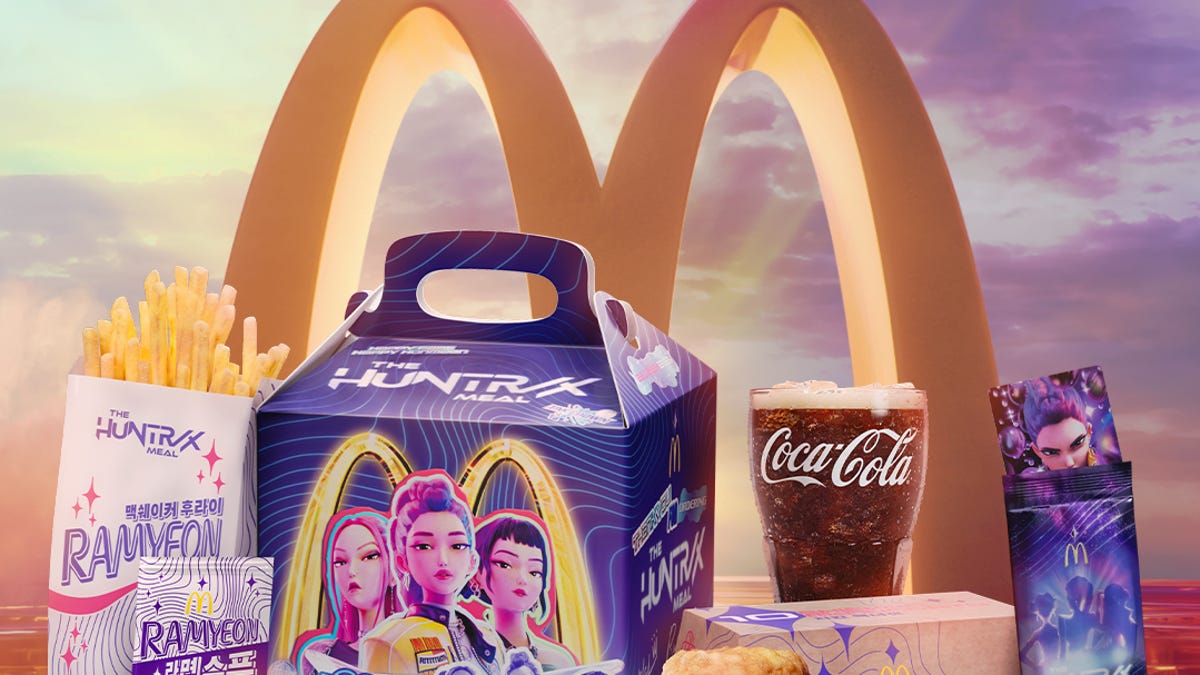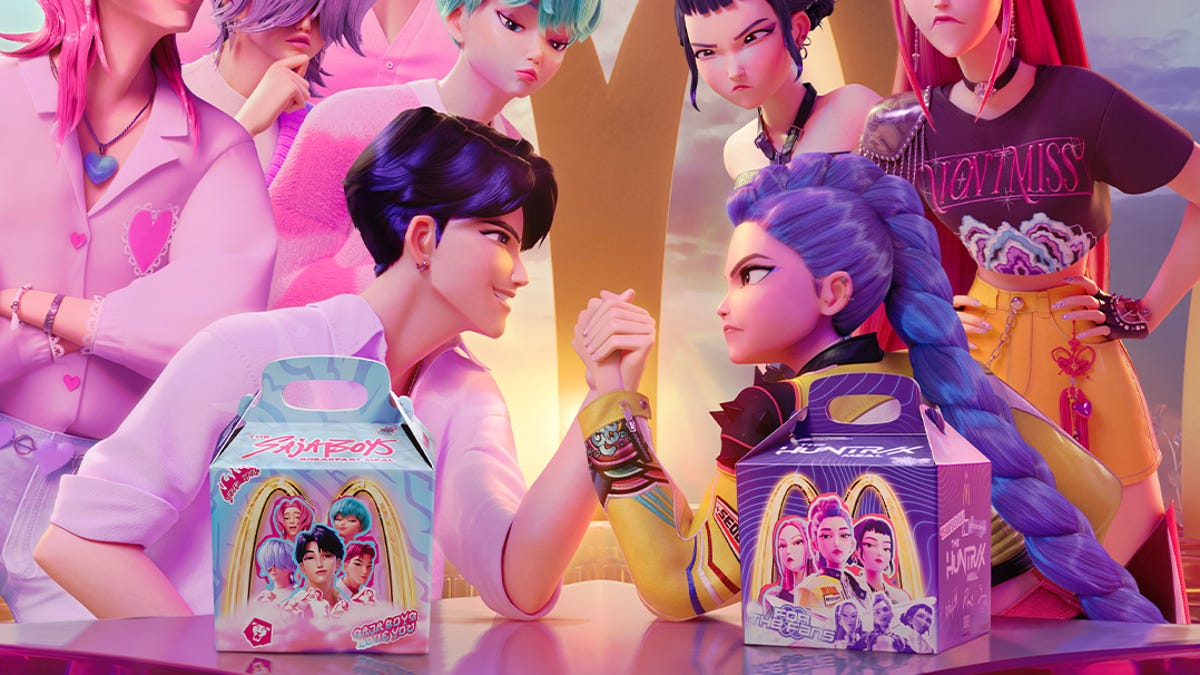
The March 24, 2026, alliance between McDonald’s and Netflix signals a major advancement in cross-sector Intellectual Property (IP) monetization. Centering the campaign on the Oscar-winning animation “KPop Demon Hunters,” both entities move beyond standard promotions to establish an integrated ecosystem linking physical retail, exclusive digital content, and fan-driven competition.
The introduction of the HUNTR/X and Saja Boys adult meals on March 31 is a calculated recalibration of McDonald’s marketing toward high-yield demographics. By emphasizing the “adult meal” category, the partnership capitalizes on greater purchasing power associated with established fandoms over the lower-margin children’s segment.
Central to driving repeat transactions is the “Battle for the Fans,” a gamified mechanism forcing consumer allegiance between the protagonist trio (HUNTR/X) and the antagonists (Saja Boys). This rivalry functions as a performance lever designed to enhance transactional velocity and brand loyalty through competitive participation.
Institutional Alignment and IP Lifecycle Management
For Netflix, this partnership critically supports the “KPop Demon Hunters” franchise lifecycle, sustaining momentum post-Oscar success ahead of the sequel release. Embedding the IP within the tangible retail environment of the Golden Arches provides a physical market presence that pure-play digital streaming cannot replicate.
The involvement of CMOs Alyssa Buetikofer (McDonald’s) and Marian Lee (Netflix) confirms the institutional commitment. Their coordination aims to merge massive global fandoms, creating synergy that maximizes market penetration for both the streaming giant and the Quick Service Restaurant (QSR) leader.
This collaboration highlights the strategic asset value of “cultural authenticity.” By integrating specific flavors from McDonald’s South Korean operations, the campaign deepens the immersive narrative link for domestic consumers while providing a scalable model for global menu harmonization.
Digital Ecosystem Expansion and Data Capture
The inclusion of the “Derpy the Tiger” access card and integrated QR codes enforces a sophisticated digital gatekeeping strategy, compelling traffic into the McDonald’s mobile application. This successfully converts physical foot traffic into measurable first-party digital engagement, yielding granular data on consumer behavior and preference mapping.
Exclusive in-app content acts as a high-value incentive, extending consumer engagement beyond the transaction. This digital layer is now vital for QSR operations, enabling personalized marketing tracks and fostering long-term customer retention within the app ecosystem.
The “special reveal” tied to the fan battle’s outcome incentivizes sustained platform usage. By making consumers arbiters of the narrative conclusion, McDonald’s and Netflix strategically offload brand advocacy to the consumer base, generating a self-perpetuating promotional loop.
Supply Chain and Operational Logistics
Integrating South Korean menu items into the U.S. supply chain necessitates high-level logistical planning, signaling confidence in the scalability of international flavor profiles and a test of U.S. market receptivity to menu globalization.
The dual-meal structure maximizes promotional window utilization across dayparts. The Saja Boys Breakfast Meal specifically targets early-morning consumers, optimizing kitchen throughput during off-peak hours.
Collectible photocards, leveraging established K-pop consumer mechanics, function as high-leverage assets driving secondary market interest and perceived scarcity. These physical artifacts transform routine meal purchases into collectible acquisition events for the adult target demographic.
Competitive Positioning and Market Benchmarks
McDonald’s is aggressively staking its claim in “fandom-led” retail, building upon the success of its “Famous Orders” platform. Association with an Oscar-winning Netflix property elevates the brand perception from fast food provision to curator of premium cultural experiences.
The competitive implication for rival QSRs is the establishment of a new benchmark for IP integration depth. Competitors face pressure to secure analogous high-level institutional partnerships to capture the valuable “adult fan” demographic.
Crucially, campaign performance will calibrate Netflix’s future retail strategy. Meeting projected metrics could validate Netflix as a significant entity in the physical consumer goods and licensing sector.
Fandom Economy Mechanics Analysis
The “KPop Demon Hunters” campaign is a prime example of the fandom economy, directly translating emotional investment into transactional metrics. The constructed rivalry systematically encourages multiple meal purchases to support preferred factions, thereby increasing average check sizes.
This IP-focused approach mitigates risks associated with variable celebrity endorsements by utilizing controllable, fictional assets. The animated source material ensures high visual consistency across all marketing touchpoints, from digital promotion to physical packaging.
As the March 31 launch approaches, success hinges on flawless execution of the digital reveal mechanisms and robust management of collectible card inventory. Sustaining pre-launch hype through launch execution will be the primary indicator of financial impact for the current fiscal quarter.
Long-Term Structural Implications
A successful integration of South Korean menu items could normalize “global flavor exchange” within the U.S. fast-food sector, potentially reducing reliance on localized product development cycles.
The data harvested from QR code interactions establishes a direct feedback loop between streaming viewership metrics and retail consumption patterns, pioneering a new frontier in cross-industry consumer analytics for both Netflix and McDonald’s menu optimization.
Ultimately, the “KPop Demon Hunters” initiative validates the power of cross-media synergy in the modern marketplace, establishing a high-engagement event founded on aligned strategic interests between physical retail and digital storytelling.