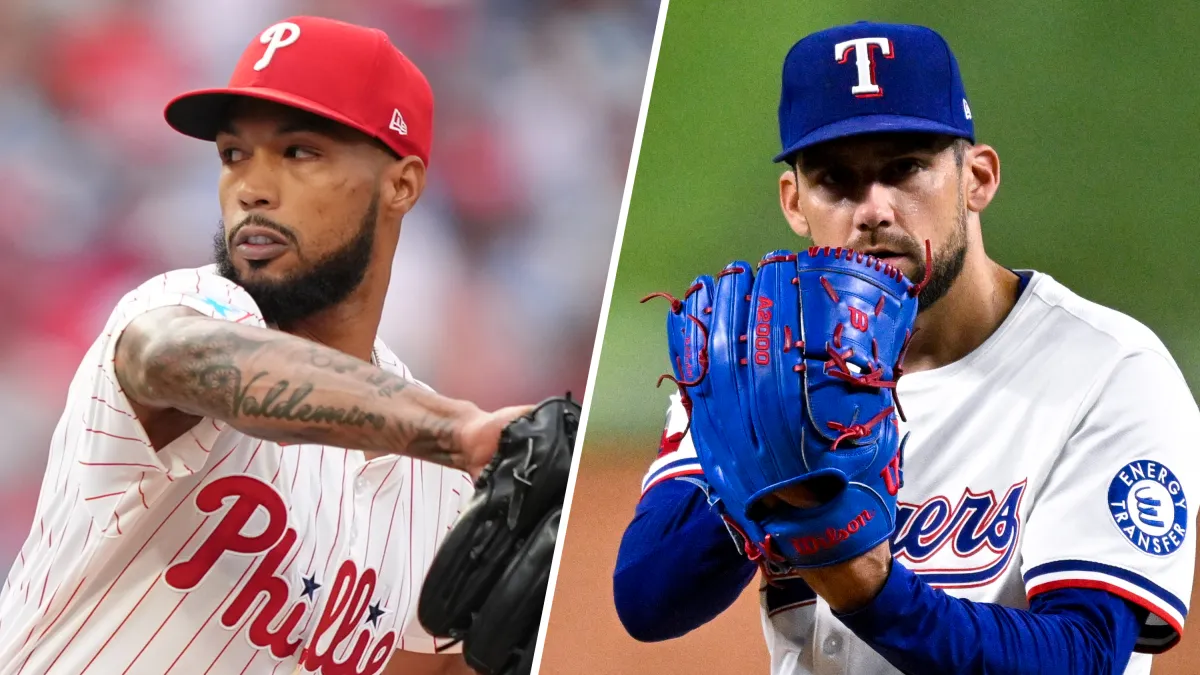
Capital Allocation: The Adolis García Acquisition
The Philadelphia Phillies’ acquisition of Adolis García on a one-year, $10 million contract represents a sophisticated form of roster arbitrage. By securing a former ALCS MVP and World Series champion at a controlled price point, the Phillies have optimized their financial flexibility for the 2027 cycle while immediately upgrading their outfield’s win probability. This short-term investment mitigates long-term luxury tax exposure while capturing the high-leverage postseason equity García accumulated during his 2020–2025 tenure with the Rangers.
For the Texas Rangers, the transition to the Skip Schumacher era necessitated a reevaluation of veteran assets. The departure of a franchise pillar signals a shift toward organizational rejuvenation and payroll realignment. The 2026 season opener serves as a high-visibility test of this philosophy, pitting the Rangers’ restructured depth against the concentrated veteran power now anchored in Philadelphia.
The Eovaldi Paradigm: Efficiency vs. Volume
Nathan Eovaldi’s 2026 campaign is defined by a shift in pitching philosophy prioritized by the Rangers’ front office. Despite a workload capped at 130 innings, Eovaldi’s 2025 peripherals—a 1.73 ERA and 0.85 WHIP—demonstrate elite efficiency. This ‘quality-over-quantity’ approach is a response to his four-year sub-30-start trend, effectively turning the veteran into a high-leverage starter with reliever-level dominance.
The catalyst for this late-career resurgence is a tactical pivot to his splitter, which saw an unprecedented 31.4% usage rate in 2025. According to Statcast data, the pitch generated an 11-run value, the highest in Eovaldi’s 14-year career. By tunneling this splitter with his primary fastball, Eovaldi has suppressed contact quality, allowing a mere 90 hits and 21 walks over his previous campaign. His performance on Opening Day will calibrate the Rangers’ expectations for a pitching staff that must now rely on technical precision rather than raw velocity.
Rotational Development: The Elevation of Cristopher Sánchez
The Phillies’ decision to start Cristopher Sánchez reflects a successful internal development cycle. Tasked with countering Eovaldi, Sánchez provides a left-handed movement profile designed to disrupt the timing of a Texas lineup in transition. This matchup is a strategic barometer for the Phillies’ pitching infrastructure, testing whether internal talent can match the output of established league aces in high-pressure broadcast windows.
Broadcast Logistics and Market Penetration
The 4:15 p.m. ET start time is a calculated effort to optimize regional sports network (RSN) advertising yields for NBC Sports Philadelphia and the Rangers Sports Network. By capturing the overlap between East Coast and Central time zone audiences, MLB maximizes its domestic reach. Furthermore, the commitment to Spanish-language broadcasting via KFLC 1270 AM in Texas and the integration of international talent through interpreters like Diego D’Aniello highlights the league’s focus on demographic expansion and operational inclusivity.
Managerial Strategy and Economic Utility
The managerial debut of Skip Schumacher in a regular-season opener involves navigating the psychological dynamics of facing a former icon like García. Schumacher’s strategy centers on maximizing Eovaldi’s refined arsenal while managing a bullpen that benefited from Eovaldi’s low walk rates. Conversely, the Phillies are leveraging García’s ‘performance-leverage’ contract—a deal designed to yield high surplus value before García re-enters the market in 2027. This intersection of contract economics and on-field tactics defines the modern competitive landscape for both franchises.