Institutional Recalibration: The Big Ten’s 13-3 Postseason Surge
The 2026 NCAA Tournament marks a definitive shift in collegiate basketball’s power hierarchy. By securing six Sweet 16 berths and maintaining an 81.2% win percentage (13-3) through the opening rounds, the Big Ten has effectively mitigated a championship drought spanning back to 2000. This collective performance is not merely a statistical outlier but a result of strategic roster construction and coaching stability across Michigan, Purdue, Michigan State, Illinois, Nebraska, and Iowa.
Geographic distribution across all four regions has allowed the conference to hedge competitive risks while maximizing media exposure. More importantly, this volume of advancement secures a dominant share of ‘tournament units’—the financial distribution mechanism based on cumulative wins. These units provide a six-year rolling capital injection, further widening the resource gap between the Big Ten and its peer conferences.
Regional Consolidation and the South Region Monopoly
The South Region serves as the primary epicenter of Big Ten dominance, where the conference occupies 75% of the remaining slots. This concentration guarantees a Big Ten presence in the Elite Eight and creates a high-probability path to the Final Four in Indianapolis. The upcoming Sweet 16 clash between No. 9 Iowa and No. 4 Nebraska in Houston represents a historic anomaly: the first intra-conference postseason meeting since the 1980 Purdue-Indiana matchup.
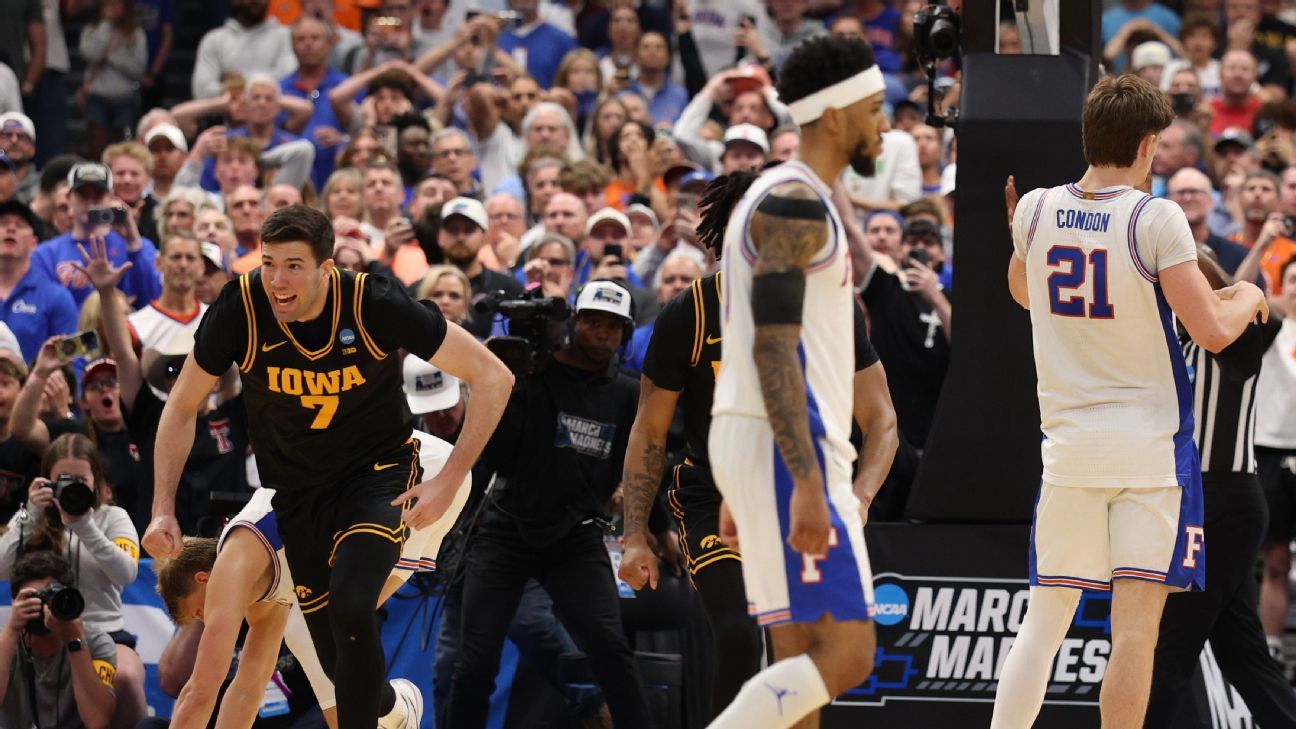
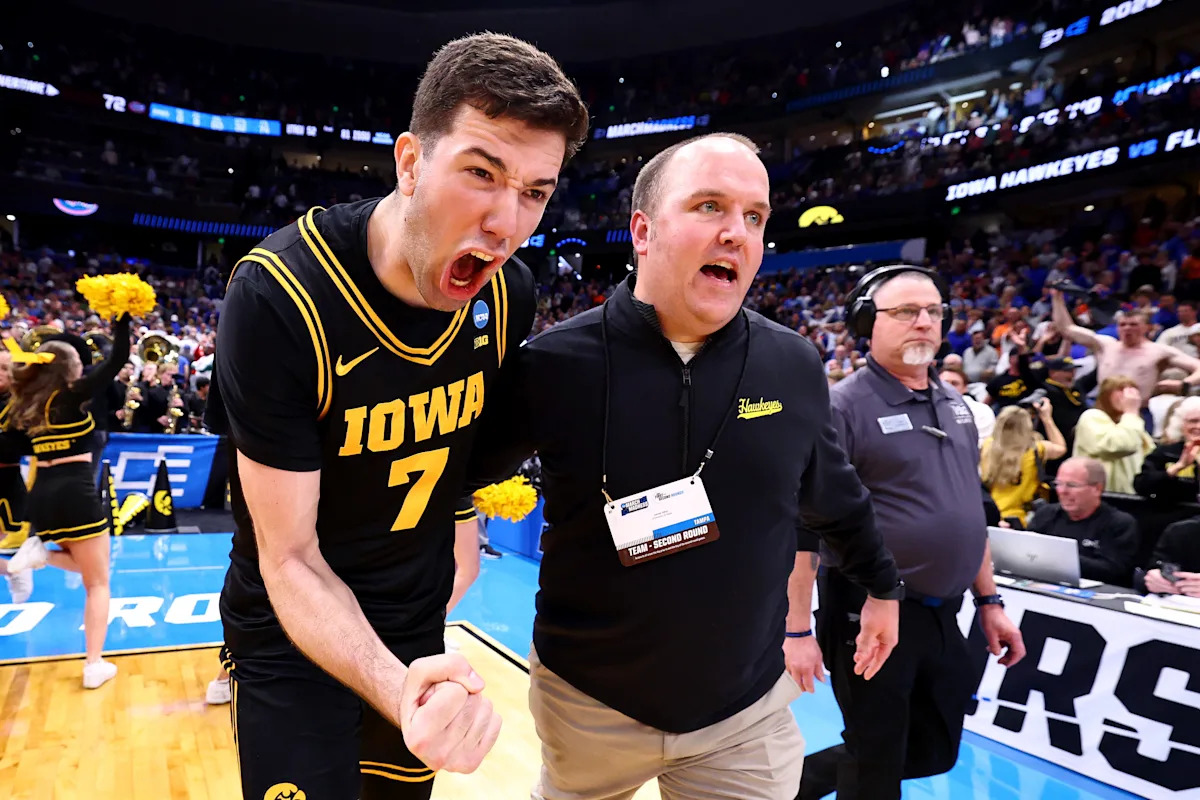
Iowa’s advancement, predicated on a second-round upset of No. 1 seed Florida, disrupted the bracket’s expected efficiency. The Hawkeyes’ tactical familiarity with Nebraska—a byproduct of annual conference play—shifts the focus from general scouting to granular, personnel-driven adjustments. This regional consolidation ensures that despite the volatility of single-elimination play, the conference maintains a strategic foothold in the tournament’s final stages.
Tactical Volatility: Alabama’s Perimeter-Centric Model
Alabama’s fourth consecutive Sweet 16 appearance highlights the efficacy of high-variance offensive strategies. Their 90-65 victory over Texas Tech was fueled by a historic 19-of-42 performance from the three-point line, the third-highest total in tournament history. This mathematical approach to scoring—prioritizing volume and spacing over interior density—serves as a systemic disruptor against disciplined defensive units.
The Crimson Tide’s upcoming matchup against No. 1 seed Michigan presents a clash of philosophies. Alabama’s backcourt, led by Latrell Wrightsell Jr. and Labaron Philon Jr., forces opponents to defend 30 feet from the basket, creating operational stress that can lead to defensive fragmentation. For Michigan, the challenge lies in neutralizing perimeter volume without compromising interior positioning, a tactical balance that will define the Midwest Region’s trajectory.
Operational Depth: UConn’s Efficiency and UCLA’s Roster Fragility
UConn’s 73-57 win over UCLA reinforced the necessity of roster depth in the postseason. While the Bruins maintained competitive parity for 30 minutes, the absence of star Tyler Bilodeau created an insurmountable scoring deficit. UConn’s ability to sustain physical pressure through a 10-man rotation allowed them to pull away late, underscoring the Huskies’ status as a blue-chip program capable of absorbing tactical shifts.
This result had broader conference implications, preventing the SEC from matching its previous Sweet 16 record and shifting the narrative toward Big East and Big Ten resilience. As the field narrows, the ability to maintain high-level execution despite personnel loss—or the depth to prevent it—remains the primary differentiator between perennial contenders and temporary bracket disruptors.
Market Valuation and the Future of Conference Parity
The 2026 field illustrates a narrowing gap between traditional powerhouses and high-performing mid-seeds, evidenced by No. 9 Iowa and No. 11 Texas reaching the second weekend. Texas’s victory over Gonzaga highlights a trend where experienced, transfer-heavy rosters from major conferences are leveraging physical maturity to displace established favorites. This environment rewards adaptability and tactical execution over preseason projections, signaling a new era of competitive parity in the NIL and transfer portal era.