Structural Saturation and Probabilistic Leverage
The 2026 NCAA Tournament has reached a critical juncture defined by the Big Ten Conference’s numerical superiority. By securing 37.5% of the Sweet 16 field, the league has achieved a level of bracket saturation that fundamentally shifts the competitive math. This performance, underpinned by a 13-3 record through the opening rounds, suggests a shift from individual program excellence to a collective conference dominance that mitigates the inherent volatility of a single-elimination format.
This geographic and regional diversification ensures the Big Ten remains a primary stakeholder in the tournament’s terminal stages. With representatives in every quadrant, the conference has effectively hedged its bets, ensuring that regional upsets elsewhere do not diminish its overall probability of reaching the Final Four in Indianapolis. The South Region serves as the apex of this institutional leverage, where a 75% concentration of Big Ten teams guarantees at least one Elite Eight berth, forcing non-conference opponents to navigate a gauntlet of physically taxing, intra-league playing styles.
The South Region: Intra-Conference Attrition
The Sweet 16 matchup between Iowa and Nebraska in Houston represents a rare historical convergence. Marking only the second time since 1980 that two Big Ten programs have met at this stage, the contest negates the traditional advantage of scouting unfamiliarity. In this high-stakes environment, tactical novelty is replaced by execution-based friction, as both programs possess deep internal data on their opponent’s personnel and rotational tendencies.
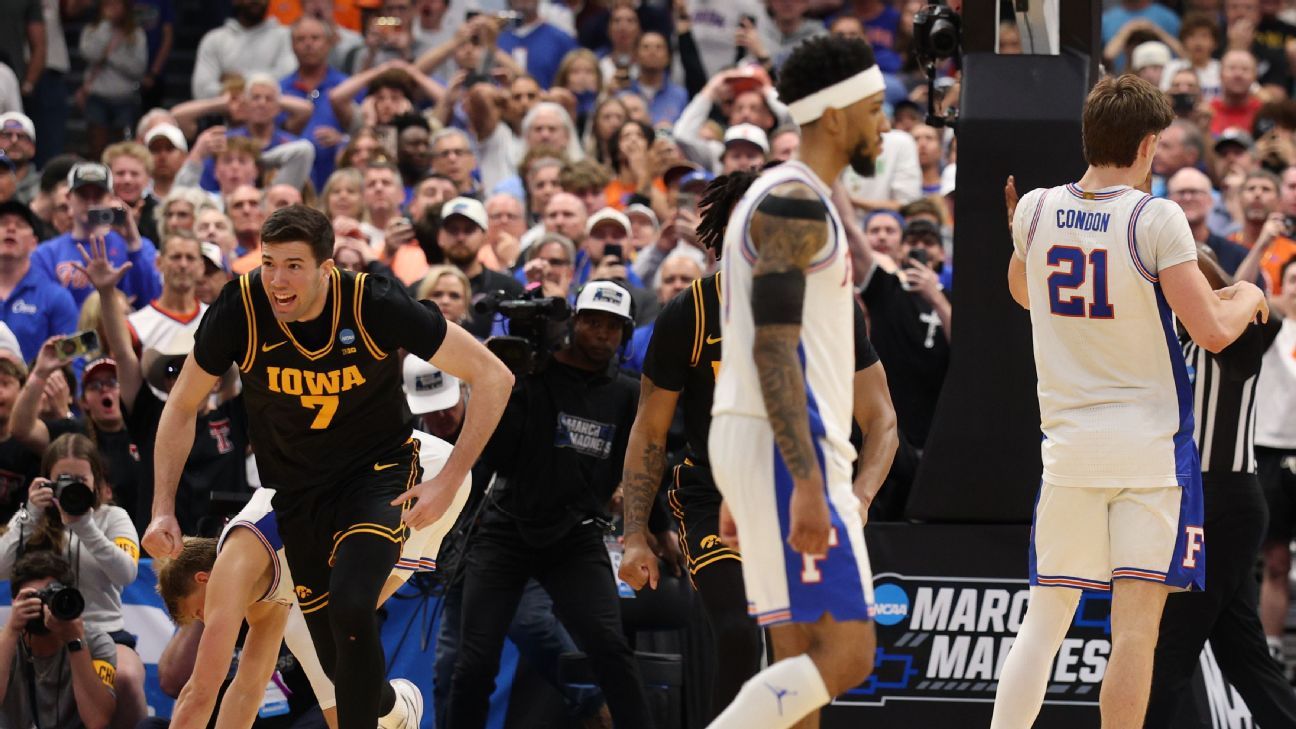
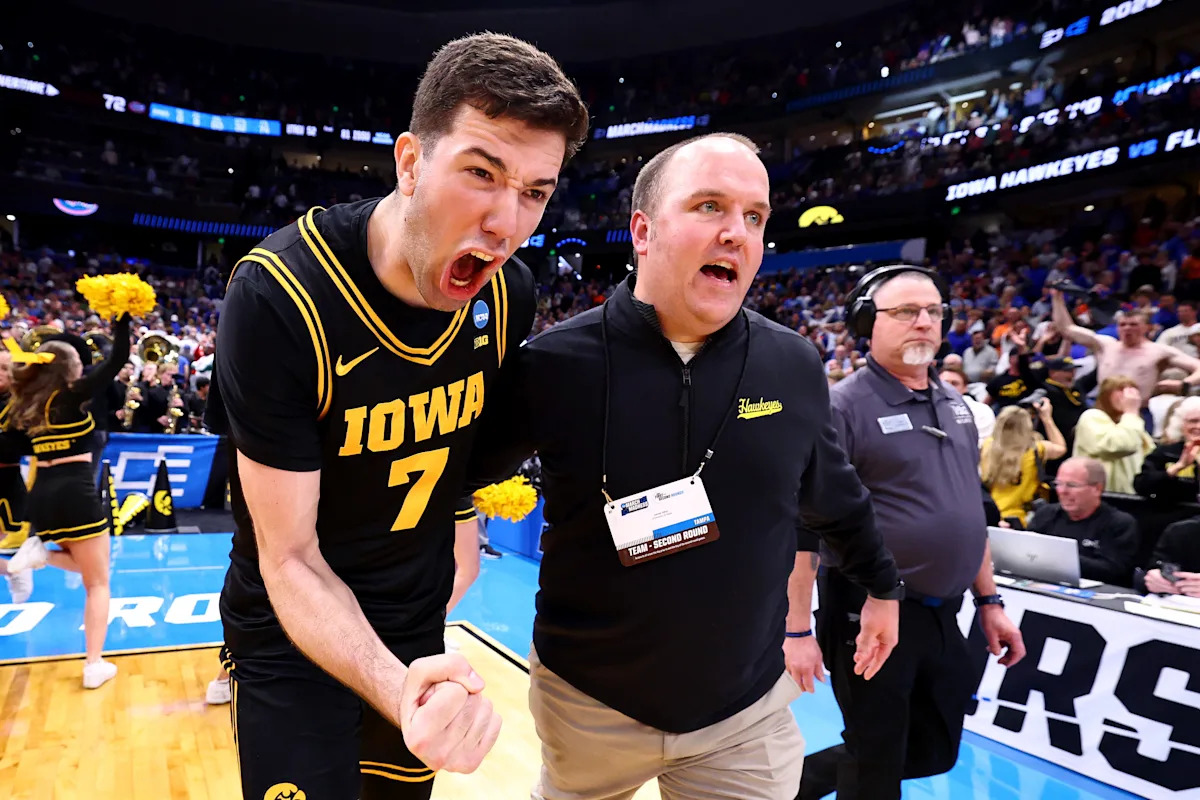
Iowa’s advancement, predicated on an upset of No. 1 seed Florida, has effectively recalibrated the South Region’s hierarchy. By removing the top-seeded incumbent, the Hawkeyes have cleared a path that prioritizes the Big Ten’s cumulative depth over individual seed prestige. This ensures that the conference’s significant resource investment in the South Region yields a tangible return, regardless of which specific program advances to the Elite Eight.
Alabama’s High-Variance Perimeter Modeling
Alabama’s progression to a fourth consecutive Sweet 16 was driven by a high-volume perimeter strategy that exploited the mathematical inefficiency of traditional defenses. Converting 19 of 42 three-point attempts against Texas Tech, the Crimson Tide utilized a high-variance offensive model to generate scoring runs that are statistically difficult to match. This performance—the third-highest three-point total in tournament history—highlights a tactical reliance on spacing and rapid ball movement over interior physicality.
Latrell Wrightsell Jr.’s scoring output and Labaron Philon Jr.’s facilitation demonstrate a backcourt-centric system designed to maximize point-per-possession metrics. As they prepare for No. 1 seed Michigan, Alabama’s longevity is tied to this shooting ceiling. Against a structured Wolverines defense, the Crimson Tide must maintain elite shooting percentages to compensate for Michigan’s superior interior depth, turning the matchup into a clash between mathematical volatility and institutional stability.
Institutional Stakes and the Championship Void
Despite its current volume of wins, the Big Ten faces mounting pressure to convert its 2026 depth into a national title, ending a drought dating back to 2000. The presence of No. 1 Michigan, No. 2 Purdue, and No. 3 seeds Michigan State and Illinois provides a multi-pronged attack intended to overcome the single-elimination variability that has historically hindered the league. Success in 2026 would align the conference’s basketball prestige with its recent football achievements, validating long-term structural investments.
UConn’s Depth and UCLA’s Roster Attrition
UConn’s 73-57 victory over UCLA highlighted the decisive role of roster elasticity. While UCLA remained competitive for 30 minutes, the Huskies’ superior conditioning and depth allowed them to exploit the Bruins’ fatigue in the closing stretch. The absence of UCLA’s Tyler Bilodeau further constrained the Bruins’ tactical options, forcing secondary players into high-usage roles for which they were unoptimized. UConn’s ability to maintain defensive intensity throughout the second half underscores their status as a disciplined unit capable of managing late-game volatility.
Regional Disruptions and Underdog Dynamics
The emergence of No. 11 Texas following their upset of Gonzaga introduces a disruptive element into the tournament’s second weekend. This result clears a path in their respective region, allowing for a potential shift in power dynamics where lower-seeded, tactically adaptable teams can exploit the vacuum left by traditional favorites. As the field narrows, the interaction between these surging underdogs and the dominant Big Ten block will define the Final Four’s ultimate composition, testing whether institutional consistency can withstand the specific tactical outliers remaining in the bracket.