
The Miami Masters has entered a phase of competitive consolidation following the resolution of logistical rain delays. The tournament narrative now shifts from administrative recovery to a high-stakes recalibration of the ATP power hierarchy, where veteran stability is challenged by high-efficiency emerging talent.
The Structural Vulnerability of Stefanos Tsitsipas
Stefanos Tsitsipas enters his third-round fixture against Arthur Fils at a professional nadir. His current world ranking of 51st represents a significant institutional decline, further exacerbated by a three-match losing streak. This downturn isn’t merely statistical; it impacts his seeding eligibility and commercial leverage within the tour’s elite tier.
While a second-round win over Alex de Minaur provided temporary relief, the 14-2 head-to-head record suggests that result was a product of stylistic compatibility rather than a recovery of championship form. The matchup against Fils presents a more severe tactical impasse: Tsitsipas holds a 0-4 lifetime record against the Frenchman, having secured only one set in seven attempts. Fils’s ability to exploit the Greek’s technical inconsistencies—most recently evidenced in Rome—indicates a persistent structural disadvantage for Tsitsipas.
Arthur Fils: Statistical Reliability as a Competitive Floor
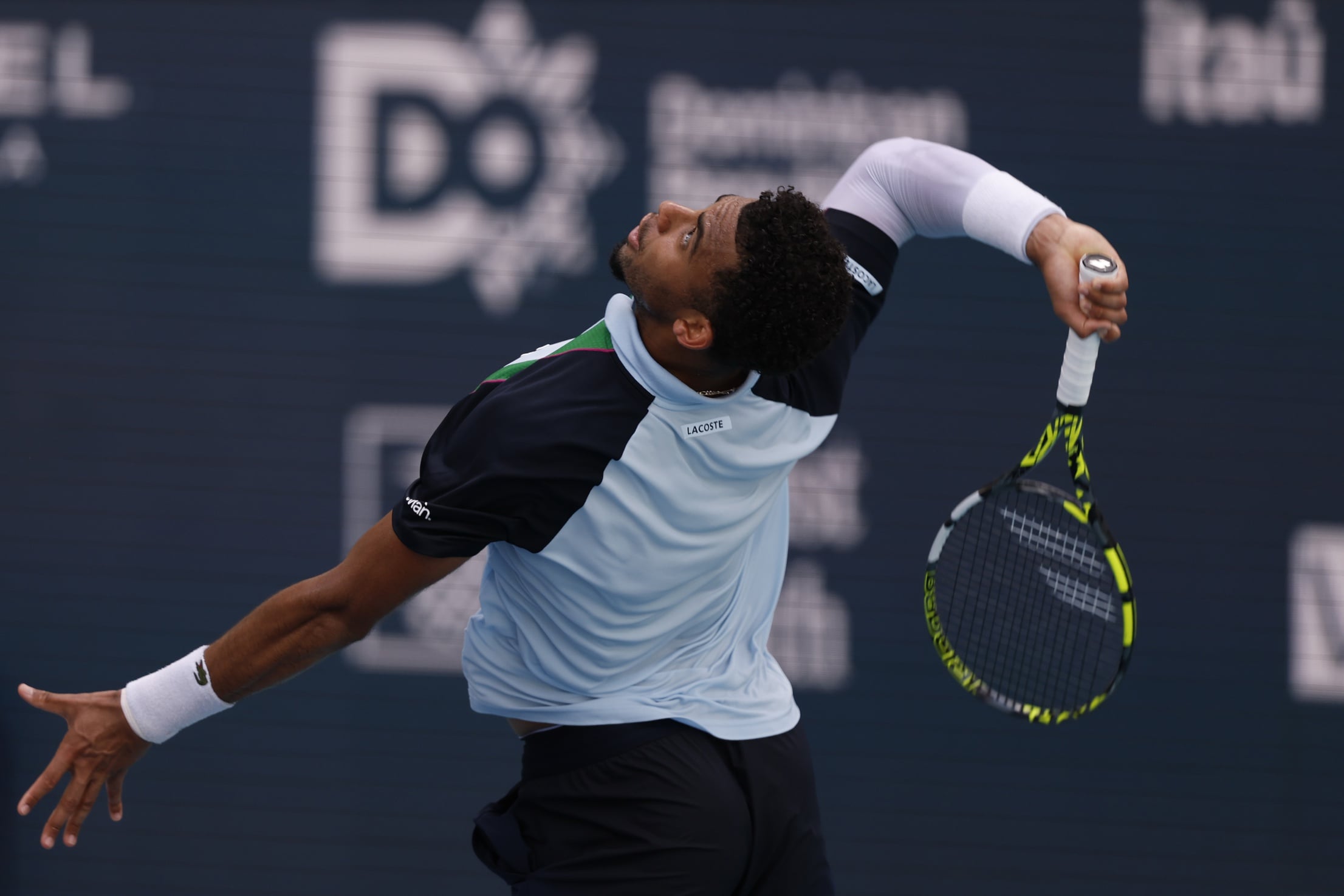
Arthur Fils exemplifies the new class of high-performance athletes disrupting the ATP order. His 10-4 record in the 2026 season highlights a level of consistency that eludes struggling veterans. Crucially, Fils has not lost to an opponent ranked outside the top eight this season, establishing a high statistical floor for Masters 1000 early rounds. For Fils, capitalizing on Tsitsipas’s confidence deficit is a strategic imperative to accelerate his ascent into the circuit’s top tier.
Domestic Dominance: Fritz vs. Opelka
The all-American clash between Taylor Fritz and Reilly Opelka serves as a case study in service-neutralization. Fritz’s 5-1 head-to-head lead confirms that his baseline consistency effectively mitigates Opelka’s high-variance service weaponry. In a match likely decided by thin margins in tiebreak scenarios, Fritz’s composure remains his primary asset in maintaining his status as the premier American representative in the rankings.
Ethan Quinn and the Challenger-to-Masters Transition
Ethan Quinn arrives in the third round carrying significant momentum following his Phoenix Challenger title. This transition represents a critical inflection point for emerging professionals. Facing the 21st seed Jiri Lehecka, Quinn must prove his high-energy play can penetrate the defenses of an established top-30 opponent. This match serves as a barometer for whether Quinn’s current ‘heater’ is a sustainable trajectory or a temporary performance spike.
Strategic Moats: Etcheverry vs. Jodar
The encounter between Tomas Martin Etcheverry and Rafael Jodar pits established defensive reliability against aggressive youth. Etcheverry’s objective is to leverage his physical conditioning and ‘defensive moat’ to outlast Jodar’s baseline aggression. In high-humidity Miami conditions, the veteran’s ability to minimize unforced errors over three sets remains a decisive factor against less experienced, high-risk hitters.
ATP Market Implications
The outcomes of Day 5 will dictate the redistribution of competitive capital for the 2026 season. A further decline for Tsitsipas would necessitate a total strategic pivot in his career management, while success for Fils and Quinn would validate the ATP’s developmental pathways. These results are particularly vital for seeding protection ahead of the European clay-court swing, influencing both broadcast narratives and sponsorship valuation across the global tour.
Photo by andremcenroe on Pixabay.