The demise of the sole remaining perfect bracket in the 2026 NCAA Men’s Tournament underscores the acute volatility of single-elimination structures, reflecting a massive contraction in predictive accuracy across tens of millions of entries.
The decisive event was the No. 6 seed Tennessee defeating the No. 3 seed Virginia, 79-72, in the Second Round. This single result extinguished the last flawless entry, tracked on ESPN as ‘christienter’, precisely at the 44th contest of the tournament.
Predictive Field Saturation and Initial Decay Metrics
The predictive difficulty is set by the massive participation scale, estimated exceeding 36 million brackets across major hosts (ESPN, CBS, Yahoo!). Perfection requires predicting 44 consecutive outcomes correctly in this high-variance environment.
The initial tournament variance proved exceptionally high: after the first 16 games on Thursday, only approximately 14,000 brackets maintained viability. By the conclusion of Round 1, this number stabilized momentarily at just 224 perfect entries.
The final perfect entry surpassed the 2025 performance benchmark but fell short of the 2019 record, where a participant achieved 49 consecutive correct picks, establishing the new 44-game mark as the 2026 standard for sustained accuracy.
The Second Round Choke Point and Seed Leverage
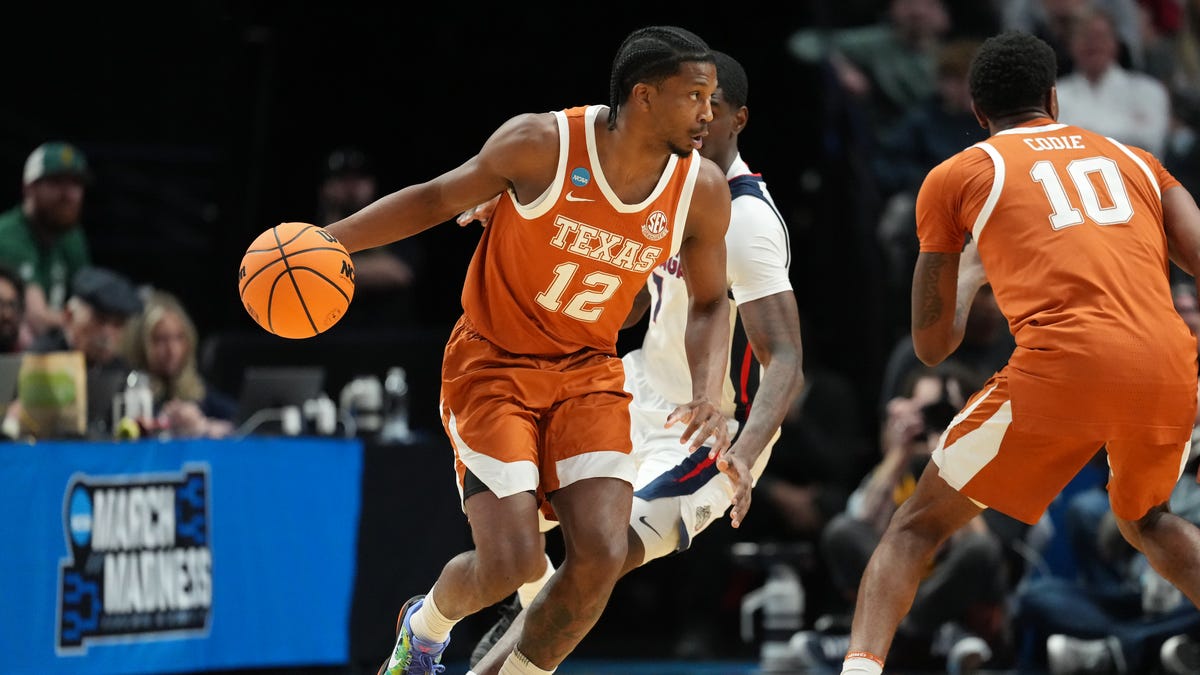
Saturday’s slate catalyzed the final purge. Tracking metrics indicate that the pool of perfect brackets dropped from four to zero by Sunday morning. The pivotal upset involved the No. 11 seed Texas defeating No. 3 seed Gonzaga, an outcome that instantly invalidated 120 previously perfect brackets.
This highlights the disproportionate impact of single, unpredicted results. Despite overall ‘chalkiness’—with only one double-digit seed advancing to the Sweet 16 through Saturday—that singular deviation from expectation was sufficient to collapse the entire field of perfect predictors.
Platform-specific data shows this collapse concentrated heavily: ESPN, hosting over 26 million entries, had only two perfect brackets remaining by 8 a.m. ET on March 22, prior to the final elimination.
Strategic Implications for Tournament Modeling and Engagement
The rapid decay of perfection fundamentally shifts platform focus from tracking a grand prize possibility to analyzing high-accuracy ‘near-misses’ and the statistical distribution of variance.
The longevity of the 44-game run establishes a crucial calibration point for future bracket contests and predictive model efficacy. The inherent excitement of March Madness, arguably amplified by the perceived talent density of the 2026 freshman class, directly correlates with sustained high digital engagement, irrespective of a perfect outcome.
Media strategy capitalizes on this shift, pivoting content toward explaining the precise upsets that caused the systemic failure, framing the narrative around variance attribution rather than simple prediction validation.
Historical Context and Conference Depth
Historical analysis (post-1985) provides context; the tournament’s current structural volatility is consistently demonstrated. The recurrence of the Final Four featuring four No. 1 seeds, which happened last year, is historically improbable to repeat consecutively.
The final perfect bracket’s last selections—Virginia, Florida, Arizona, and UConn—revealed a highly risk-averse prediction profile, which the Tennessee upset fundamentally challenged. The increased conference depth, exemplified by institutions like the SEC sending a record 14 teams last year, statistically increases the probability of mid-major disruptions derailing high-seed selections.
Market Integrity and Logistical Challenges
The persistent failure to sustain perfection across millions of entries reinforces the fundamental high-variance nature of the competition. This outcome benefits hosting platforms by maintaining broad competitive interest even after the possibility of winning the grand prize is mathematically removed for the vast majority.
The financial layer introduced by specialized betting markets (e.g., Kalshi) is built directly upon this documented unpredictability, commodifying the very variance that destroys perfect brackets.
Logistically, tracking entities face the constant challenge of ensuring data integrity and synchronization across disparate platform APIs while delivering time-sensitive updates on the collapsing pool of viable entries. The current framework, largely standardized since 1985, dictates the rules against which predictive success is benchmarked.
Forecasting Future Predictive Strategy
The observed elimination pattern—massive drop-off Day 1, stabilization until a key mid-bracket upset—informs future participant strategy away from simple chalk selection towards building resilience against established upset vectors.
The ultimate failure of the sophisticated initial bracket underscores that forecasting performance reliably across five or six increasingly specialized rounds remains statistically improbable. The segmentation of the prediction market, evidenced by the final bracket residing specifically within the ESPN ecosystem, means performance metrics are not perfectly fungible across all hosting sites.
Comparing this run to Gregg Nigl’s 2019 benchmark confirms that sustained perfection relies on navigating a statistically improbable sequence of upset alignments tailored exactly to the predictor’s specific selections.