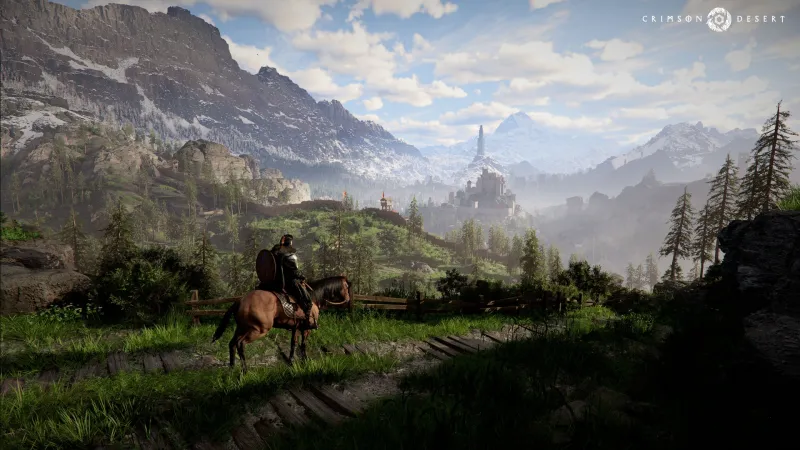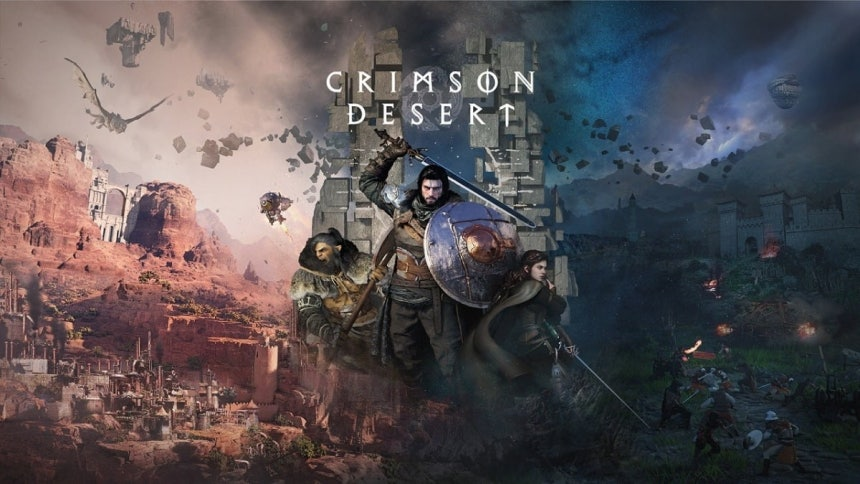
Pearl Abyss (KRX: 261750) faced a severe market repricing, with shares declining approximately 29% in early trading following the initial wave of preview reviews for its long-anticipated MMORPG, “Crimson Desert.” This precipitous capital reaction demonstrates the acute sensitivity of high-investment titles to critical benchmarks, where prolonged development cycles magnify the financial impact of unmet expectations.
Valuation Compression: Technical Prowess vs. Critical Consensus
The market correction was precipitated by a misalignment between investor expectations—which were positioned for aggregate review scores exceeding the high 80s—and the resultant Metacritic average settling near 78/100. While technical specifications, visual scale, and asset density were often praised by outlets, consistent critiques regarding narrative integration and structural complexity acted as a potent downward valuation pressure.
This divergence reveals a critical vulnerability: when technological excellence in world-building is decoupled from satisfying core gameplay loops (narrative cohesion and control responsiveness), the perceived return on investment diminishes rapidly for sophisticated institutional investors. The market is factoring in a lower achievable ceiling for monetization and long-term engagement when the foundational experience is deemed structurally flawed.
Leveraging Sunk Costs: The 200 Billion Won Pressure Point
The estimated 200 billion won development cost, accumulated over a seven-year pipeline, creates intense leverage on initial reception. A mediocre critical consensus, rather than a definitive failure, signals a protracted timeline for recouping this capital. The immediate drop to 46,600 won highlights that the market is pricing in increased future operational expenditure required for extensive post-launch iterative refinement rather than relying on initial sales velocity.
Structural Bottlenecks and Scope Creep Analysis
Critiques pointing to “overly complex content structure” juxtaposed with praise for visual scope suggest a classic AAA development challenge: scope bloat overwhelming user experience (UX). The sheer magnitude of interconnected systems necessary for the world’s depicted complexity—clockwork cities, floating ruins—can lead to unintuitive interface design and fragmented progression paths that frustrate modern player expectations.
Narrative Scaffolding as Essential Differentiator
The noted failure of the narrative, exemplified by the simplistic ‘Clear Soup’ cooking mechanic allegory, exposes a strategic gap. In the competitive open-world genre, technical spectacle alone is insufficient; sustained player retention is contingent upon robust narrative scaffolding that justifies extensive time investment. A lack of compelling central conflict (the threat to Pailune, the Greymanes lore) fails to anchor the high-fidelity world, eroding the perceived value proposition.
Strategic Implications for Post-Launch Resource Allocation
The current critical feedback mandates a strategic pivot from prioritizing new feature development to immediate resource reallocation toward quality-of-life patches addressing controls and structural clarity. This creates an internal conflict: satisfying the critical consensus necessary for long-term review stability versus catering to the initial purchaser base.
Furthermore, the planned multi-platform launch (PC Steam, Apple macOS) implies a strategy prioritizing market saturation. Inconsistent critical reception across different ecosystems suggests the game may not translate uniformly, further dampening optimism for maximized initial sales velocity.
Competitive Benchmarking and Future Development
The market’s harsh reaction sets a stringent new benchmark for next-generation open-world viability. Competitors will likely internalize the need to prioritize integrated narrative design and streamlined controls, recognizing that technological parity is now a baseline requirement, not a competitive advantage.
The perceived over-engineering of systems serves as a cautionary data point against feature accumulation, suggesting that future high-budget productions may shift toward more tightly curated gameplay loops to ensure higher critical scores and faster capital recovery.