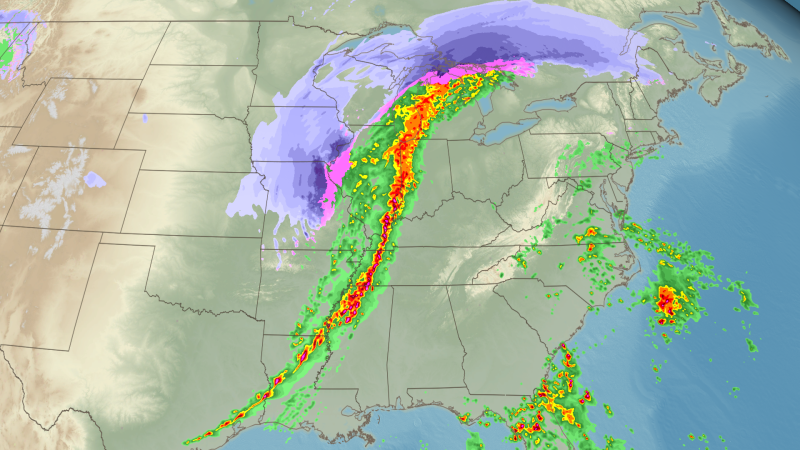
The convergence of a synoptic-scale atmospheric system across the Eastern United States has precipitated a multi-modal operational crisis, testing the resilience of critical infrastructure and emergency response frameworks. This powerhouse storm, characterized by extreme barometric volatility, has simultaneously deployed blizzard conditions across northern latitudes and severe tornadic threats in the south, creating a complex risk profile for federal and state agencies.
The scale of this meteorological event is defined by its impact on a demographic exceeding 100 million people. From the Rockies to the Mid-Atlantic, the storm’s trajectory has necessitated a radical recalibration of public safety protocols and commercial logistics, specifically within the energy and transportation sectors.
Aviation Logistics and Hub Vulnerability
Minneapolis-St. Paul International Airport (MSP) has emerged as a primary node of friction within the national aviation network. Heavy snowfall and high-velocity winds have induced hundreds of flight cancellations, rendering runways impassable and triggering a logistical cascade across the domestic air travel ecosystem. This disruption forced airlines to implement aggressive rebooking strategies to mitigate terminal congestion and crew scheduling conflicts.
The industry’s shift toward preemptive cancellations reflects a risk-averse operational posture prioritized to preserve long-term asset integrity over immediate schedule adherence. While these measures incur significant short-term revenue losses, they are essential for maintaining safety during periods of extreme atmospheric volatility. Meteorologists anticipate that wind gusts from advancing squall lines will continue to impact major Eastern hubs through Monday.
Grid Resilience and Utility Infrastructure Degradation
As of Monday morning, the storm has compromised the energy security of approximately 340,000 customers, highlighting the inherent vulnerability of the electrical grid to sustained high-velocity winds. The threat remains acute in the Tennessee Valley and Great Lakes regions, where straight-line wind gusts are projected to exceed 75 mph—a threshold that frequently results in the structural failure of aging distribution infrastructure.
Utility providers are navigating a dual-phase challenge: restoring power to existing outages while hardening assets against a secondary wave of severe weather. The economic implications of these outages extend beyond repair costs, affecting commercial productivity and residential safety in regions where essential services are contingent upon grid stability. The widespread nature of damaging winds suggests a fragmented demand for technical labor and equipment, complicating resource allocation across state lines.
Executive Action and Civil Defense Posture
In response to the blizzard’s severity, Minnesota Governor Tim Walz signed an executive order authorizing the National Guard to support emergency operations. This move signifies a transition from municipal response to a state-level civil defense posture, ensuring that specialized heavy equipment and personnel are available for life-safety missions and the maintenance of essential transit corridors.
This institutional support is critical for sustaining the continuity of emergency services, particularly in southern Minnesota where travel has been officially discouraged. The activation provides a strategic reserve of logistical capability, providing the legal and financial framework necessary to mitigate a weather event that has deposited over 12 inches of snow in the Upper Midwest.
Severe Weather Corridor and Convective Risk
While the northern tier manages snow accumulation, the eastern half of the U.S. faces a Level 3 of 5 risk for severe thunderstorms and tornadoes. This corridor, stretching from the Great Lakes to the Gulf Coast, is susceptible to intense squall lines. The geographic shift in the storm’s energy toward the Mid-Atlantic, including Washington, D.C., requires emergency management agencies to pivot rapidly from snow removal to wind damage mitigation and tornado sheltering.
The atmospheric dynamics driving this system involve a potent combination of deep moisture and high-altitude wind shear, conducive to rapid storm intensification. For institutional stakeholders, the window for preparation is narrow, demanding real-time monitoring and a flexible approach to resource deployment.
Geographic Anomalies and Macro-Scale Impacts
The storm’s reach extends to the Pacific, with severe flooding reported in Hawaii, illustrating the erratic and broad-scale nature of current atmospheric patterns. Simultaneously, the Plains and Rockies face elevated fire weather concerns due to high winds and low humidity on the storm’s dry side. This creates a paradoxical environment where responders must manage wildfires and blizzards simultaneously, thinning national emergency response assets.
Ultimately, the March megastorm serves as a stress test for integrated warning systems. The ability to provide tiered risk assessments allowed for the preemptive activation of the National Guard and strategic aviation pauses, likely preventing higher human and capital losses. As the system moves toward the Atlantic, the focus remains on the Mid-Atlantic’s capacity to withstand the final high-wind phase of this transcontinental event.