Structural Dependency and the Succession Void in Senate Leadership
Senator Mitch McConnell’s extended absence from public view following a hospitalization due to a fall underscores a critical structural vulnerability within the United States Senate: the high centralization of strategic authority within senior party leadership. When a primary legislative architect is sidelined, the internal operational framework of the party caucus faces immediate coordination friction. The delay in returning to the Senate floor raises fundamental questions about institutional resilience when key negotiators are operationally constrained, directly impacting the progression of the legislative calendar and party discipline.
This absence creates a strategic vacuum, necessitating an ad-hoc redistribution of leadership responsibilities. Without a highly visible and active leader to enforce caucus unity, internal ideological divisions and factional maneuvering can intensify. Consequently, the party’s ability to present a unified front during high-stakes policy negotiations is compromised, exposing legislative agendas to delays and diminishing the predictability of legislative outcomes.
Gerontocratic Vulnerabilities and Institutional Continuity
The situation highlights broader systemic challenges associated with an aging legislative body. The advanced average age of US senators means health-related disruptions are a recurring operational risk. Historically, senior lawmakers often maintain a cultural norm of stoicism and privacy regarding health matters, which directly conflicts with the modern public demand for transparency. When communication from a leader’s office is delayed or sparse, an informational vacuum emerges, fostering speculative narratives that can undermine public trust in governance stability.
This dynamic emphasizes the lack of formalized, proactive protocols for temporary leadership transitions during health crises. Relying on informal delegation or staff-managed continuity is insufficient for addressing the systemic risks of a prolonged absence. The operational challenges surrounding McConnell’s recovery could catalyze legislative and institutional discussions regarding mandatory health disclosures, term limits, or more structured succession-planning mechanisms within congressional caucuses.
Information Asymmetry, Media Narratives, and Public Image Management
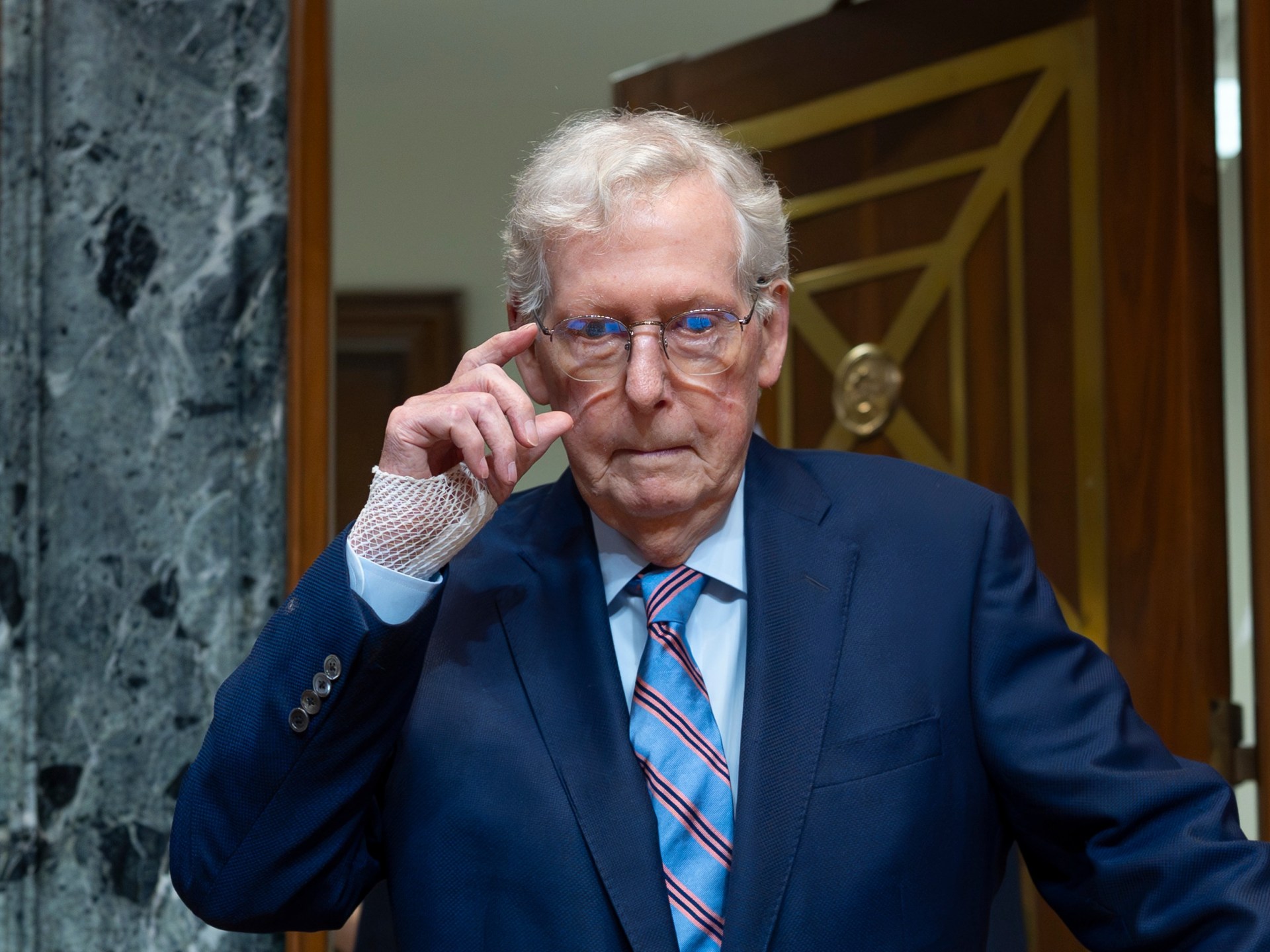
The public relations strategy surrounding McConnell’s recovery illustrates the high stakes of information control during periods of political uncertainty. Initial messaging gaps allowed online speculation to proliferate, demonstrating how rapidly the digital media ecosystem fills communication voids with unsubstantiated rumors. Subsequent efforts to manage the narrative—such as releasing staged visual proof of recovery—aimed to project resilience and counter perceptions of physical or cognitive decline.
However, the tension between choreographed recovery narratives and visible physical frailty during unscripted public appearances presents a complex communication challenge. The media’s dual focus on official recovery statements and observable physical vulnerability shapes public discourse regarding fitness for high office. This ongoing scrutiny highlights the difficulty of maintaining institutional authority when a leader’s physical presentation diverges from the demanding public perception of political command.
Operational Friction and Downstream Economic Predictability
While staff-driven continuity protocols allow a recovering leader to manage routine administrative tasks, they cannot replicate the persuasive power and strategic nuance of physical presence in face-to-face negotiations. Strategic compromises and coalition-building rely heavily on direct personal engagement, meaning that remote or delegated leadership inherently slows decision-making processes. This operational friction has broader implications for economic and policy predictability.
External stakeholders, including financial markets, corporate investors, and international partners, depend on stable and predictable legislative leadership to anticipate regulatory shifts and fiscal policies. Prolonged leadership uncertainty can introduce market hesitancy, as major policy decisions are deferred. The strategic implications of leadership capacity extend far beyond the immediate political sphere, directly influencing investor confidence and capital allocation decisions based on the perceived stability of the legislative branch.