2026 Ivy League Men’s Basketball Championship Final: Yale’s Dominance, Penn’s Resurgence
The 2026 Ivy League Men’s Basketball Tournament championship game, featuring top-seeded Yale Bulldogs against third-seeded Pennsylvania Quakers, marks a significant inflection point in collegiate athletic strategy and institutional branding. Scheduled for Sunday afternoon at Newman Arena in Ithaca, N.Y., this contest transcends a mere battle for a conference title, serving instead as a high-stakes demonstration of long-term program development and competitive leverage within the Ivy League’s unique academic-athletic framework.
Yale’s consistent presence in the championship narrative underscores a sustained period of athletic program excellence. The Bulldogs are vying for their third consecutive Ivy League Tournament championship, marking their sixth consecutive appearance in the final, a streak that speaks to deep institutional commitment and effective talent pipeline management. Such enduring success generates considerable reputational capital, influencing alumni engagement and prospective student-athlete recruitment.
The Bulldogs’ recent performance, including an 88-76 victory over fourth-seeded Cornell in the semifinals, reinforces their operational efficiency and strategic depth. This win, secured as 5.5-point favorites, demonstrates their capacity to perform under tournament pressure, a critical attribute for programs aiming for national visibility. Their overall 24-5 record further solidifies their standing as a dominant force, reflecting a robust season-long competitive advantage.
In contrast, the Pennsylvania Quakers arrive at the final following a hard-fought 62-60 overtime win against second-seeded Harvard, signaling a notable resurgence in their program’s trajectory. This semifinal upset, achieved as 3.5-point underdogs, highlights the Quakers’ resilience and tactical adaptability, essential qualities for navigating high-stakes elimination rounds. Their current four-game winning streak and eight wins in their last nine outings indicate a significant late-season performance acceleration.
The Quakers’ pursuit of their first Ivy League Tournament title since 2018 positions this game as a pivotal moment for their athletic department’s strategic objectives. A championship victory would not only validate their recent performance but also provide substantial leverage for future recruitment cycles and institutional fundraising efforts. The narrative of an underdog overcoming higher seeds resonates deeply with stakeholders and can amplify institutional pride.
The historical context of the rivalry adds another layer of strategic significance to the upcoming final. While Penn holds a substantial 150-89 lead in the all-time series, Yale has established clear recent dominance, sweeping the season series and winning six straight, and nine of the last ten meetings. This shift in competitive balance reflects evolving coaching strategies, player development models, and resource allocation within both athletic programs over time.
From a market perspective, the betting odds reflect a clear consensus on Yale’s superior competitive positioning. DraftKings Sportsbook lists the Bulldogs as 9.5-point favorites, with Covers.com further endorsing Yale at -10 (-116). These figures, derived from sophisticated analytical models, encapsulate market perceptions of team strength, recent form, and the operational fatigue factors for a team like Penn coming off an overtime contest.
The over/under for total points scored, set at 142.5 by DraftKings, further informs market expectations regarding game flow and strategic approaches. Penn’s recent trend of the Under cashing in 13 consecutive contests, including their low-scoring semifinal against Harvard (Under 140.5), contrasts with Yale’s higher-scoring semifinal against Cornell (Over 163.5). This divergence highlights distinct offensive and defensive operational profiles influencing market valuations.
Individual player performances have been instrumental in shaping both teams’ paths to the final, demonstrating the critical role of talent identification and development. Penn’s TJ Power, with 16 points, 12 rebounds, 4 steals, and a block in the semifinal, exemplifies a player demonstrating consistent high-level output, having scored 16 or more points in five of the past six games. Such individual contributions are vital for team leverage in critical moments.
Similarly, AJ Levine’s game-winning layup with 6.1 seconds left against Harvard underscores the importance of clutch performance and strategic play execution under immense pressure. These moments not only decide games but also become part of the institutional lore, inspiring future generations of student-athletes and reinforcing the value of athletic programs. For Penn, this play is a testament to their late-game operational precision.
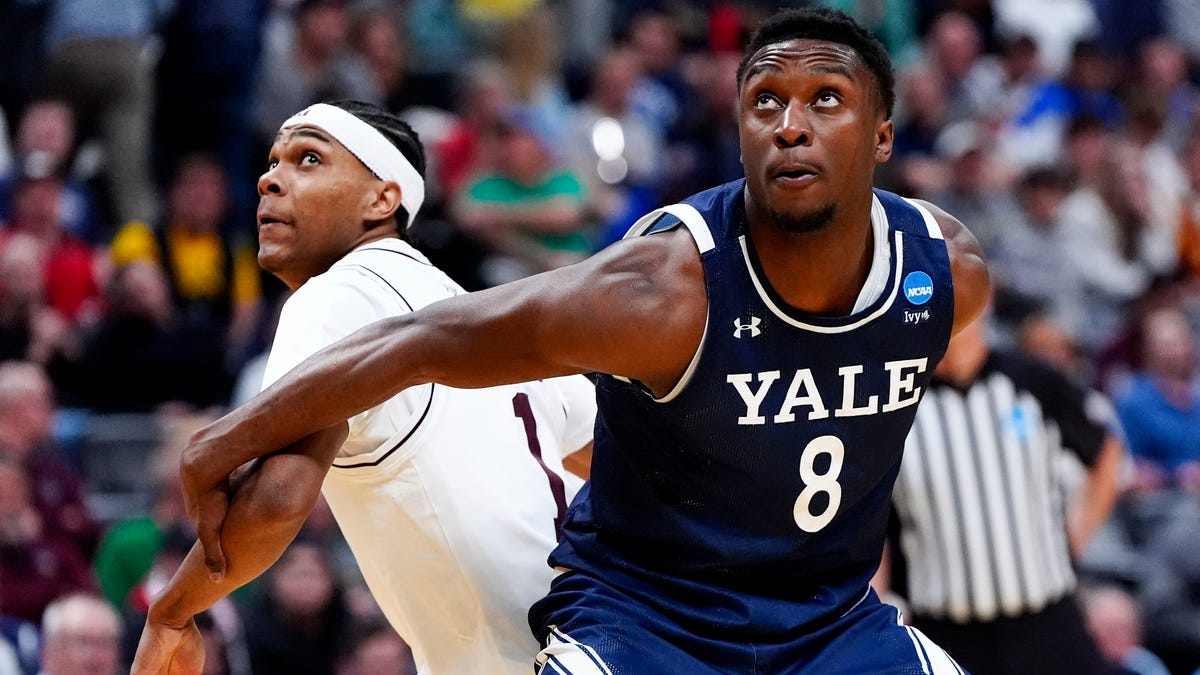
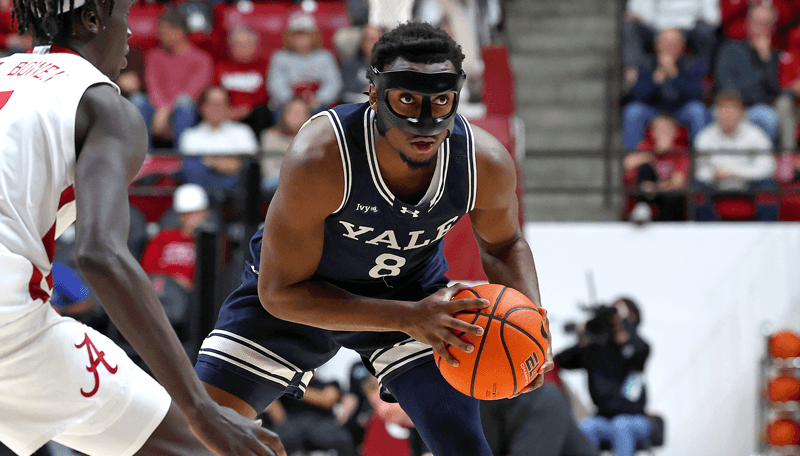
Yale’s Isaac Celiscar delivered a commanding 27 points, 6 rebounds, and 3 assists in their semifinal victory, showcasing the depth of talent within the Bulldogs’ roster. This type of dominant individual performance provides significant competitive leverage, forcing opposing teams to adjust their defensive strategies and often creating opportunities for other players. It reflects a successful scouting and player integration strategy.
The Bulldogs’ overall statistical profile, ranking in the Top 3 in the Ivy League for both scoring (81.7 ppg) and defense (70.4 ppg), illustrates a balanced and highly effective operational model. This dual proficiency in offensive execution and defensive containment is a hallmark of championship-caliber teams, minimizing vulnerabilities and maximizing strategic flexibility. It speaks to comprehensive coaching and player adherence to system principles.
While Yale’s 12-15 against the spread (ATS) record this season might suggest some market overvaluation or inconsistency in covering large spreads, their outright win-loss record of 24-5 remains a primary indicator of their competitive strength. For bettors and analysts, this discrepancy highlights the difference between predicting outcomes and predicting margins, a key consideration in sports finance and risk assessment.
The stakes of this championship extend beyond the immediate trophy, as the winner secures an automatic bid to the NCAA Tournament. This qualification provides invaluable national exposure for the winning institution, elevating its brand on a significantly larger stage. The associated media attention and potential for deep tournament runs can translate into tangible benefits, including increased applications and alumni donations.
For the Ivy League as a whole, the tournament final, broadcast on ESPN2, serves as a crucial platform to showcase its unique blend of academic rigor and athletic competitiveness. The visibility offered by a national broadcast reinforces the league’s identity and attracts broader interest from prospective student-athletes and fans. This media exposure is a strategic asset for the conference’s long-term positioning.
The strategic implications for both Yale and Penn’s athletic departments are profound. For Yale, a third consecutive title would cement their status as a dynastic program within the Ivy League, setting a high benchmark for competitive excellence and institutional support. This sustained success can be leveraged in fundraising campaigns and to attract elite coaching talent.
For Penn, a championship win would signify a successful culmination of their recent strategic adjustments and player development efforts. It would provide tangible proof of their program’s upward trajectory, offering a compelling narrative for recruitment and alumni engagement. The ability to overcome a dominant opponent like Yale would underscore their competitive resilience and strategic acumen.
The operational logistics of hosting the tournament at a neutral site like Newman Arena in Ithaca, N.Y., also bear significance. Such arrangements ensure competitive fairness and provide a centralized platform for the league’s premier event. The selection of a neutral venue reflects a governance decision aimed at maximizing accessibility and minimizing home-court advantages in a championship setting.
The financial ecosystem surrounding collegiate sports, even within the Ivy League’s distinct amateur model, is subtly influenced by these high-stakes contests. While direct revenue generation from ticket sales might be modest compared to larger conferences, the indirect financial benefits through enhanced institutional reputation, increased alumni giving, and potential NCAA unit distributions for tournament participation are substantial. These are critical considerations for university endowments and athletic department budgets.
The competitive landscape of the Ivy League, characterized by its unique academic requirements for student-athletes, means that sustained athletic success often reflects exceptional institutional alignment between academic and athletic missions. Yale’s consistent performance suggests a highly effective integration of these elements, allowing them to attract and retain high-caliber student-athletes who excel both academically and athletically.
Penn’s journey to the final, marked by a significant late-season surge, demonstrates the dynamic nature of collegiate competition and the potential for strategic adjustments to yield substantial results. Their ability to string together wins and overcome higher seeds speaks to effective coaching interventions and strong team cohesion, critical factors in tournament play.
The role of data analytics and “proven models” in predicting game outcomes, as referenced by SportsLine, highlights the increasing sophistication in sports analysis and its integration into public discourse and betting markets. These models attempt to quantify competitive advantages and predict performance leverage, influencing market sentiment and stakeholder decisions.
Ultimately, the 2026 Ivy League Men’s Basketball Tournament championship game is more than a single athletic contest; it is a microcosm of broader institutional strategies, competitive dynamics, and the intricate interplay between athletic performance, financial implications, and reputational capital within the collegiate sports ecosystem. The outcome will not only crown a champion but also shape the strategic narratives for both universities and the Ivy League for the foreseeable future.