The commencement of the 2026 Fort Worth fundraising season, signaled by elite galas like the Junior League’s Grand Entry Gala and the Jewel Charity Ball, illustrates a high-capital environment characterized by strategic deployment of concentrated disposable income.
These localized philanthropic hubs, leveraging major musical acts (Kacey Musgraves, Lyle Lovett), act as barometers for elite financial activity and the strategic allocation of legacy capital into civic infrastructure.
Structural Persistence: Inherited Assets Anchor Top Female Global Wealth
The 2026 Forbes World’s Billionaires list definitively confirms a structural reality: the highest echelons of female global wealth are overwhelmingly sustained by inherited assets, reinforcing legacy capital structures over contemporary venture creation.
Alice Walton’s continued placement as the world’s wealthiest woman, with a $134 billion net worth (approx. KES 17.4 trillion), solidifies the enduring leverage derived from foundational retail empires.
This pattern is structurally replicated by peers such as Françoise Bettencourt Meyers and Julia Koch, whose valuations are direct products of multi-generational asset transfer mechanisms, underscoring a systemic bias toward legacy wealth maintenance.
Divergence in Global Economic Narratives: Inheritance vs. Enterprise
For economic analysts, the scale of documented inherited wealth serves as a critical benchmark against which the viability of emerging market entrepreneurial endeavors is measured.
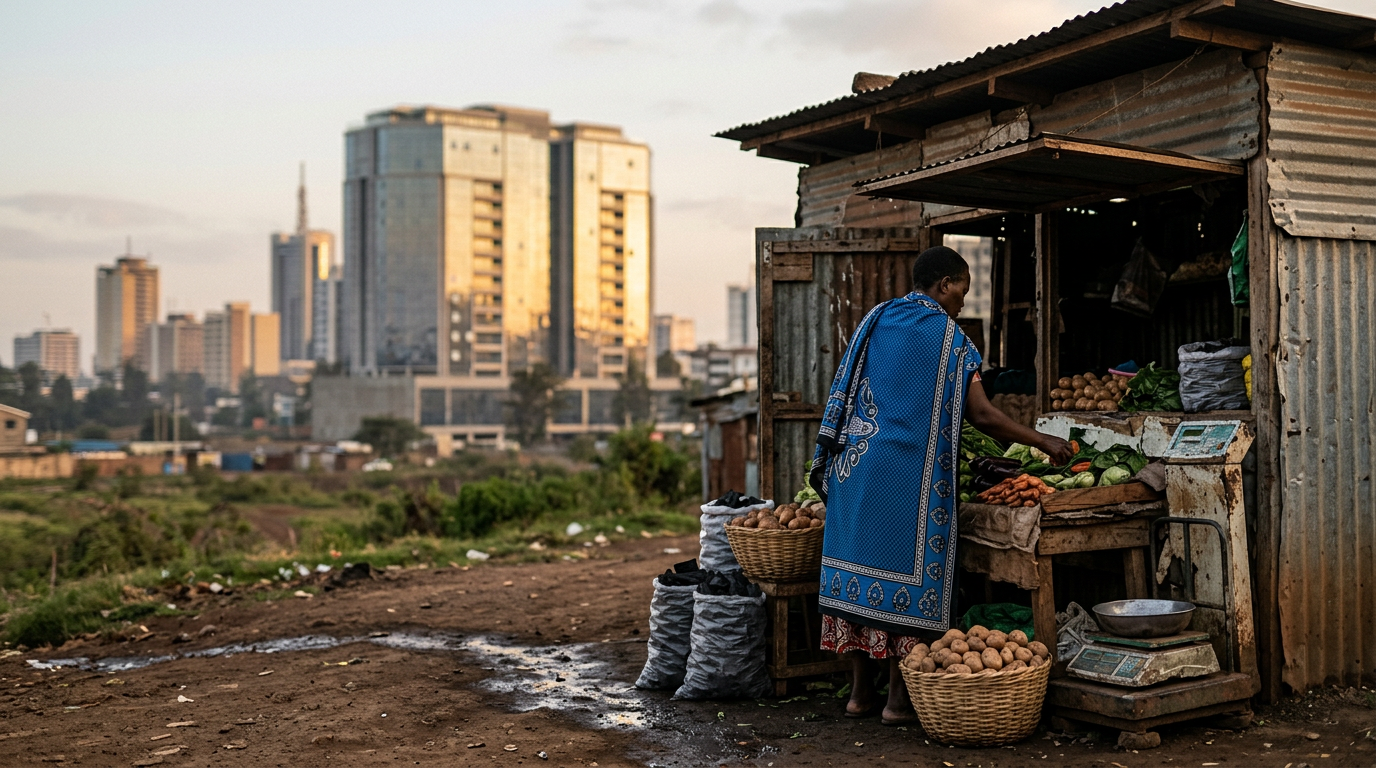
The Forbes metrics quantify a significant global wealth consolidation, revealing a profound divergence between the mechanisms sustaining the apex of female wealth and the operational realities—such as credit access and regulatory friction—facing women building enterprises in regions like Nairobi.
This disparity exposes a tension where narratives promoting grassroots empowerment clash with the immense, often static, capital bases controlled by a select cohort of inheritors.
Fort Worth Philanthropy: Capital Deployment and Strategic Signaling
The high-profile nature of Fort Worth galas—including events hosted by The Cliburn and the TEX Gala—demonstrates the strategic channeling of inherited capital into cultural and social infrastructure.
These events are complex capital allocation points, directing substantial, often tax-advantaged, funding toward established non-profits like St. Jude and local entities. The utilization of commercial headliners (Zac Brown Band) illustrates an optimization strategy aimed at maximizing fundraising yield through sophisticated cultural leverage.
Contrasting Capital Velocity: Legacy Inertia vs. MSME Constraints
The juxtaposition of Walton’s $134 billion valuation against the documented operational bottlenecks for Kenya’s Micro, Small, and Medium Enterprises (MSMEs) reveals a critical fracture in global capital access and velocity.
While dynastic fortunes are sustained by the inertia of historical asset accumulation, female entrepreneurs in developing economies are constrained by systemic hurdles to credit and market penetration.
This structural contrast necessitates policy discussions on equitable growth that confront not only current market dynamics but also the deeply entrenched, multi-generational concentration of existing global capital pools.
Operational Context of Legacy Wealth Maintenance
Walton’s financial stability is intrinsically linked to sophisticated governance and administrative frameworks securing the Walmart estate, prioritizing long-term asset retention over short-term liquidity maximization—a hallmark of dynastic capital.
This multi-decade preservation strategy contrasts sharply with the high-risk, capital-constrained environments defining MSME survival, where immediate cash flow dictates operational tenure.
Global Perception: Wealth Reporting as Geopolitical Data
Reporting these figures—Walton’s $134B against Kenyan entrepreneurial challenges—internationalizes the discussion on wealth distribution, compelling global financial bodies to address how capital flows either reinforce or mitigate disparities between established Western economies and developing African markets.
Media Framing and Elite Network Maintenance
Media coverage detailing the scale and performers of the Fort Worth galas functions as elite signaling, reinforcing social hierarchies and investment networks within the North Texas nexus.
This focused framing validates the economic status of organizers and attendees, creating a feedback loop that secures continuous high-volume contributions from this specific financial stratum, contrasting with analytical reporting on systemic barriers faced elsewhere.
The Role of Intergenerational Transfer in Economic Stability
The sustained financial positioning derived from the Walmart legacy suggests intergenerational transfer acts as a potent stabilizing force for national economic anchors, insulating vast fortunes from the volatility impacting newer, high-risk ventures.
This structural preference for inheritance over enterprise at the highest tier of female wealth signals a conservative bias in the deployment of the world’s largest private capital reserves.
Institutional Response to Systemic Stratification
The documented wealth concentration compels regulatory bodies to continuously reassess taxation frameworks and estate planning regulations, as current mechanisms for capital circulation appear insufficient against sophisticated, multi-generational asset structuring.
The Endurance of Inherited Status in 2026
The 2026 rankings reconfirm that mechanisms for transferring vast fortunes remain robust, suggesting that significant shifts in the top tier of female wealth will likely require systemic regulatory intervention rather than organic market dynamics alone.