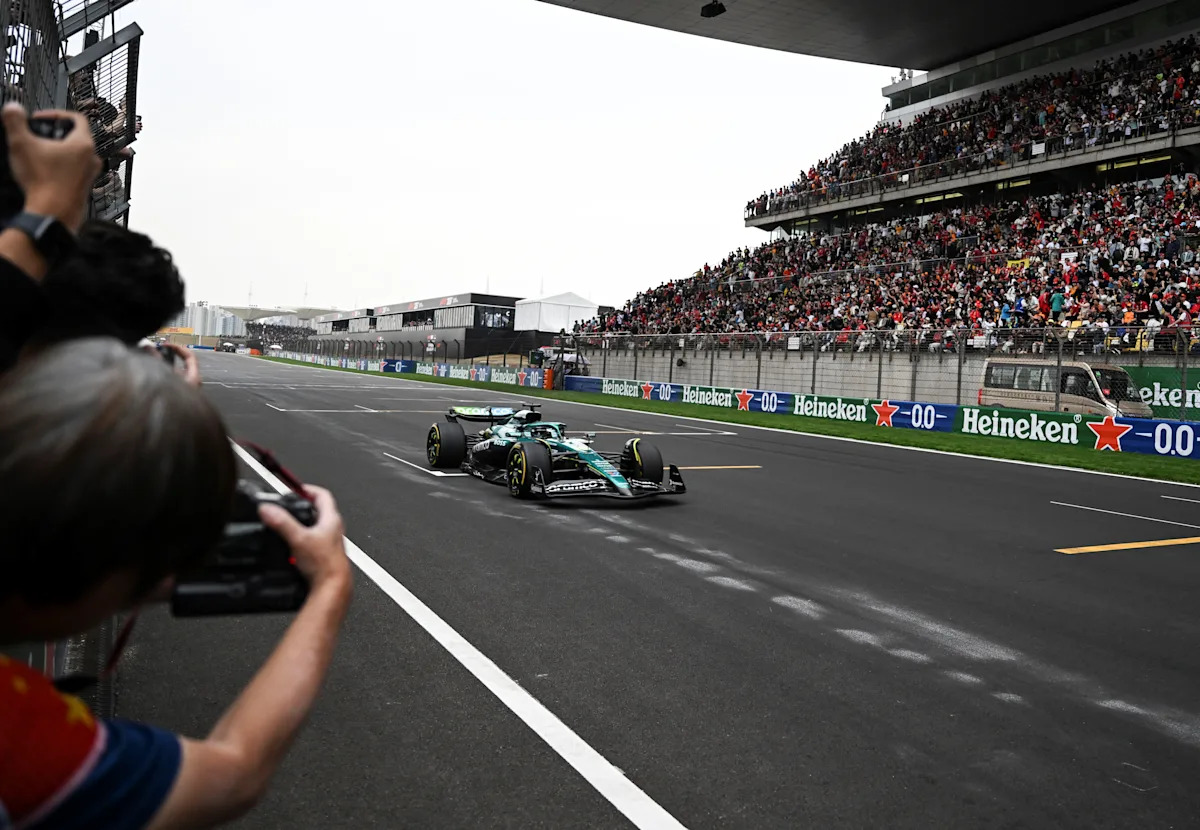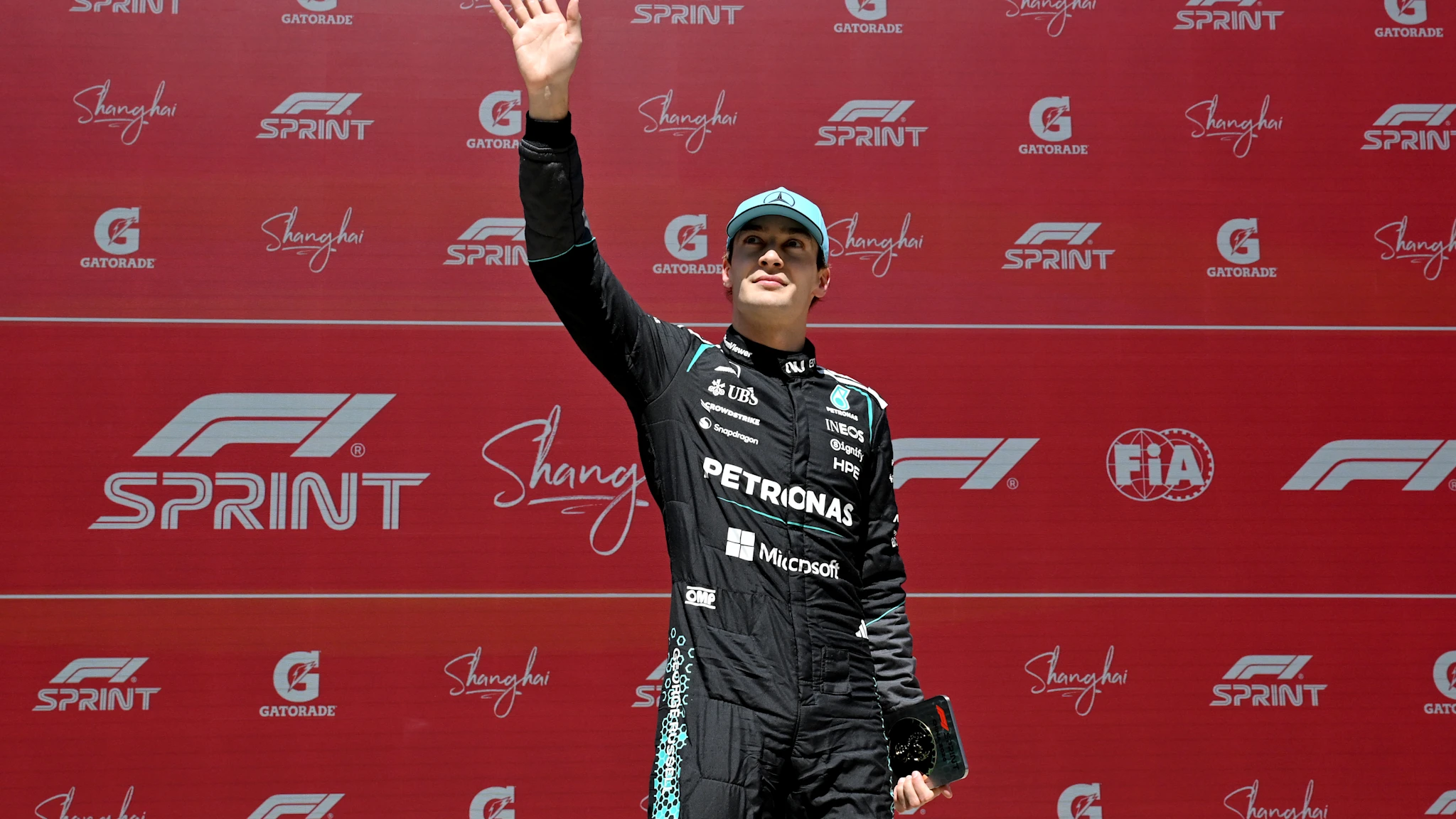
George Russell’s commanding victory in the Chinese Grand Prix Sprint, holding off Charles Leclerc and Lewis Hamilton, immediately calibrates the competitive hierarchy entering the main race, focusing intensely on the operational variance between Mercedes and Ferrari.
Early Race Instability and Mercedes Pace Conversion
The initial five laps, featuring a rapid lead exchange between Russell and Hamilton, reveal a fragility in initial tire deployment or driver management under immediate duress for both front-running outfits. Russell’s critical move on Lap 5 secured a track position that Leclerc could not ultimately neutralize, suggesting Mercedes maximized their early-phase tire and power unit mapping more effectively than Ferrari during intense initial combat.
Hamilton’s subsequent positional trade with Leclerc pointed towards internal prioritization conflicts within Ferrari regarding optimal strategic sequencing after high-intensity opening skirmishes.
The Safety Car as a Strategic Crucible
The late-race Safety Car intervention served as a decisive inflection point, neutralizing gains and forcing a high-stakes pit stop convergence that brutally exposed operational inefficiencies.
The mandatory stacking of Hamilton behind Leclerc during the pit flurry directly degraded Hamilton’s potential finishing position, illustrating a structural bottleneck in Ferrari’s pit lane coordination or garage allocation management under convergence stress.
Hamilton’s subsequent recovery pass on the restart confirms raw pace but underscores the inefficiency embedded in the preceding pit sequence, forcing a high-energy recovery drive against drivers who maintained clean track sequencing.
Operational Constraints and Disciplinary Cost
The trajectory of the second Mercedes entry, with Kimi Antonelli dropping significantly before recovering to P5, was severely hampered by a 10-second penalty for first-lap contact with Isack Hadjar. This penalty represents a measurable time/track-position cost absorbed due to an initial control deficit.
Antonelli’s recovery demonstrates significant underlying chassis performance but confirms that disciplinary infractions are currently acting as a ceiling on the team’s overall weekend points potential, necessitating excessive on-track compensation.
McLaren’s Procedural Deference
Lando Norris securing P4 leveraged the midfield chaos. However, the immediate directive for Oscar Piastri to cede a position gained under the restart, based on a perceived procedural violation (overtaking before the line), showcases McLaren’s stringent adherence to regulatory compliance over marginal track position maximization. This risk-averse procedural focus contrasts sharply with the aggressive, albeit riskier, engagement seen at the front.
Media Consolidation and Data Democratization
The confirmed transition to Apple TV as the exclusive 2026 broadcaster, absorbing the F1 TV Premium service, signifies a major capital realignment in media distribution. This centralizes leverage under a major tech platform, potentially creating novel revenue streams while concentrating exposure risk.
The advertised integration of features—Driver Tracker, real-time telemetry, mixed onboard feeds—signals an aggressive pivot toward data-rich, personalized consumption models targeting digitally fluent audiences.
Implications for Data Symmetry
Direct subscriber access to granular, real-time telemetry via the dedicated Apple channel fundamentally erodes the information asymmetry previously maintained by incumbent broadcasters or specialized data services. This forces analysts and teams to assume complex performance metrics are instantly public, influencing competitive analysis.
Performance Leverage Validation
Russell’s Sprint victory, achieved while managing immediate pressure from both Ferraris, provides crucial performance validation for Mercedes’ chassis package under compressed, high-stress formats. This leverage is vital for sustaining morale and sponsor confidence.
Leclerc finishing only 0.6 seconds behind Russell indicates that the outright pace differential may be narrower than the final result implies, placing critical importance on race-day setup variance.
External Variables: Hulkenberg’s Incident
Nico Hulkenberg’s retirement triggering the pivotal Safety Car underscores the inherent operational fragility across the grid, where single-car failures instantly reset strategic advantages. The efficiency of marshaling and recovery protocols remains a constant external multiplier on race outcomes.
Stakeholder Dynamics in the 2026 Context
These early results establish that marginal gains in high-pressure execution (Sprints) are now co-equal with long-race strategy. Mercedes appears to have achieved higher execution consistency in short bursts, while Ferrari displays peak pace susceptibility to procedural errors under duress.
The performance spread between the four lead drivers in the Sprint race strongly suggests that internal synchronization and driver management are now primary performance levers, potentially eclipsing minor chassis evolution.
Financial Architecture of Media Rights
The Apple TV rights consolidation shifts significant viewership revenue toward a technology ecosystem. This demands that team marketing strategies align with the viewing habits and data consumption models favored by the new primary distributor. The ‘free’ inclusion of F1 TV features suggests an aggressive volume-based market penetration strategy typical of platform expansion phases.
Succession Planning and Reactive Performance
Hamilton’s recovery to P3, mitigating the strategic compromise enacted by his own team’s sequencing, reinforces his value as a performance stabilizer capable of offsetting internal execution failures. However, this necessitated recovery drive highlights the competitive tax imposed by suboptimal sequencing.
Russell’s ability to anchor the lead against immediate pursuit solidifies his role as a reliable pillar for Mercedes, in direct contrast to the visible internal friction points challenging Ferrari’s consistency.
Restart Precision Analysis
The post-Safety Car sequence demonstrated contrasting outcomes: Russell maintained control, Hamilton executed a decisive positional gain, and Piastri was mandated to cede ground due to the timing of his overtake relative to the restart line. This variance shows competitive advantage hinges on restart execution precision and procedural interpretation.
Institutional Trajectory
The Sprint outcome frames the 2026 season as one where operational excellence in compressed formats is paramount. Teams seamlessly integrating complex, public-facing data into decision-making processes will gain sustained competitive advantage. The performance asymmetry observed between driver pairings mandates that internal team dynamics are now critical differentiators, exceeding minor aerodynamic improvements. Russell’s win sets a demanding execution baseline, compelling Ferrari to urgently address the strategic bottlenecks exposed during the mandatory pit phase.