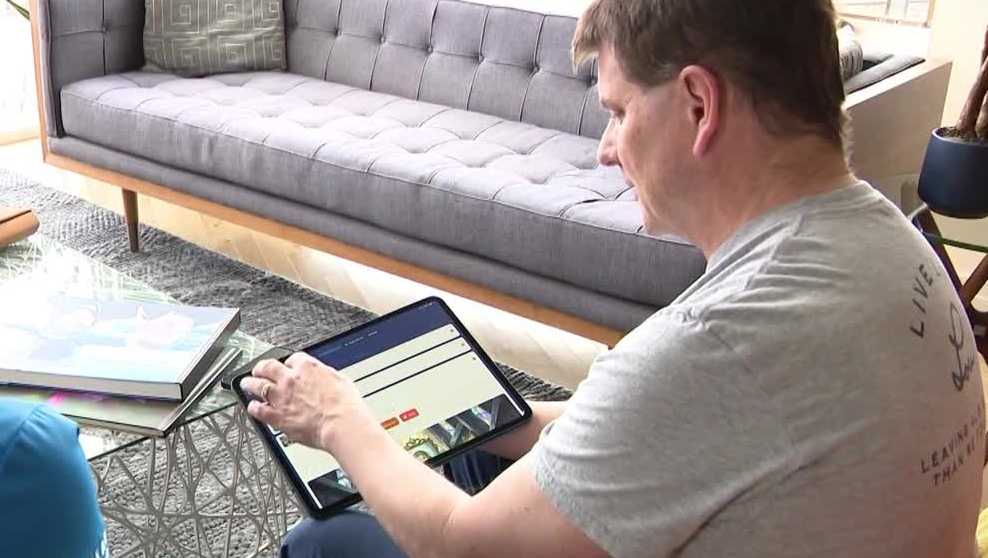
David Betts, a Pittsburgh-area consultant diagnosed with ALS two years ago, engineered the AI-powered text-to-speech application, “Talk to Me, Goose!,” marking a significant paradigm shift in personalized assistive communication.
Betts identified a critical market failure in commercially available speech aids: their synthesized voices were overly robotic, failing to preserve the user’s unique vocal identity—a necessity for psychological continuity.
Analysis of Assistive Technology Deficiencies
The creation of the app stemmed directly from the perceived inadequacy of existing commercial solutions to address the nuanced identity preservation needs of individuals facing progressive speech impairment due to ALS and similar conditions.
Betts’s development process, undertaken without prior coding expertise, highlights a grassroots innovation response to institutional and commercial inertia, forcing rapid patient-led technological intervention in the health-tech domain.
The application’s core capability, high-fidelity voice cloning via AI, directly counters the identity erosion associated with voice loss, positioning it as a crucial intervention for maintaining psychological selfhood over mere functional output.
Strategic Distribution and Accessibility
Distributing “Talk to Me, Goose!” free of charge through the Live Like Lou Foundation immediately neutralizes the high economic barriers often associated with proprietary voice preservation systems, maximizing patient impact.
This non-profit distribution model strategically bypasses slow traditional healthcare procurement channels, ensuring rapid adoption of advanced AI capabilities within the patient community.
With a potential scale targeting the estimated 97 million individuals globally affected by speech conditions, the application transcends niche status, demanding attention from established Augmentative and Alternative Communication (AAC) providers.
Competitive Disruption in the AAC Sector
The availability of a free, high-fidelity, patient-developed cloning solution directly challenges the value proposition of licensed or subscription-based text-to-speech platforms relying on generic synthetic voices.
This innovation forces established medical device manufacturers to reprioritize R&D investment toward personalized voice synthesis to remain competitive within the AAC market.
The application’s cultural naming, “Talk to Me, Goose!” (a ‘Top Gun’ reference), illustrates an effective use of personal framing to foster adoption, a strategy often lacking in purely corporate technological offerings.
Synergy of Patient-Led Innovation and Philanthropy
Integrating this technology within the Live Like Lou Foundation’s support structure creates a potent synergy, leveraging established non-profit infrastructure for rapid, trusted deployment within the ALS community.
This partnership enables a swift, vetted pathway for non-commercial solutions, overcoming typical adoption hurdles faced by independent developers.
The concurrent $2.3 million fundraising goal by the Phi Delta Theta fraternity for ALS support during the 2023–25 biennium demonstrates a robust financial ecosystem directly intersecting with technological enablement for patients.
Phi-athlon: Integrating Fitness, Fundraising, and Legacy
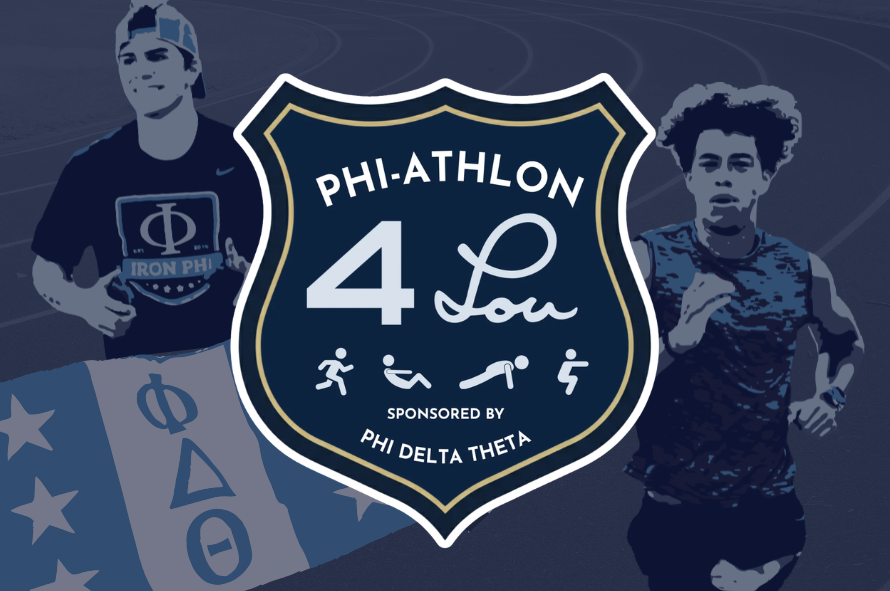
The Phi-athlon fitness challenge introduced by Phi Delta Theta chapters is a novel framework integrating philanthropy with campus wellness, utilizing structured physical activity to drive fundraising velocity.
The standardized workout (1-mile run/walk, 44 reps of sit-ups, push-ups, and air squats) deliberately honors Lou Gehrig via the number 44, embedding historical context into participant engagement.
This template minimizes administrative overhead for campus chapters while creating a mission-aligned, competitive framework designed to increase overall fundraising efficiency and frequency across campuses.
Future Trajectory and Institutional Readiness
The manageable structure of the Phi-athlon is optimized for broad chapter recruitment, signaling institutional commitment to scaling support mechanisms beyond the previous biennium’s fundraising benchmarks.
The integration of individual registration and fundraising fosters direct participant accountability, translating physical exertion into tangible financial support for ALS research and family services.
The long-term success metric hinges on the model’s ability to combine scalable fundraising (Phi-athlon) with high-impact, individualized technological solutions (voice app), defining the next generation of ALS support strategy.
Implications for Patient Autonomy and Healthcare R&D
Betts’s trajectory from diagnosis to developer validates a trend where acute, unmet patient needs drive the most impactful innovations in specialized healthcare technology, often superseding traditional corporate R&D timelines.
This patient-driven development model exerts competitive pressure on the industry to accelerate responsiveness, as affected individuals possess the capacity to engineer bespoke solutions rapidly.
The subtle onset of Betts’s symptoms (foot trouble with bicycle pedals) prior to formal diagnosis underscores the progressive nature of ALS, reinforcing the imperative for preemptive safeguards like personalized voice preservation technology.
Contextualizing Voice Preservation in Chronic Illness
For patients with degenerative neurological conditions, maintaining one’s voice is intrinsically linked to personal autonomy and sustained social connection, extending beyond simple functional utility.
The AI cloning process creates a digital vocal proxy matching pre-illness characteristics, offering crucial identity continuity that generic synthetic voices cannot replicate for family and peer relationships.
The solution’s origin near Mt. Washington, rather than a major tech hub, demonstrates that high-impact technological breakthroughs are increasingly emerging from diverse community contexts.
Leverage Points for Evolving ALS Support Models
The confluence of fraternity mobilization, patient-led engineering, and non-profit dissemination establishes a powerful leverage model for future ALS advocacy, attacking the disease challenges through multi-faceted action.
The strategic commitment to leaving ALS “better than we found it”—through both capital investment and technological enablement—signals a necessary shift toward proactive quality-of-life preservation.
The sustained commitment by Phi Delta Theta chapters through the 2025–27 biennium ensures the infrastructure supporting both the Phi-athlon and the voice app dissemination remains active, providing a stable platform for integrating future technological advancements.
The primary operational challenge for organizations like Live Like Lou will be managing the intake and secure integration of diverse patient-developed technologies into their established support frameworks.
The success of the Phi-athlon will be measured not only by capital raised but by the measurable increase in campus awareness and the adoption rate of this high-engagement philanthropic template by affiliated chapters.
This entire integrated ecosystem—from personal crisis driving innovation to structured campus fundraising—defines an adaptive support model capable of responding effectively where conventional institutional timelines falter against the pace of chronic disease progression.