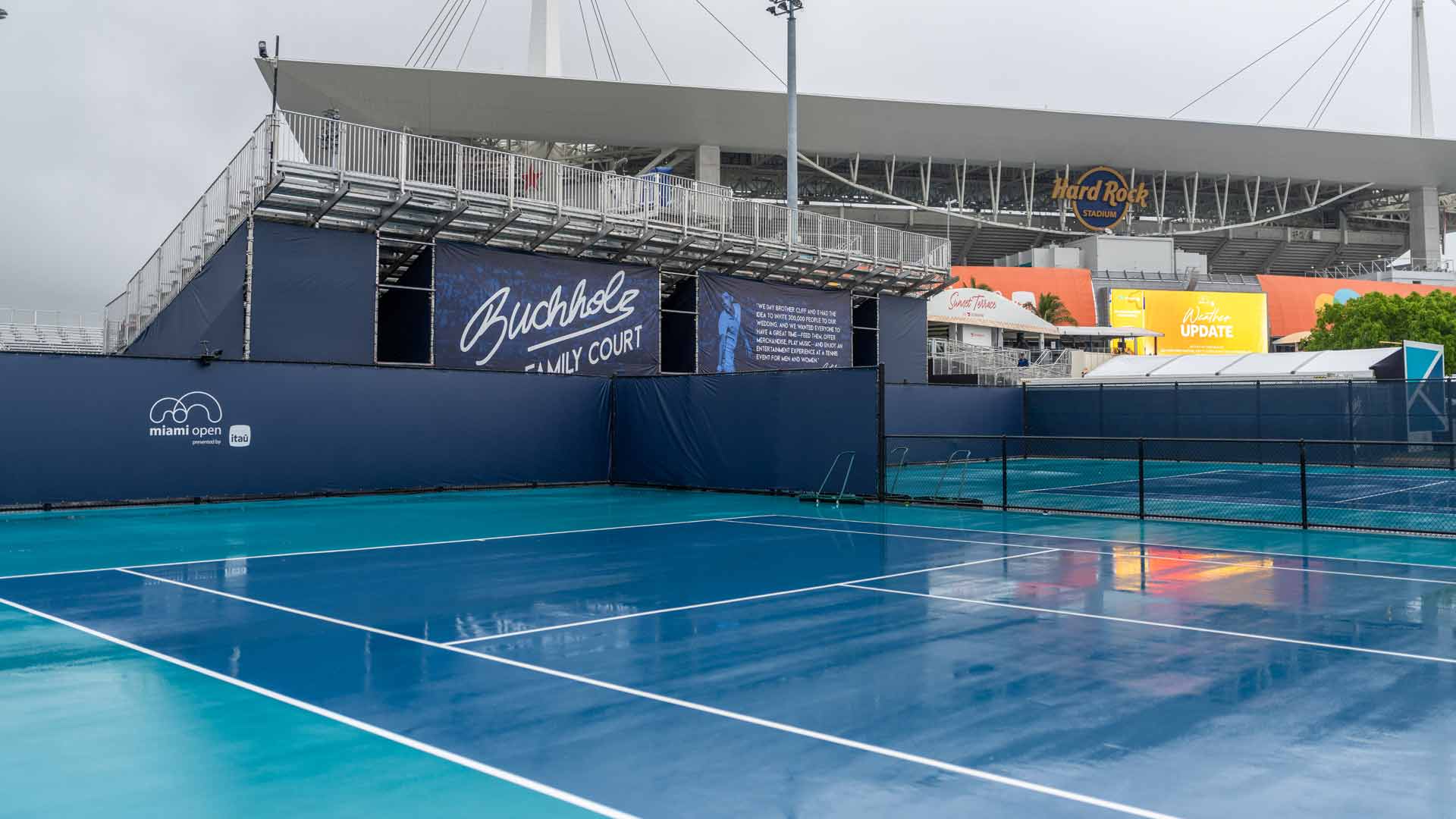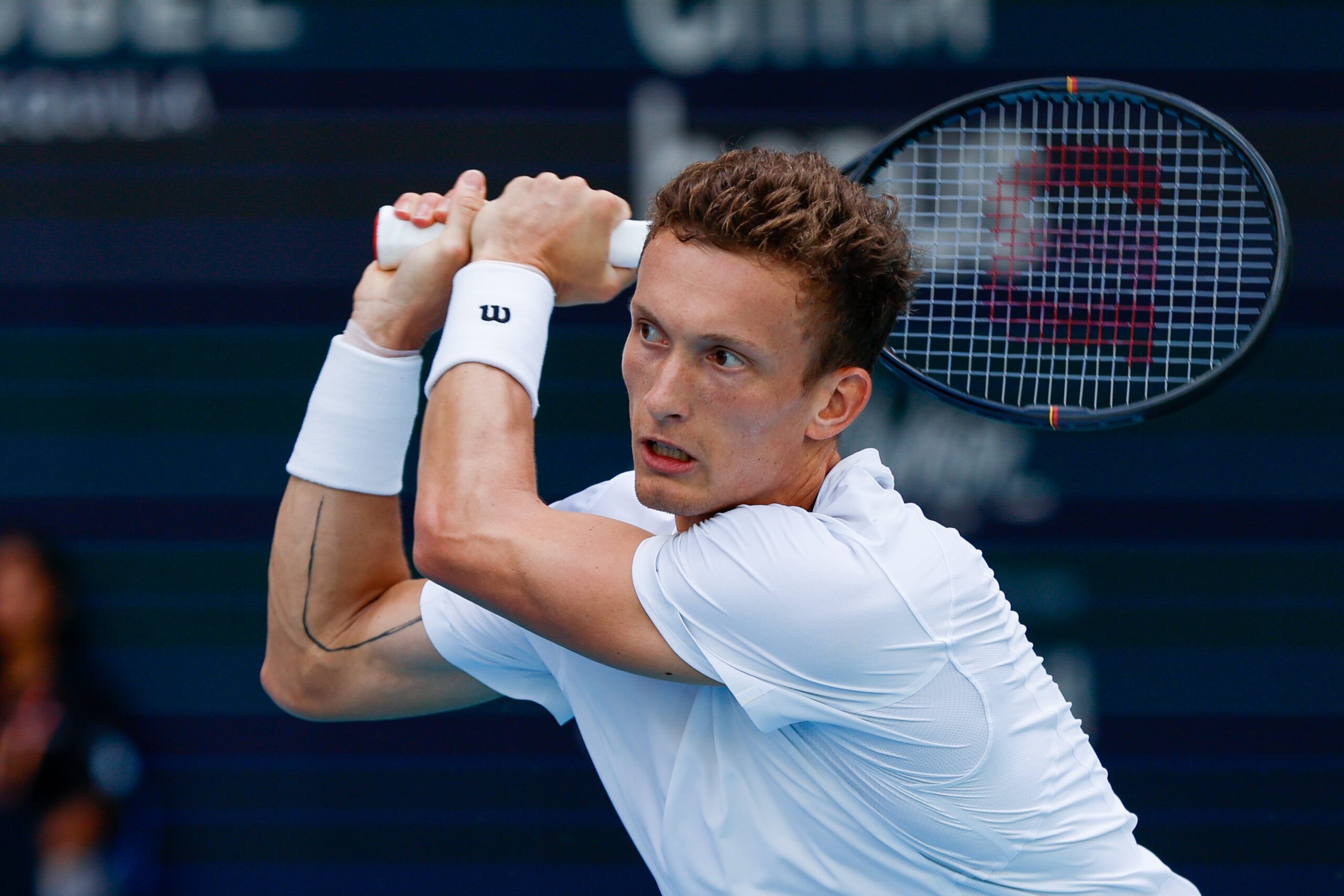
The Miami Open final between Jannik Sinner and Jiri Lehecka has encountered a significant logistical bottleneck, with inclement weather delaying proceedings until at least 4:15 p.m. local time. This operational pause creates a psychological vacuum, testing the physiological latency and mental fortitude of both competitors as they vie for the season’s second ATP Masters 1000 trophy.
For Sinner, the final represents a critical milestone in his pursuit of hardcourt dominance. By maintaining a high-performance floor throughout the North American swing, he has established himself as the tour’s primary pace-setter. The delay, while disruptive to momentum, serves as a litmus test for his refined recovery protocols and ability to manage high-stakes environmental variability.
Logistical adjustments reached beyond the singles draw, as officials relocated the women’s doubles final from Stadium Court to the Grandstand. This decision underscores the institutional priority placed on the primary broadcast window for the men’s championship, reflecting the commercial hierarchies inherent in elite tournament management during weather-related scheduling crises.
Technical Evolution: The Service Apex
Sinner’s progression to the final has been underpinned by a marked evolution in his service metrics. His semifinal victory over Alexander Zverev—who returns to the world No. 3 ranking—highlighted this technical surge. Sinner utilized 15 aces to neutralize Zverev’s aggressive baseline positioning, demonstrating a newfound reliance on a high-percentage, high-velocity first serve.
Zverev attempted to disrupt Sinner’s rhythm with 130mph second serves and frequent net approaches. However, Sinner’s tactical clarity remained uncompromised. The second-set tiebreak served as a case study in environmental awareness; Sinner’s lob, which Zverev lost in the stadium floodlights, capitalized on the specific visibility conditions of the night session, turning a defensive position into a decisive break.
The Statistical Deficit for Jiri Lehecka
Jiri Lehecka enters his maiden Masters 1000 final facing a daunting statistical threshold. Sinner has historically controlled their head-to-head encounters, utilizing a flatter ball strike to deny the Czech the time required to set up his heavy forehand. For Lehecka to disrupt this pattern, he must increase his return-of-serve efficiency and force Sinner into lateral defensive movements.
Lehecka’s run to the final guarantees a significant ascent in the ATP rankings, providing him with a higher seeding floor for the upcoming clay-court season. However, overcoming Sinner requires more than baseline consistency; it demands a high-risk tactical pivot to prevent the Italian from dictating play from the center of the court.
Institutional Context and Ranking Implications
The outcome of this final carries profound implications for the ATP hierarchy. A victory for Sinner would significantly narrow the points gap at the top of the rankings, positioning him to challenge for the world No. 1 spot during the European swing. His recent form suggests a sustainable model of success that relies on technical refinement rather than physical attrition.
Furthermore, the success of players like Sinner and the doubles team of Bolelli and Vavassori signals a Renaissance in Italian tennis. This institutional strength is the result of long-term developmental planning, which has produced a generation of players capable of competing across all surfaces and formats. The Miami Open serves as the ultimate proof of concept for this strategic investment.
Conclusion: A Shifting Power Dynamic
As the tennis world awaits a break in the weather, the Miami Open final stands as a pivotal moment in the ATP’s post-Big Three transition. Sinner is no longer merely a rising prospect; he is the tour’s most efficient operator. Whether Lehecka can shatter the current narrative or Sinner solidifies his grip on the hardcourt season, the match will provide essential data on the future of professional tennis.