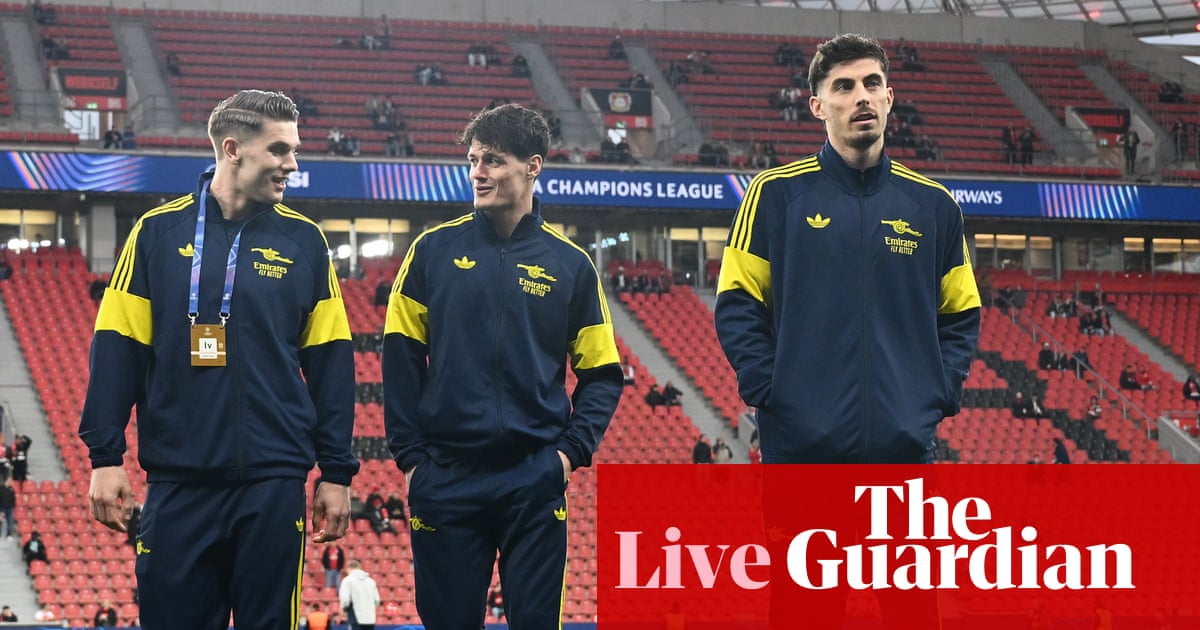
Arsenal’s progression through domestic cups provides context, but the strategic fulcrum shifts decisively to the Champions League Round of 16 resumption against Bayer Leverkusen. The first leg at the BayArena serves as the definitive metric for Mikel Arteta’s insistence that Arsenal has attained European elite standing—a status requiring tangible knockout performance, irrespective of domestic results.
Critical Impact of Personnel Deficits on Elite Aspirations
The confirmed absence of Martin Ødegaard until April represents a profound tactical blow, directly compromising Arsenal’s established creative nexus and decision-making capacity in high-leverage fixtures. While medical reports from Norway offer optimism, the operational reality demands significant midfield recalibration for this crucial two-legged tie.
Conversely, William Saliba’s return shores up defensive stability, essential for absorbing the rotational load inherent in competing concurrently across multiple elite competitions. Kai Havertz’s measured return from a significant knee injury, framed psychologically as a source of ‘new hunger,’ introduces a variable intensity factor, though physical latency from over 20 missed games remains a concern against high-tempo opponents.
Disciplinary management adds constraint; Christian Norgaard’s yellow card accumulation necessitates careful tactical deployment to prevent suspension in the decisive North London return leg.
Leverkusen Context and Competitive Divergence
Bayer Leverkusen, despite securing the Bundesliga title, currently exhibits domestic inconsistency (positioned 6th), presenting a potential strategic exploitation opportunity. Arsenal’s perfect group stage record establishes them as favorites, yet Arteta correctly emphasizes the volatility of two-legged ties, where singular moments supersede historical form.
The club’s recent history—first knockout win in 14 years, first semi-final in 16 years over the past two seasons—underscores that sustained elite performance is a short-term achievement, not an entrenched status, making this fixture a vital proof point.
Financial Architecture: UEFA Revenue and the UEC Challenge
The fixture coincides with heightened systemic tension surrounding the Union of European Clubs (UEC) proposal to restructure UEFA competition revenue distribution. The current model channels €3.317 billion in prize money to participating clubs, leaving minimal solidarity payments (€308 million) for non-qualifiers.
This disparity structurally entrenches competitive stratification. For Arsenal, Champions League success is a core component of the financial framework underwriting elite operational expenditure, competitive wage structures, and transfer market positioning.
The UEC’s advocacy for capital redistribution directly challenges the financial hegemony favoring established incumbents. If adopted, a revised model would alter the capital mobility for clubs reliant on deep European runs, potentially diluting expected returns unless performance weighting is heavily prioritized in the new formula.
Validation Beyond Prestige
The Leverkusen contest operates on dual planes: immediate sporting advancement and securing the financial leverage derived from continued participation in the highest-earning competitions. Progression directly enhances club valuation metrics and commercial appeal, reinforcing the cycle of investment capacity critical for maintaining status against rivals with deeper recent European longevity.
Operational Demands and Institutional Learning
Arteta has frequently cited the squad’s prior lack of UCL experience as an operational bottleneck, systematically addressed via recent campaigns. The transition to knockout European football requires institutional learning regarding tempo, psychological resilience, and management of high-stakes game states.
Ødegaard’s absence tests the depth of this learned experience. It forces secondary playmakers into roles without established rapport or precedent, shifting the mandate from broad quality demonstration to procedural competence under duress—specifically, the ability to manage game states when primary creative conduits are neutralized.
Stakeholder Accountability
Failure to navigate this round signals a stagnation in the established trajectory, undermining the narrative of sustained elite status despite significant capital investment. For Leverkusen, a positive result offers a substantial reputational uplift within the broader European framework.
The mandate for Arsenal is clear: translating perceived elite status into tangible advancement. The margin for error against a tactically astute opponent like Leverkusen is minimal, demanding execution precision that goes beyond mere aggregation of talent.