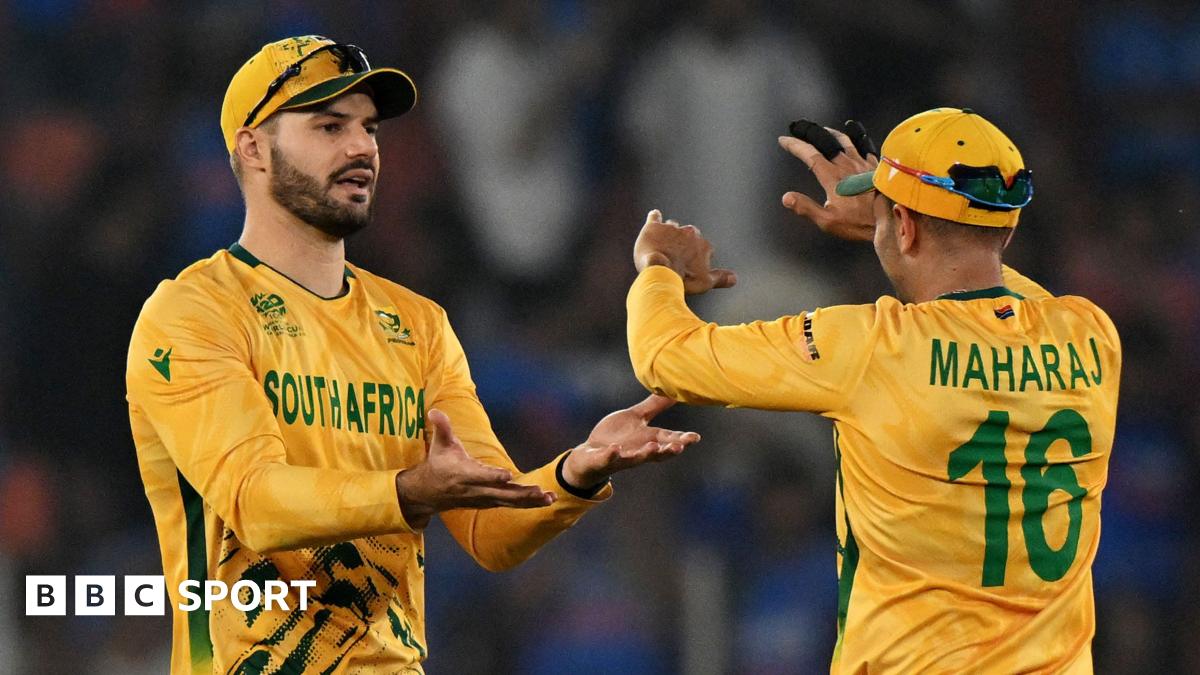
South Africa’s designation as tournament favourites entering the T20 World Cup semi-final against New Zealand at Eden Gardens represents a deliberate, high-stakes psychological maneuver. This acceptance of expectation, championed by Coach Shukri Conrad, directly confronts the nation’s legacy of systemic underperformance in global knockout cricket.
Operationalizing Expectation: From Underdog Status to Proactive Pressure
Conrad’s assertion, “I’m glad that we’re favourites because I always felt that as a South African team, you want to be able to play as a favourite,” is a strategic pivot designed to neutralize the historical anchor of the underdog narrative. This reframing leverages the team’s undefeated seven-match streak and recent Test success to mandate a shift from mere survival to active dominance.
Historically, South Africa’s tournament narrative has been defined by specific choke points—from the 1992 rain rule to critical errors in 1999 and 2015. By embracing favouritism, the current leadership attempts to redirect external pressure onto New Zealand, allowing the Proteas to perform with perceived reduced internal anxiety related to their past failures.
NZ’s Counter-Framing and Shared Knockout Trauma
New Zealand captain Mitchell Santner immediately countered this framing, insisting on parity. This strategic defense underscores a shared institutional vulnerability: neither team has secured the men’s white-ball World Cup, collectively accumulating numerous semi-final and final defeats.
Captain Aiden Markram validated the high-variance nature of knockout fixtures by terming the semi-final a “completely fresh start,” acknowledging that group stage results hold diminishing predictive power. The competitive dynamic shifts from sustained form to immediate, high-leverage execution.
The Knockout Bottleneck: Institutional Reputation at Stake
The Kolkata semi-final guarantees that one of these historically burdened nations will extend its final-match drought, dramatically escalating the institutional cost of failure regarding player morale and commercial valuation.
For South Africa, advancing under expectation would validate the Conrad/Markram leadership structure, potentially unlocking significant commercial capital previously constrained by the ‘nearly-men’ perception. Conversely, another semi-final exit demands a rigorous review of systemic failure mechanisms.
Leveraging Individual Performance vs. Collective Resilience
The analysis notes a critical dependency on individual performance, highlighted by Markram remaining the highest-scoring batter in the competition. This contrasts with New Zealand’s strength, often derived from proven, process-driven organizational stability in tight, attrition-based contests.
If SA is to operate successfully under the favouritism mandate, operational success hinges on dictating tempo via superior execution in power plays and middle overs—the typical loci of historical collapses. Failure to enforce their game plan concedes psychological initiative to an opponent expert at navigating low-scoring, high-pressure scenarios.
Venue Context and Narrative Maximization
The Eden Gardens venue introduces variables (pitch behavior, dew factor) that demand superior in-game adaptation. The team mastering these transient conditions gains a decisive, albeit localized, edge, superseding pre-match status.
Administratively, pairing these two historically haunted teams in the first semi-final maximizes narrative tension and viewership engagement for the opening qualifier to the final in Ahmedabad.
The Unspoken Leverage of Historical Underdogs
Despite Conrad’s proactive stance, the implicit leverage remains with New Zealand: the ingrained expectation that South Africa will eventually falter under acute pressure. Santner’s push for equality is tactical, aiming to reintroduce cognitive dissonance and anxiety associated with past negative reinforcement.
The ultimate metric for the South African leadership will be scoreboard management in the final overs, testing whether their psychological conditioning can withstand the specific triggers linked to previous high-stakes implosions.
Conclusion: A Test of Institutional Evolution
This semi-final is fundamentally a test of institutional capacity: South Africa’s ability to sever financial and psychological ties to its past, versus New Zealand’s consistent demonstration of structural integrity, even without the ultimate trophy.
Stakeholders are assessing whether this moment represents a genuine, sustainable strategic evolution or a temporary performance spike preceding a reversion to established systemic norms. The outcome defines the immediate strategic trajectory and capital valuation for both boards entering the next World Cup cycle.