Texas Supreme Court Blocks Polling Hour Extension, Creating Election Uncertainty
The Texas Supreme Court issued a temporary injunction to block a lower court order extending polling hours in Dallas County, creating immediate uncertainty for ballots cast during the additional two hours. The ruling mandated that all ballots cast after the original 7 p.m. closing time be segregated from the general vote count. This procedural intervention by the state’s highest court introduced a significant legal complication into the Democratic primary race for Senate, where state Rep. James Talarico and Rep. Jasmine Crockett are engaged in a closely contested battle for votes.
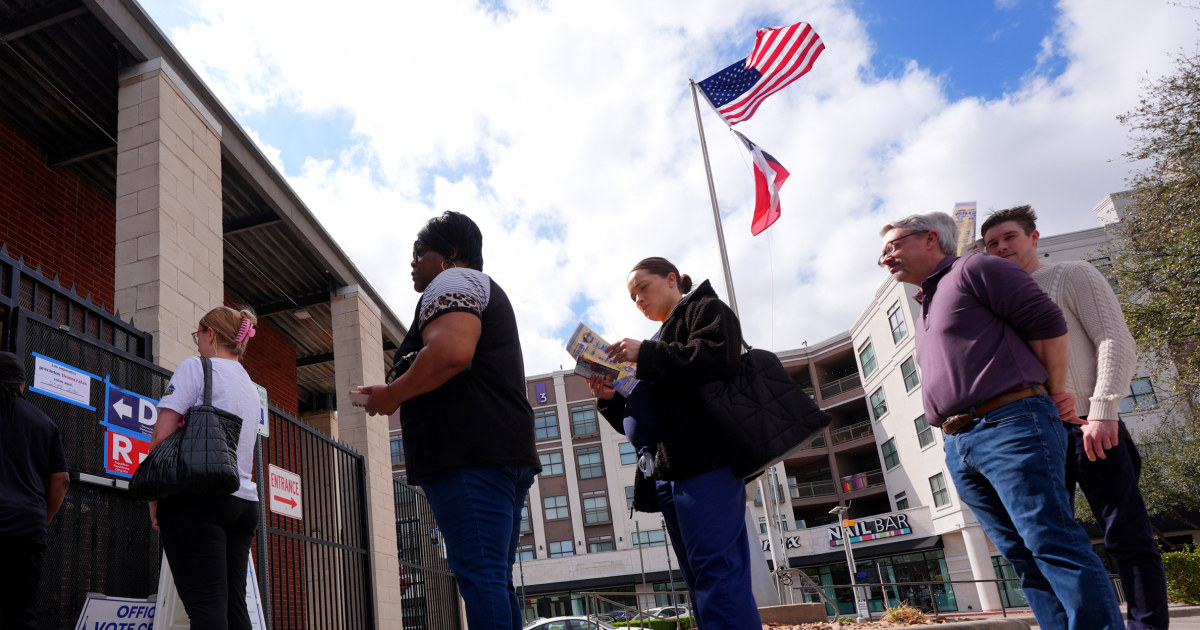
The judicial intervention followed a decision by a local Dallas County judge to keep Democratic polling sites open for two additional hours in response to widespread voter confusion. Voters who took advantage of the extended hours were instructed to cast provisional ballots. This mechanism captures votes that are subject to subsequent legal review, effectively creating a separate category of ballots whose validity is contingent on the final judicial outcome regarding the extension.
Root Cause Analysis: The Impact of Precinct-Based Voting Policy
The underlying cause of the confusion stemmed from a significant administrative policy shift in election administration. Texas Democrats reported that thousands of voters in Dallas and Williamson counties arrived at incorrect polling sites throughout the day. This operational disruption was attributed to new rules limiting Election Day voting to party-specific precinct locations, departing from the previous practice of allowing countywide voting at any location. The implementation of precinct-based voting on Election Day created a substantial administrative burden on both election officials and voters, as it requires voters to confirm their assigned location, often leading to confusion for those accustomed to the previous, more flexible system.
Kardal Coleman, chairman of the Dallas County Democratic Party, characterized the situation as entirely avoidable. He noted that the decision by Republican officials in those counties to implement a precinct-based primary election ended the practice of countywide voting on Election Day, which had been standard procedure in previous elections. This policy choice directly triggered the operational challenges and subsequent legal challenges, demonstrating how local administrative decisions can significantly impact voter access and election-day logistics.
Political Implications for Candidates and Campaigns
The disruption immediately impacted the strategic calculations of the candidates in the tight Senate primary. Candidate James Talarico called for the extension of voting hours in Dallas and Williamson counties, arguing it was necessary to ensure all Texans’ voices were heard. Similarly, Talarico’s opponent, Rep. Jasmine Crockett, also denounced the changes to voting rules that caused the confusion. Both candidates’ responses highlight the strategic necessity of addressing perceived threats to voter participation, particularly in a high-stakes primary where every vote carries significant weight.
The intervention by the Dallas County Democratic Party to obtain a court order for extended hours demonstrates the critical role of party infrastructure in mitigating operational failures. By leveraging legal mechanisms, the party sought to protect voter access and ensure that the confusion did not disenfranchise a significant portion of its base. This highlights the strategic importance of legal and administrative preparedness for political organizations in navigating complex election procedures.
Systemic Consequences and Legal Precedent
The Texas Supreme Court’s decision to halt the lower court’s ruling introduced a significant legal conflict regarding the authority over election administration. The local judge’s order reflected a judicial response to immediate operational failures and voter disenfranchisement concerns, while the state supreme court’s intervention asserted a higher level of procedural control. The directive to separate ballots cast during the extended hours from the rest of the day’s votes is a critical procedural safeguard, ensuring that if the state supreme court ultimately rules against the extension, those ballots can be easily identified and potentially excluded from the final count. However, this also creates a period of prolonged uncertainty for the candidates and the public.
The incident underscores the importance of clear communication and voter education when implementing changes to election procedures. The fact that thousands of voters were affected suggests a failure in public outreach regarding the new rules. This failure not only creates operational chaos but also erodes public confidence in the election process, regardless of the underlying policy intent. For political campaigns, the incident necessitates a re-evaluation of voter mobilization strategies, as campaigns must now account for potential administrative barriers and provide more precise guidance to voters regarding their specific precinct locations.
The Role of Institutional Incentives and Risk Distribution
The decision by Republican officials to implement precinct-based voting on Election Day suggests institutional incentives related to election administration. While the specific rationale (e.g., security or cost concerns) may vary, the resulting confusion and legal challenges demonstrate a significant risk distribution where the operational burden falls disproportionately on voters, and the financial and legal risk falls on political parties and judicial systems. The Texas Supreme Court’s intervention highlights the judiciary’s role as the final arbiter of election procedures, setting a precedent for how similar conflicts will be handled in the future.
The tight margin in the primary race between Talarico and Crockett amplifies the significance of every vote, including those cast via provisional ballots during the extended hours. The outcome of the legal challenge regarding these ballots could determine the winner of the primary, demonstrating how operational failures and judicial interventions can directly influence competitive outcomes. The uncertainty surrounding these votes creates a high-stakes environment where legal strategy becomes as important as campaign strategy.