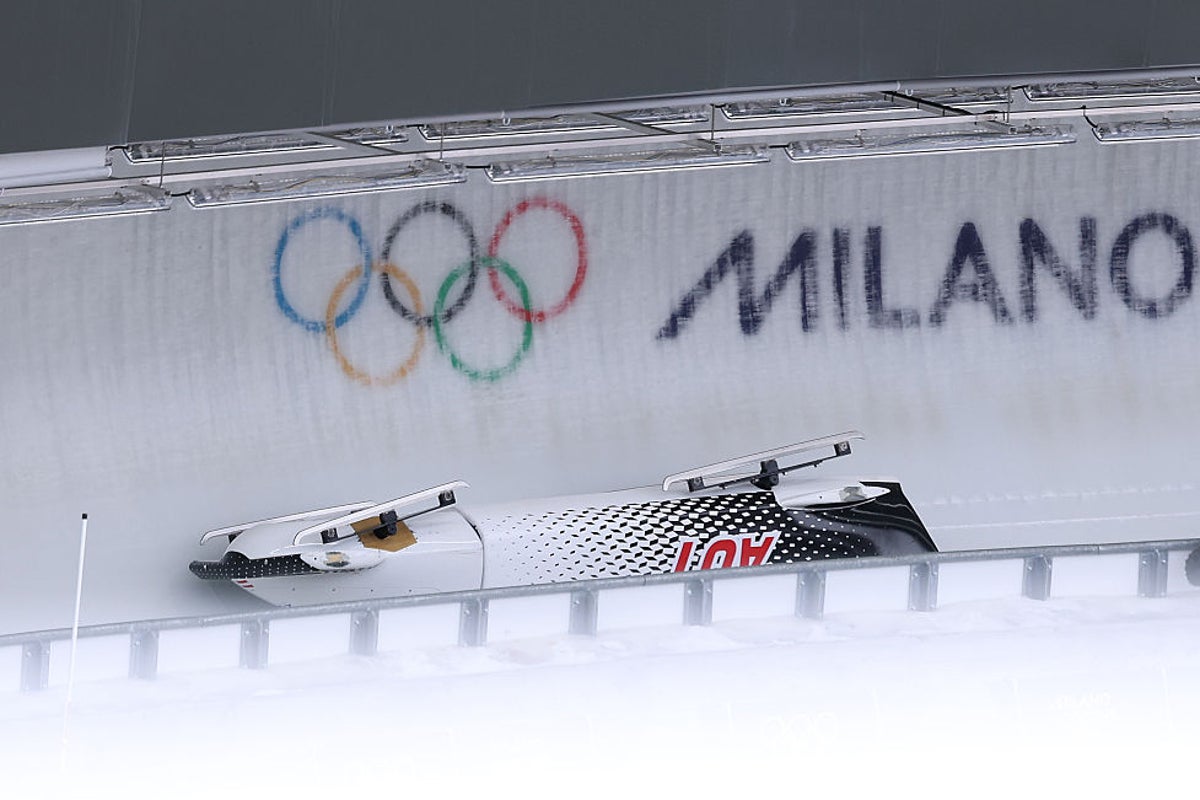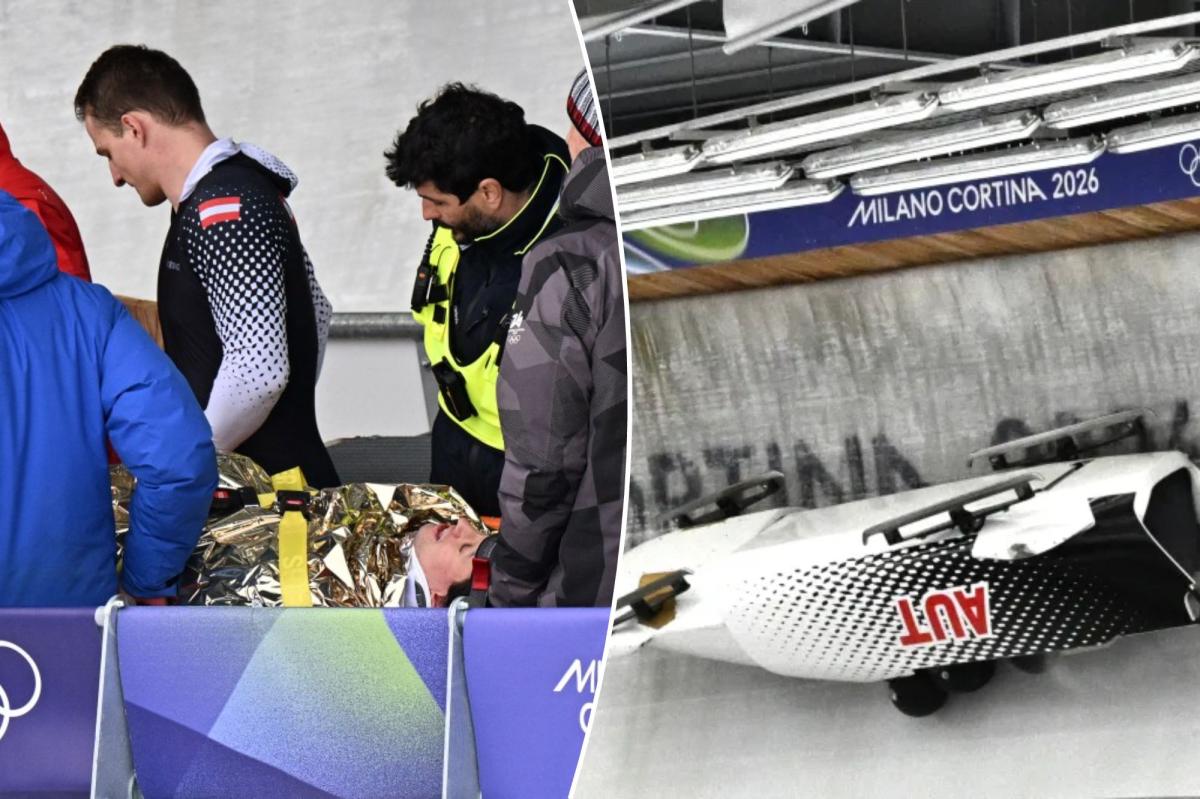
The simultaneous failure of three 4-man bobsleds from Austria, France, and Trinidad & Tobago to successfully navigate Curve 7 during the second heats at the Cortina Sliding Centre has triggered an urgent reassessment of the venue’s design integrity and operational readiness for the 2026 Winter Olympics.
The clustering of incidents at this single, U-shaped turn strongly implies a localized physical characteristic—either aerodynamic channeling or insufficient banking/surface friction—is inducing instability beyond the operational tolerance for current sled configurations and competitive inputs.
Crucially, the resulting prolonged kinetic slide of the sleds nearly to the finish line demonstrates a failure in the track’s geometric design to effectively dissipate momentum post-instability, suggesting remedial action must target banking angles or surface condition management.
Incident Response and Athlete Welfare Metrics
The hospitalization of Austrian pilot Jakob Mandlbauer, requiring immobilization and transport, elevates the incident beyond standard high-speed mishaps. While initial reports cited stable conditions, the necessary medical intervention underscores the severity of the impact forces generated at the point of failure.
The ensuing 20-minute competition delay and the need for professional extraction strained on-site logistical readiness. Mandlbauer’s reported head impact and subsequent cervical monitoring place the event squarely in the category of high-consequence injury risk, directly impacting venue certification liability and insurance protocols.
Commentary from uninjured pilots, such as Team GB’s Greg Hackett, serves as implicit confirmation of severity; expressions of relief regarding their crew’s safety validate the seriousness of Mandlbauer’s transport via stretcher.
Governance and Stakeholder Risk Assessment
For the International Bobsleigh and Skeleton Federation (IBSF), repeated, localized failures on a designated Olympic track represent a severe governance challenge that jeopardizes long-term venue certification. Remediation will require substantial, immediate capital expenditure.
National Olympic Committees involved face stratified risks: Austria shifts focus to pilot health and support staff safety; Trinidad & Tobago faces external infrastructure failure disrupting a resource-limited campaign, raising questions of compensation for lost training time.
Financial repercussions extend to broadcast partners, where the 20-minute delay translates directly into lost premium advertising inventory and a measurable erosion of viewership engagement during a critical competition window.
Competitive Integrity and Track Geometry Analysis
The concentration of failures at Curve 7 necessitates a strategic reassessment by all competing teams regarding approach vectors and sled setup, suggesting that successful navigation in earlier runs was either coincidental or relied on proprietary mitigation knowledge.
The observed performance degradation across the field, exemplified by Team GB dropping from 3rd to 7th, suggests systemic negative impacts beyond the direct crash participants. This could stem from evolving track conditions (e.g., ice temperature shifts or cumulative surface wear) altering the intended profile.
If track degradation is the root cause, the risk profile becomes a function of time and usage, demanding unscheduled maintenance that fundamentally alters the track’s initial design specifications.
Venue Viability and Engineering Mandates
The sequence of crashes functions as an involuntary, high-stakes stress test for the Cortina Sliding Centre. Documented failure at Curve 7 mandates an immediate, third-party engineering review concentrating on the coefficient of friction, radius of curvature, and transition angles.
Failure to provide swift, transparent remediation will invite intense scrutiny from the International Olympic Committee (IOC), whose mandate prioritizes athlete safety above scheduling, potentially leading to future event reassignment if structural confidence is undermined.
The administrative response will establish a regulatory precedent. Downplaying the severity, even with minor injuries, guarantees regulatory backlash. The fact that Mandlbauer required stretcher transport despite being reportedly conscious highlights a critical gap between on-site triage and definitive medical protocol adherence.
Data Parity and Risk Perception
The competitive matrix is now skewed. Teams surviving the turn may self-regulate speed based on negative reinforcement from the track itself, introducing a non-athletic variable—infrastructure risk tolerance—into performance calculations.
The diversity of affected nations (European powerhouse Austria, established France, emerging Trinidad & Tobago) confirms the vulnerability is endemic to the track structure, not isolated national training methods or equipment variances.
Equitable risk assessment moving forward requires mandatory, standardized data sharing among all teams, encompassing telemetry and pilot subjective feedback regarding Curve 7 performance parameters. The operational delay further disrupts condensed athlete recovery and tactical review schedules.
Structural Pressures on Governing Bodies
The IBSF must demonstrate immediate corrective action, likely involving temporary surface treatments or ice temperature adjustments around the curve. However, such reactive measures introduce new variables and require rigorous validation against historical track performance data to maintain credibility.
Institutional history in sliding sports dictates high caution; past minor surface modifications have led to unforeseen instability elsewhere. For the 2026 organizing committee, this exposes shortfalls in operational budget contingency planning concerning unforeseen capital remediation costs.
Coordination alignment among venue operators, national safety inspectors, and the IBSF during post-incident assessment will be scrutinized heavily. Furthermore, equipment manufacturers face pressure as teams dissect whether failures were track-induced or exacerbated by subtle runner profiles or chassis stiffness variations.
This conflict forces a strategic split: modifications to counter track instability versus advanced pilot retraining. The long slide distance, extending almost to the finish, indicates a fundamental engineering oversight in kinetic energy management, as the track geometry failed to induce adequate frictional resistance once the sled achieved a critical angle of repose. This slow, extended slide maximizes exposure to cumulative injury during lateral impacts with safety barriers.