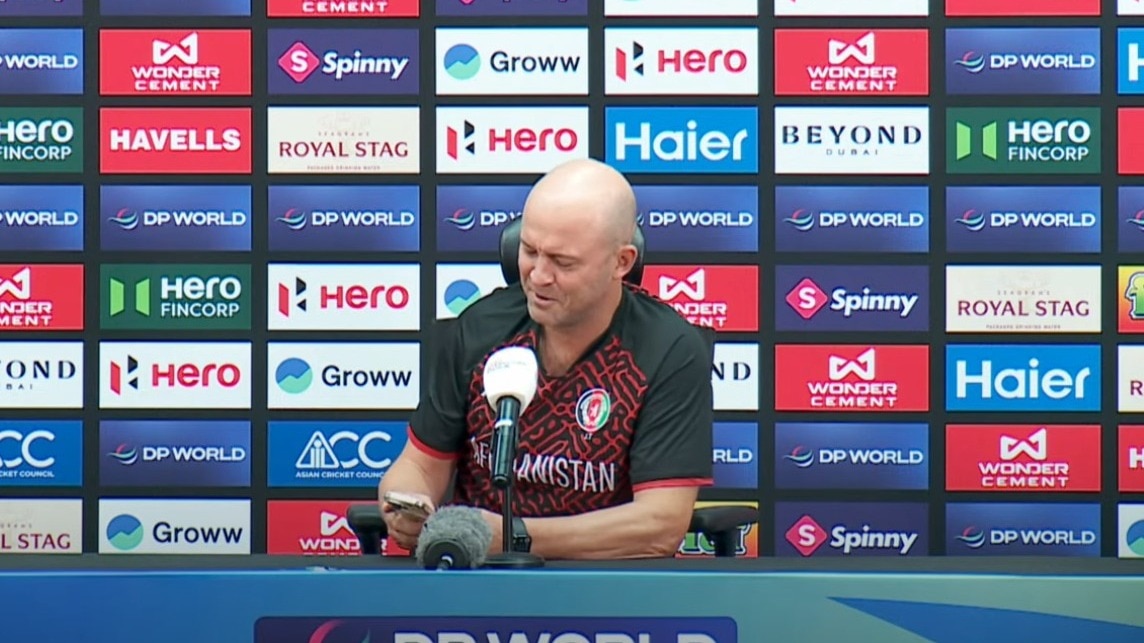
The conclusion of the 2026 T20 World Cup campaign signals a definitive structural pivot for Afghanistan cricket as head coach Jonathan Trott vacates his position. Confirmed ahead of the final group fixture against Canada, this transition concludes a tenure defined by the transition from erratic brilliance to institutionalized professionalization and tactical rigor.
Captain Rashid Khan’s public endorsement of Trott’s methodology highlights an internal recognition of the coach’s role as the architect of a high-performance culture. Trott’s departure is not merely a personnel change; it is a critical inflection point for a program that has successfully established itself as a consistent Tier-1 competitor.
Institutional Professionalization and the High-Performance Legacy
Under Trott’s stewardship, the Afghanistan national team underwent a fundamental recalibration of operational benchmarks. By implementing rigorous performance standards common in established cricketing nations, Trott addressed the team’s historical volatility. This legacy is rooted in the ‘Right Path’ doctrine—a shift toward disciplined match-situational awareness and tactical flexibility.
The durability of this era will be measured by the sustainability of these technical frameworks. By prioritizing individual development alongside collective clarity, Trott provided a blueprint for future leadership. This institutional growth is vital as the team navigates an ICC 2024–2027 calendar characterized by high-density international fixtures and multi-format demands.
Strategic Continuity and the Volatility of Transition
The timing of Trott’s exit introduces immediate operational friction. With a bilateral series against Sri Lanka following the World Cup, the Afghanistan Cricket Board (ACB) faces an urgent need for an efficient technical handover. Rashid Khan’s leadership becomes the primary stabilizing force, ensuring that the momentum generated under Trott is not lost to administrative or coaching voids.
The upcoming Sri Lanka series serves as a litmus test for the squad’s technical autonomy. Stakeholders will evaluate whether the discipline instilled over recent cycles has become intrinsic to the team’s identity or remains dependent on specific external oversight. Success in this period is essential to mitigate the economic and performance risks inherent in leadership transitions.
Market Dynamics: The IPL Intersection and Workload Management
The coaching transition is further complicated by the intersection of the international schedule and franchise commitments, notably the Indian Premier League (IPL). Key assets like Rashid Khan must transition seamlessly from national duty to high-stakes franchise environments. This requires a sophisticated approach to workload management and mental conditioning—disciplines Trott prioritized during his tenure.
While the IPL offers essential elite-level exposure and financial stability for players, the ACB must balance these individual opportunities with collective national goals. The professional standards established by Trott provide a necessary framework for players to navigate these dual responsibilities without compromising their performance floor.
Conclusion: Scaling the Foundation for the 2027 Cycle
Jonathan Trott leaves Afghanistan cricket with a refined technical pedigree, particularly in batting structures where his experience as an England international proved transformative. The focus now shifts to the ICC 2026-2027 cycle, encompassing the Champions Trophy and various developmental World Cups.
The ACB’s challenge is to scale Trott’s high-performance principles across developmental and women’s programs, creating a trickle-down effect. Ultimately, the success of the Trott era will be judged by the team’s ability to maintain its upward trajectory in the global rankings. The foundation is solidified; the mandate for his successor is the evolution of this professionalized identity.