The 2026 Milano Cortina Winter Olympics men’s hockey tournament has decisively transitioned from preliminary seeding into high-leverage, single-elimination competition, with the quarterfinals establishing the definitive hierarchy of medal contenders.
Structural Consequences of Preliminary Seeding
The allocation of byes to the top four seeds pits teams like the No. 2 USA directly against highly motivated opponents such as No. 7 Sweden. This specific bracket placement is a direct analytical consequence of unexpected outcomes in the round-robin, notably Slovakia’s dominant Group B finish, which significantly rerouted the expected tournament flow.
Men’s Bracket Inflection Points
The USA vs. Sweden contest represents a critical inflection point: for Sweden, institutional expectations prioritize gold over silver, mandating an all-or-nothing tactical deployment against the American favorites. For the United States, success against a top-tier European opponent is required to validate their gold-medal status, moving beyond routine victories achieved in earlier stages (e.g., against Latvia).
The return of NHL players since 2014 fundamentally elevates operational intensity. Roster cohesion under compressed timelines, rather than long-term league performance, becomes the metric of success. Any quarterfinal failure equates to a complete forfeiture of the Olympic cycle’s primary objective.
Conversely, teams advancing via qualification playoffs, like Switzerland (after defeating Italy), gain a tactical edge through immediate stress-testing in do-or-die scenarios, contrasting with teams relying solely on seeded protection.
Finland vs. Switzerland: A Strategic Sorter
The pairing of (4) Finland against (5) Switzerland directly sorts out the lower half of the bracket for semifinal advancement. Finland’s preliminary record shows high ceiling capability but inconsistent execution, evidenced by a significant loss to Slovakia balanced against commanding wins (including 4-1 vs. Sweden).
Switzerland’s progression via tight qualification wins (e.g., overtime victory over Czechia) highlights tactical adaptability in low-margin contests. The performance leverage for Switzerland hinges on neutralizing Finland’s balanced attack, while Finland must ensure their scoring depth surpasses the defensive structure they face.
The structural incentive for the winner of this matchup is significant: securing momentum while avoiding the top seed in the subsequent semifinal draw.
Women’s Tournament Certainty vs. Men’s Volatility
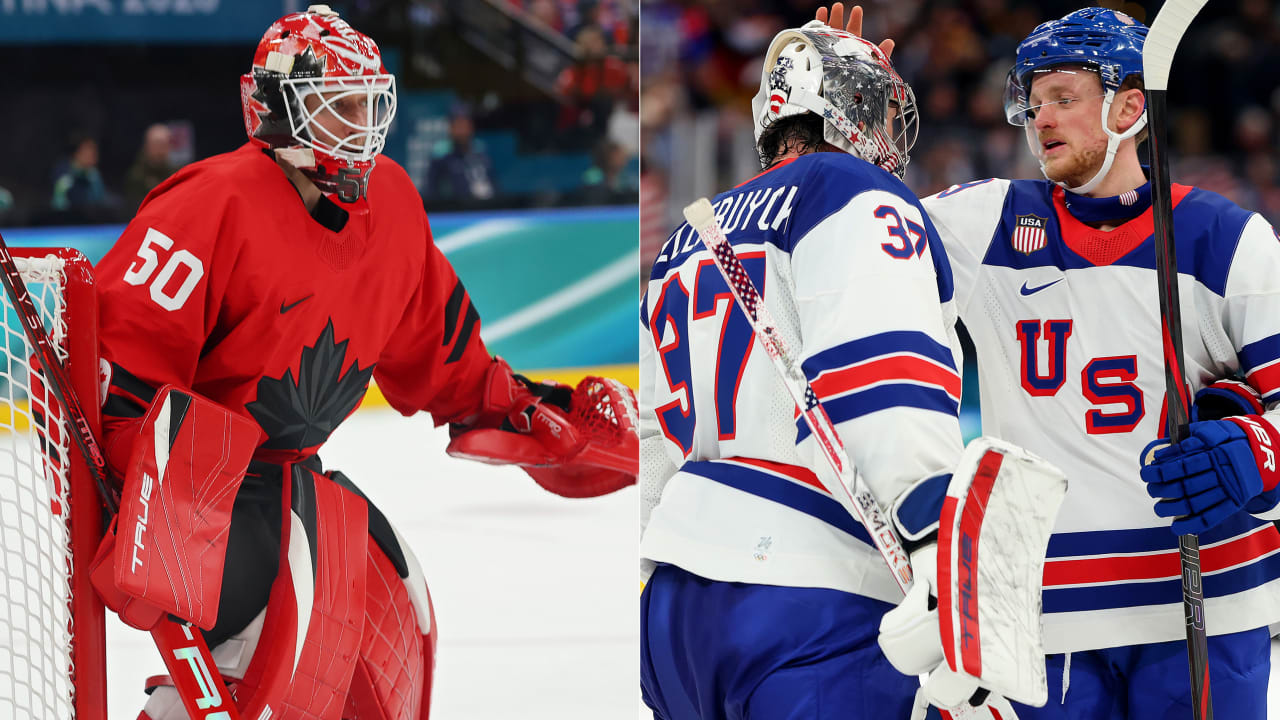
The women’s tournament has finalized its ultimate competitive axis: a guaranteed medal for Team USA as they prepare for a seventh historical gold medal confrontation against Canada. This recurring clash is a focal point for national sporting investment and media valuation.
The guaranteed medal for the US women’s team establishes a baseline success metric for the entire national hockey delegation, contrasting sharply with the high-risk, high-reward uncertainty of the men’s knockout bracket. The Thursday scheduling of the women’s final ensures an early peak in the closing sequence of the Games.
Institutional and Media Stakeholder Value
The commencement of elimination rounds shifts national Olympic committee focus from broad participation management to intensive, game-by-game strategic deployment. Hockey success is a primary KPI for national sporting investment narratives.
Media monetization strategies are directly linked to deep playoff runs. The scheduling of the men’s gold medal game on the final Sunday maximizes cumulative audience aggregation—a critical variable for future broadcast rights negotiations. The editorial framework explicitly rewards immediate knockout impact over sustained preliminary dominance.
Impact of NHL Participation Governance
The active NHL player presence necessitates complex administrative frameworks involving the IOC, NHL, and player associations (insurance, liability). Tournament conclusion timing, closely preceding the NHL regular season resumption, introduces inherent tension regarding player health and subsequent club availability. Tournament outcomes will directly inform future NHL executive calculus on sustained Olympic involvement.
Consequences of Early Elimination
For nations like Sweden, quarterfinal elimination signifies a failure to meet intrinsic player benchmarks prioritizing gold. For heavily favored teams like the USA men’s squad, an exit at this stage constitutes a significant underperformance against established expectations, impacting public perception and future federal funding allocations.