
The launch of Anthropic’s Claude 4.6 ecosystem signifies a critical inflection point in the LLM market: the transition from raw reasoning capacity to specialized operational utility. By narrowing the performance delta between the mid-tier Sonnet and flagship Opus models, Anthropic is recalibrating the enterprise value proposition. This convergence suggests that the industry is moving past the era of ‘intelligence for its own sake’ toward a paradigm of high-velocity, cost-optimized deployment.
Architectural Parity and Economic Efficiency
The diminishing intelligence gap between Sonnet 4.6 and Opus 4.6 disrupts traditional model-tiering strategies. For enterprise architects, this parity enables the migration of complex reasoning tasks to lower-cost tiers without sacrificing output quality. This strategy functions as an economic defensive moat, allowing developers to scale multi-step workflows while reserving the more expensive Opus tier for outlier cases of extreme cognitive load. Consequently, the focus shifts from parameter count to architectural refinement and compute-to-intelligence ratios.
Operationalizing ‘Computer Use’ and Agentic Workflows
The definitive feature of the 4.6 suite is the maturation of ‘computer use’—a shift toward agentic AI capable of navigating software interfaces, manipulating file systems, and executing browser-based tasks. This transition moves AI from a text-based advisor to a functional operator within the enterprise stack. By facilitating direct interaction with UI elements, Anthropic is reducing the friction of data movement across disparate silos, though this simultaneously introduces new requirements for robust security sandboxing and auditability in production environments.
Case Studies in Production: Hex and Shortcut
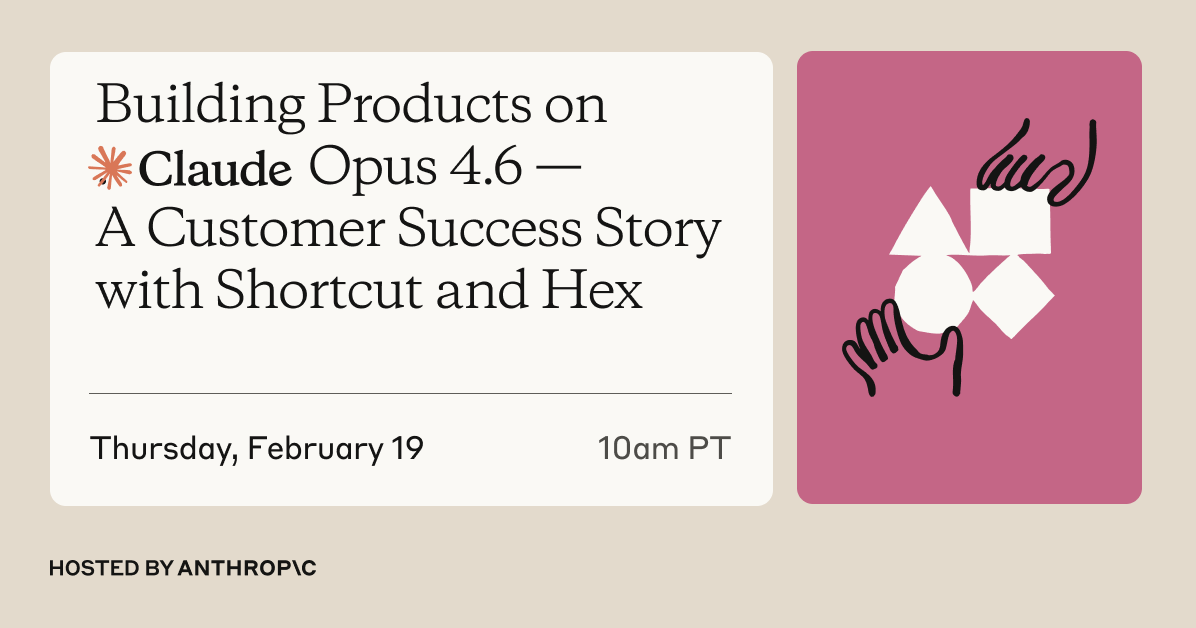
The deployment of Claude 4.6 at Hex and Shortcut illustrates the model’s viability for high-stakes production. Hex utilizes the model’s reasoning to interpret complex data schemas and generate executable code, maintaining contextual integrity over long-form analytical sessions. Shortcut integrates the model to synthesize project requirements and automate lifecycle management. Both cases demonstrate that the value of Opus 4.6 lies in its reliability as a ‘cognitive layer’—providing the consistency needed for sophisticated user experiences that experimental models cannot sustain.
Institutional Maturity and Applied AI Strategy
Building with Claude 4.6 requires a transition from prompt engineering to full-scale Applied AI discipline. Insights from early adopters suggest that the primary bottleneck in AI integration is no longer model intelligence, but the infrastructure surrounding it: prompting guides, error-handling for non-deterministic outputs, and security protocols for autonomous agents. Anthropic’s strategy positions them not just as a model provider, but as a partner for world-class product teams aiming to build resilient, production-grade AI native software.
Conclusion: The Future of AI-Native SaaS
The 4.6 release confirms that the next competitive frontier is integration depth. As intelligence becomes a standardized commodity, the advantage shifts to organizations that can orchestrate agentic models to perform autonomous labor. The convergence of model tiers and the rise of computer use capabilities signal the beginning of an era where software is built to be operated by both humans and AI agents interchangeably, fundamentally altering the economics of the SaaS industry.