
The 53rd White Marlin Open: A Convergence of Sport, Strategy, and Economic Impact
The 53rd Annual White Marlin Open has commenced in Ocean City, Maryland, solidifying its designation as the “World’s Largest & Richest Billfish Tournament.” This week-long event transcends a mere fishing competition, operating as a significant nexus of competitive angling, intricate financial strategy, and regional economic stimulus. With 334 registered vessels, the tournament’s unique operational framework mandates each team to select three fishing days out of six, introducing a critical strategic dimension where captains and crews must make calculated decisions regarding weather windows, target species, and competitive positioning.
Sophisticated Prize Mechanics: Deconstructing Multi-Million Dollar Incentives
The White Marlin Open’s allure is fundamentally driven by its elaborate financial architecture, boasting a prize pool totaling $9.9 million with individual payouts frequently reaching millions. This transforms competitive angling into a high-stakes financial domain, where every strategic choice directly impacts potential economic returns. Beyond standard weight-based categories, the tournament employs an intricate prize distribution mechanism encompassing various side divisions and “calcutta” entries, designed to exponentially amplify potential winnings. This layered financial structure accounts for significant payout disparities, exemplified by ‘Talkin’ Trash’ securing over $3.9 million for an 81.5-lb Bluefin tuna, while ‘Full Service’ received $1.2 million for a slightly larger 84-lb Bluefin. This highlights the critical leverage provided by these optional, high-risk, high-reward commitments.
These optional side pools serve as a sophisticated risk-sharing and reward-amplification mechanism, compelling participants to commit additional capital based on a calculated assessment of initial investment, probability of success, and potential return. The early absence of qualifying white or blue marlins introduces a dynamic variable to the prize structure, implying specific reallocation or rollover protocols for unclaimed categories, which could significantly reshape the final distribution of the $9.9 million and intensify strategic focus among remaining competitors. Anglers like Steve DeBrabander, whose 85-lb tuna caught on the ‘Marli’ saw its potential value fluctuate from $2.8 million to an estimated $1.8 million, exemplify the constant financial recalculation and the profound physical and skill-based investment inherent in securing these high-value catches.
Environmental Calculus: Weather’s Profound Impact on Strategy and Participation
The initial days of the 53rd White Marlin Open have starkly illustrated the profound operational challenges and strategic implications stemming from environmental factors. On Day 1, only 17 of the 334 registered vessels ventured out, a direct consequence of severe weather conditions featuring 20-25 knot winds and 7-9 foot seas. This dramatic reduction in participation underscored the paramount influence of meteorology on safety protocols and strategic decision-making.
The low initial turnout paradoxically created a unique competitive advantage: the few teams that braved the conditions strategically targeted tuna, a species often more accessible in rougher waters and eligible for daily prize opportunities. This calculated risk, fishing despite adverse conditions, offered a less congested competitive environment for early leads in specific categories. In contrast, Day 2 witnessed a significant surge in participation, with 255 boats competing, as weather conditions presumably improved. This oscillation highlights a critical strategic dilemma for captains: balancing the pursuit of calmer seas and optimal fishing conditions against the increasing competitive density that accompanies improved weather later in the week. The strategic allocation of their three fishing days within the six-day window thus becomes a complex optimization problem, factoring in crew fatigue, vessel maintenance, evolving weather forecasts, and the dynamic leaderboard.
Brand Amplification: The Enduring Influence of High-Profile Participants
The presence of NBA icon Michael Jordan’s boat, ‘Catch 23,’ serves as a potent catalyst for the tournament’s media profile and brand recognition. Though Jordan is not an official participant, his vessel, crewed by accomplished anglers Trey McMillan and Nick Ewald (who secured over $400,000 in previous iterations), consistently generates significant public interest and mainstream media attention beyond traditional sportfishing circles. This high-profile association functions as an invaluable marketing asset, elevating the tournament’s prestige, potentially attracting premium sponsorships, and enhancing spectator engagement, thereby reinforcing its claim as the “richest” event in its category. The sustained involvement of such prominent figures and their formidable teams is integral to the tournament’s institutional longevity and broad appeal, crafting a compelling narrative where elite sportsmanship and business leadership converge within the demanding arena of competitive angling, further cementing the event’s cultural and economic significance.
Economic Ripple Effect: The White Marlin Open’s Substantial Regional Impact
The annual White Marlin Open generates a profound and quantifiable economic footprint across Ocean City, Maryland, and neighboring coastal communities such as Fenwick Island. The influx of 334 registered vessels, their associated crews, extensive support staff, and thousands of spectators translates directly into substantial revenue streams for local hospitality, marine service providers, fuel distributors, and the retail sector. This event functions as a critical seasonal economic anchor, delivering a predictable surge in demand for accommodations, dining establishments, and specialized marine equipment. The multi-million dollar prize pool, coupled with significant operational expenditures by participating teams, represents a direct infusion of capital into the regional economy, providing vital support for numerous small and medium-sized enterprises. Furthermore, the tournament’s global reputation as the “World’s Largest & Richest” fortifies Ocean City’s standing as a premier sportfishing destination, stimulating future tourism and investment in marine infrastructure. This sustained economic activity underscores the institutional importance of such large-scale events, extending far beyond their immediate competitive outcomes.
Strategic Chessboard: Evolving Dynamics and Remaining Prize Pool Contention
With several fishing days still ahead and a substantial portion of the prize pool yet to be claimed, the competitive dynamics of the White Marlin Open are poised for significant evolution. The continued absence of qualifying white or blue marlins in the initial days means these high-value categories remain entirely open, thereby intensifying the strategic focus for vessels with available fishing days. While the current leaderboard is predominantly defined by tuna catches, reflecting early conditions and participant strategies, the potential for a record-breaking marlin catch in the tournament’s latter half could instantaneously recalibrate overall standings and prize allocations, compelling teams to dynamically adapt their fishing approaches.
Captains and crews face a continuous strategic calculus, meticulously monitoring weather forecasts, analyzing the kinetic leaderboard, and making real-time decisions regarding their final fishing days. These critical decisions involve weighing the high-risk, high-reward pursuit of an elusive marlin against the more consistent, yet potentially lower-payout, tuna categories—a constant assessment of risk versus reward within this intensely competitive environment. The tournament’s culmination on Saturday will consolidate these sophisticated strategic plays, ultimately revealing the beneficiaries of the multi-million dollar prize pool. Beyond crowning champions, the outcomes will provide invaluable empirical data on the efficacy of diverse fishing strategies and risk management methodologies deployed throughout the event.
Enduring Legacy: Institutional Significance and Future Trajectories
The 53rd White Marlin Open powerfully reinforces its enduring institutional significance within the global sportfishing community. Its consistent capacity to attract a formidable fleet, generate a substantial multi-million dollar prize fund, and maintain a high media profile is a testament to its robust organizational framework and deeply entrenched tradition. This success stems from its proven adaptability and sustained relevance, continually drawing both elite professional anglers and high-net-worth individuals. Such sustained engagement solidifies its benchmark status, profoundly influencing trends in competitive angling, marine technology advancements, and coastal tourism development.
As the tournament concludes, the analytical implications of its outcomes will extend far beyond the immediate determination of winners and losers. The accumulated data and insights will inform future strategic planning for participants, refine operational logistics for organizers, and provide critical economic intelligence for regional stakeholders. This cyclical process reinforces the event’s profound and continuous impact, ensuring its trajectory as a premier international sportfishing competition for years to come.

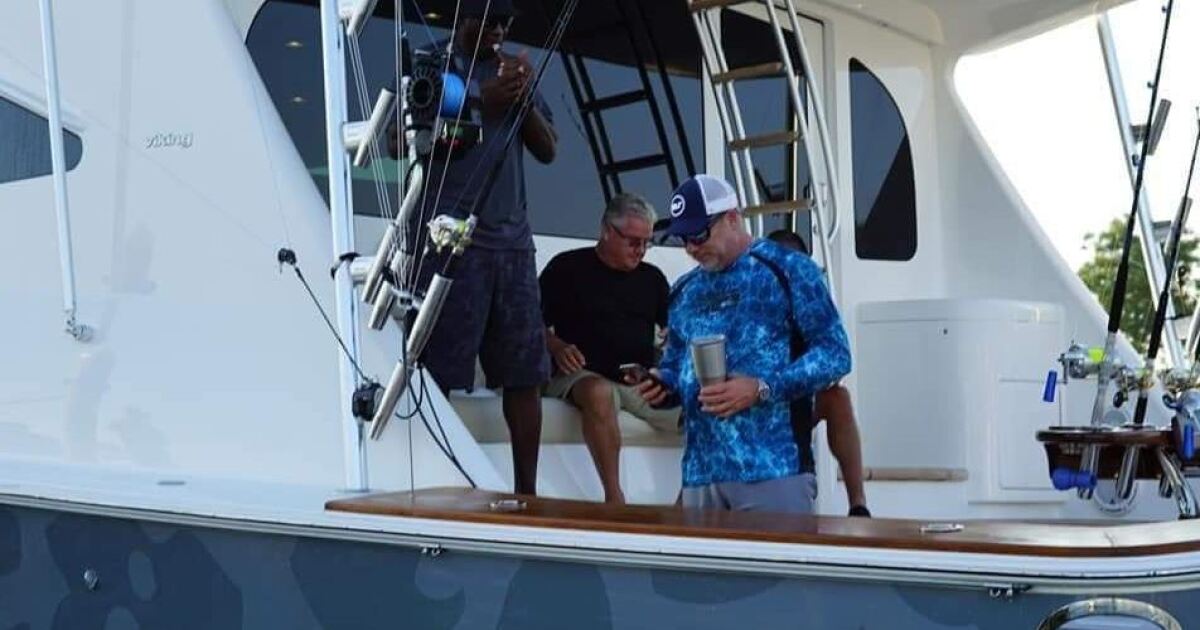
Photo by ELG21 on Pixabay.