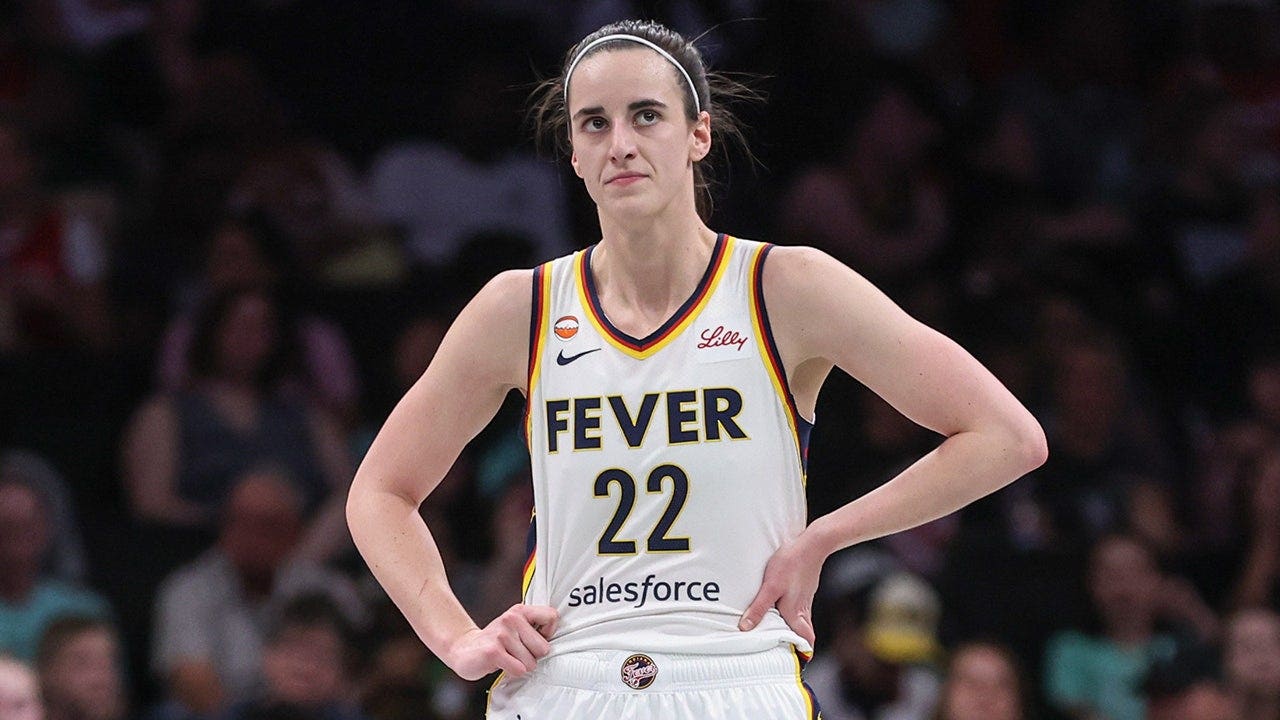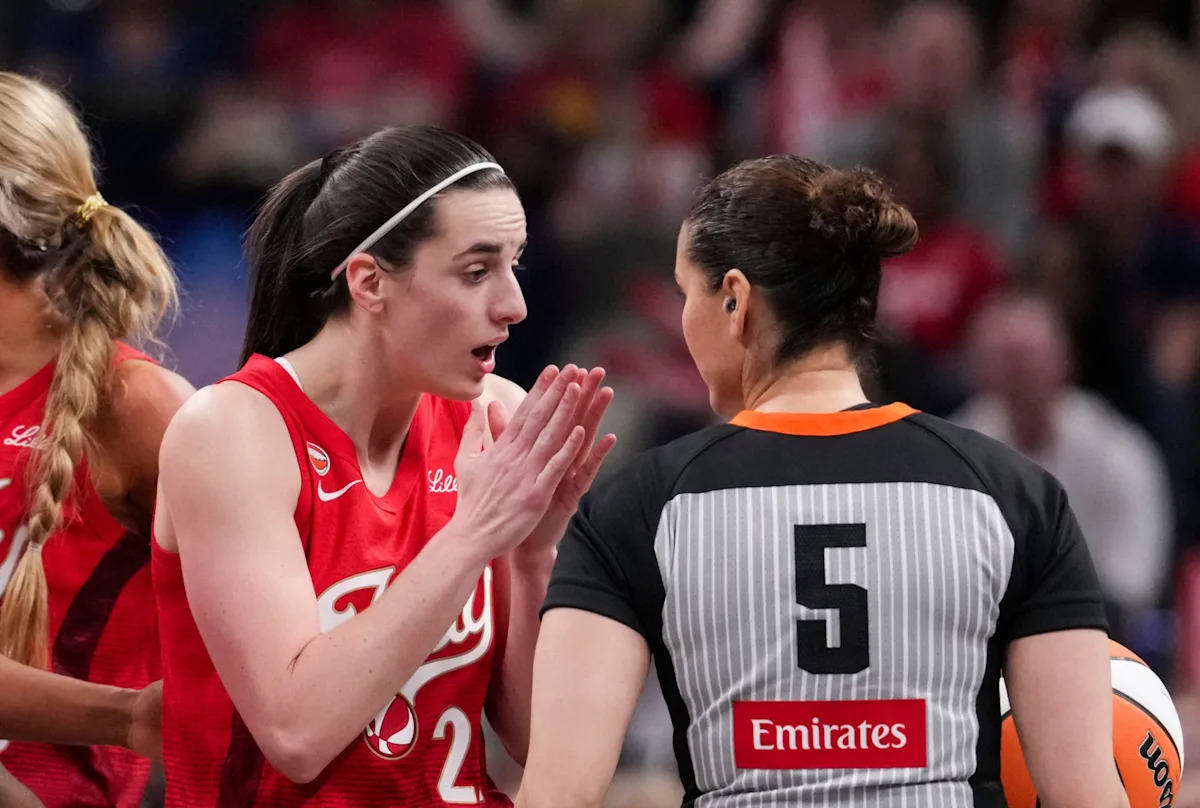
The contemporary landscape of professional women’s basketball is characterized by an unprecedented confluence of athletic spectacle, rapid commercial expansion, and hyper-intensive media scrutiny. This profound structural transformation is exemplified by the persistent public discourse surrounding the Indiana Fever’s high-profile guard, Caitlin Clark. The intense, often disproportionate, focus on her individual on-court actions and perceived demeanor underscores a critical tension: how singular star power, amplified by external pressures, can both elevate and fundamentally strain established team dynamics and league structures.
The Micro-Analysis of On-Court Interactions
A recent competitive matchup against the New York Liberty provided a potent example of this phenomenon. A brief, five-second video clip, depicting Caitlin Clark seemingly failing to acknowledge a high-five attempt from teammate Tyasha Harris while exiting the bench, rapidly escalated into a national talking point. Despite the interaction’s apparent triviality—Clark focused on the game, Harris patting her shoulder—its immediate and widespread amplification across social media vividly illustrates how micro-behaviors are now strategically leveraged to construct narratives of team chemistry and internal cohesion.
This analytical dissection by digital sports media platforms transforms routine athletic transitions into complex narratives of potential internal organizational friction. For professional franchises, this unprecedented level of scrutiny presents significant operational and reputational challenges. Coaching staffs and front offices are compelled to proactively manage external perceptions, which, if left unaddressed, can directly compromise locker room cohesion and team morale. The rapid virality of such isolated clips undeniably signifies a shift in modern sports consumption, prioritizing individual drama and speculative conflict above collective team strategy and performance.
Beyond the immediate context, this incident highlights the exorbitant expectations placed upon high-profile athletes for flawless interpersonal conduct under pervasive surveillance. The elevation of minor physical gestures into potent indicators of team dysfunction exponentially amplifies the pressure on athletes to meticulously curate their public presentation. Consequently, organizations are compelled to develop agile communication strategies, designed not merely to react but to pre-emptively address and neutralize nascent social media narratives before they can fundamentally disrupt team focus and performance.
Coaching Dynamics and the Gendered Perception of Conflict
The intense scrutiny enveloping the Indiana Fever extends beyond individual player interactions to fundamentally analyze the relationship between athletes and coaching staff. A notable instance occurred in late May, when a visibly heated sideline exchange between Clark and head coach Stephanie White rapidly propelled the organization into fervent social media debates. This necessitated White’s public commentary, providing a crucial, gender-specific perspective on the differential interpretation of conflict within women’s professional sports versus men’s leagues.
White’s observation was incisive: challenging interactions with female players are consistently viewed through a distinctly different cultural lens compared to analogous high-intensity exchanges in men’s basketball. In male professional leagues, vigorous sideline debates between coaches and players are frequently valorized as embodying competitive passion and unwavering dedication. Conversely, identical behaviors within the WNBA are often subjected to hyper-scrutiny, reinterpreted as indicators of disrespect, insubordination, or even systemic organizational instability. This constitutes a stark gendered double standard.
This entrenched double standard illuminates the profound cultural hurdles confronting female athletes and coaches navigating high-stakes professional environments. The prevailing insistence on pathologizing competitive friction as personal conflict, rather than acknowledging it as an operational necessity for performance optimization, severely curtails the expressive freedom of female competitors. Furthermore, it significantly complicates a coaching staff’s ability to implement rigorous, high-pressure accountability measures without invariably triggering adverse public relations cycles and accusations of misogyny.
Legacy Media Critiques and the Sports Debate Ecosystem
The evolution of sports media from objective reporting to a polarized, opinion-driven, high-conflict debate ecosystem has substantially intensified individual athlete scrutiny. This paradigm shift is acutely exemplified by the sharp criticisms directed at Clark from prominent legacy media figures, notably Bill Plaschke. As a longtime Los Angeles Times columnist and former ESPN panelist, with 1,758 appearances on ‘Around the Horn’ before its May 2025 conclusion, Plaschke represents a deeply entrenched and influential voice within the traditional sports journalism establishment, his pronouncements carrying significant weight.
Plaschke’s public critique has centered on Clark’s perceived behavioral patterns, controversially characterizing her on-court demeanor as entitled and labeling her a ‘spoiled brat’ requiring a sole focus on play. His observations detail frequent disputes with game officials, sarcastic on-court gestures, and heated exchanges with coaching staff. This stance, however, reflects a broader institutional resistance within traditional sports journalism against the more expressive, assertive, and often confrontational behaviors increasingly exhibited by modern athletic superstars, viewing them as deviations from established norms.
This palpable tension between legacy media’s expectations of decorum and the realities of contemporary athlete branding exposes a significant generational and cultural schism within sports. Traditional commentators frequently champion a more reserved, deferential comportment towards on-court authority, often interpreting emotional outbursts as detrimental to the sport’s perceived integrity. In stark contrast, modern athlete branding strategically capitalizes on high-intensity, emotionally raw engagement—a style that demonstrably resonates with, and cultivates deep loyalty among, younger digital-native audiences.
Consumer Expectations and the Economics of Fandom
The discourse surrounding Clark’s on-court demeanor extends beyond professional media analysts to deeply vested consumers and season-ticket holders, revealing a critical economic dimension to fandom. A poignant commentary from a self-described ‘diehard’ WNBA fan, who actively purchases Iowa and Indiana Fever merchandise, articulated a growing frustration among a segment of core supporters. This fan expressed exhaustion with Clark’s frequent complaints to officials, arguing that such emotional reactions, despite her undeniable athletic talent, actively detract from the overall game experience and sportsmanship.
This perspective elucidates the intricate, often fraught, relationship between consumer investment and athlete behavior in the ecosystem of professional sports. Fans who commit significant financial capital—through season tickets, merchandise, and endorsements—often perceive a latent social contract, feeling entitled to impose specific behavioral standards upon athletes. When an athlete’s on-court demeanor is perceived as consistently petulant or disrespectful, it risks alienating a crucial demographic of dedicated supporters who prioritize sportsmanship and aspirational conduct alongside athletic excellence.
Such consumer friction presents a formidable strategic challenge for sports franchises and leagues actively pursuing commercial maximization. While magnetic, high-intensity personalities undeniably drive television ratings, merchandise sales, and social media engagement, they simultaneously introduce the substantial risk of alienating traditional fan bases who intrinsically value a more conventional, decorum-focused sporting experience. Navigating these diametrically opposing consumer demands necessitates sophisticated brand management and unequivocally clear, consistent communication from both the league and its constituent franchises to mitigate potential brand erosion.
Operational and Strategic Implications for the WNBA
The hyper-intensive scrutiny surrounding transcendent individual stars like Caitlin Clark carries profound operational and strategic implications for the WNBA as a rapidly evolving institutional entity. The league is currently undergoing an unprecedented period of commercial acceleration, significantly propelled by burgeoning public interest in its rookie class and marquee players. Yet, this rapid expansion concurrently exposes inherent structural vulnerabilities in its governance of player relations, the consistency of officiating standards, and the management of media access.
The persistent and vocal complaints from players concerning officiating standards underscore an urgent institutional imperative for the league: substantial investment in referee development, rigorous training, and the standardized, transparent enforcement of rules. When star players consistently and publicly challenge officials on the court, it fundamentally erodes referee authority, disrupts game flow, and fosters perceptions of inconsistency. Addressing this requires the league to delineate unambiguous boundaries for player-official interactions, while simultaneously guaranteeing officiating remains consistently impartial and equitable across all franchises.
Furthermore, the league must proactively equip and support its franchises in effectively managing the profound psychological and operational demands inherent in hyper-visibility. Players and coaches alike are subjected to an unrelenting barrage of online commentary, which can severely compromise individual mental health and broader team cohesion. The strategic development of robust institutional support systems—encompassing comprehensive media training, advanced public relations guidance, and accessible mental health resources—is unequivocally essential for cultivating and sustaining a healthy, productive, and resilient competitive environment.
The Balance Between Individual Stardom and Collective Success
Ultimately, the persistent discourse enveloping Caitlin Clark and the Indiana Fever vividly illuminates the precarious, yet symbiotic, balance between individual stardom and collective success—a foundational tension within professional sports. While individual superstars are undeniably indispensable for catalyzing commercial interest, expanding market reach, and broadening the league’s fan base, basketball remains, at its core, a fundamentally collective endeavor. True team success is predicated on the seamless, synergistic integration of disparate individual talents into a cohesive, cooperative, and high-performing unit.
When external media narratives disproportionately—or even exclusively—center on a singular player, it carries the significant risk of fostering resentment, internal friction, and ultimately, division within a roster. Teammates who contribute substantively to the team’s performance may experience feelings of being overlooked, undervalued, or marginalized by both the media and the fan base. Effectively navigating these complex internal dynamics necessitates exceptional, empathetic leadership from both coaching staffs and seasoned veteran players, who are collectively tasked with actively cultivating and maintaining a robust culture of mutual respect, shared purpose, and collective accountability.
As the WNBA continues its trajectory of rapid evolution and expands its audience reach, the inherent tension between individual athlete branding and a team-first philosophy will undoubtedly persist as a central, defining theme. The franchises best positioned to effectively navigate this intricate tension will be those that meticulously construct resilient organizational cultures, specifically designed to absorb and strategically channel external pressures. By rigorously prioritizing collective accountability, fostering transparent communication, and strategically integrating individual brilliance within a cohesive framework, teams can optimally harness the transformative power of individual stardom to achieve not just sporadic visibility, but sustained competitive and commercial success.