Analysis of the Tier 1 Security Perimeter Failure
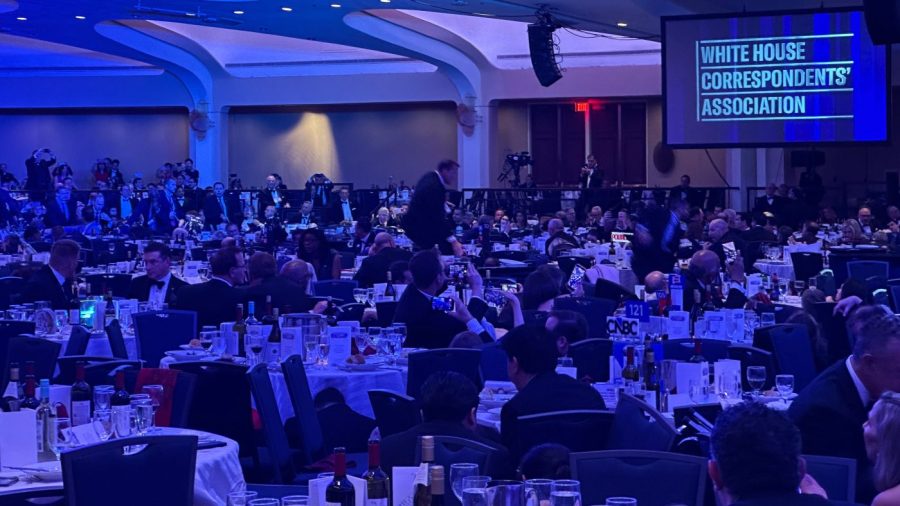
The security breach at the White House Correspondents’ Association (WHCA) dinner represents a catastrophic failure of multi-layered protective protocols. Federal prosecutors, through a detailed timeline of the actions of suspect Cole Tomas Allen, have exposed how the integrity of a high-density, non-governmental venue was compromised. The ability of an armed assailant to penetrate the perimeter and engage law enforcement near the President and Cabinet officials highlights a critical vulnerability in managing Tier 1 security events within civilian infrastructure like hotels and convention centers.
Ballistic Forensics and Tactical Implications
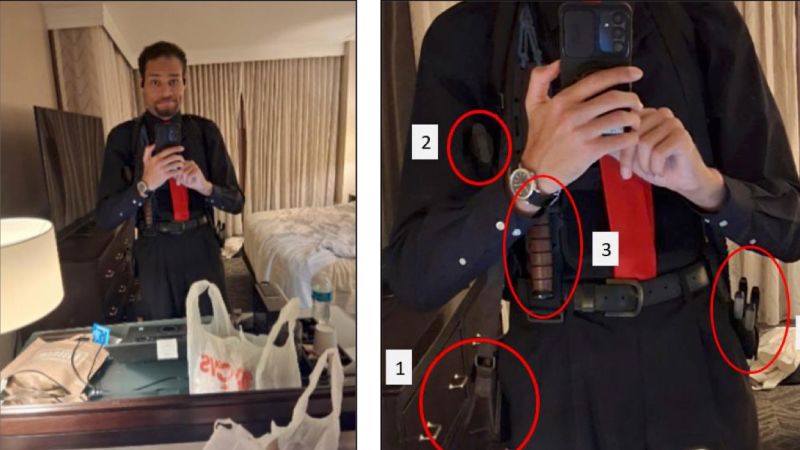
Data provided by the U.S. Attorney’s Office for D.C. offers a granular reconstruction of the 8:30 p.m. EDT exchange. The evidence confirms that the suspect initiated fire against a Secret Service officer, whose survival is credited solely to ballistic armor. This engagement underscores the necessity of immediate, close-quarters tactical response. Furthermore, the suspect’s ‘extensive arsenal’ indicates sustained logistical preparation, challenging previous assumptions regarding the spontaneity of such attacks and suggesting a failure in pre-event threat monitoring of high-risk individuals.
The ‘Extreme Political Violence’ Legal Framework
The Department of Justice (DOJ) has strategically classified this incident as ‘extreme political violence.’ This designation is pivotal for the prosecution’s argument for pretrial detention without bail, framing the suspect not merely as a criminal actor but as a fundamental risk to institutional stability. By centering the legal narrative on the intent to disrupt executive functions, the DOJ aims to establish a judicial precedent that prioritizes public safety and administrative continuity over standard release conditions.
Sociocultural Desensitization and Operational Friction
The incident also revealed a significant divergence between civilian perception and tactical reality. The reaction of guests—exemplified by Creative Artists Agency (CAA) agent Michael Glantz, who remained seated during the gunfire—illustrates an urban desensitization that complicates emergency evacuations. This ‘civilian inertia’ poses a unique challenge for security teams requiring rapid crowd movement. Moving forward, event organizers must bridge this gap, likely through more assertive crowd management and potentially shifting high-profile gatherings to government-controlled, hardened sites to mitigate the risks inherent in public-private venues.
Institutional Fallout and Strategic Evolution
The WHCA dinner shooting serves as a catalyst for a systemic overhaul of executive protection. For the Secret Service, the internal review will likely focus on technological screening failures and personnel deployment at entry points. Beyond the immediate legal outcome for Allen, the long-term impact will include increased insurance premiums for the hospitality sector and a more aggressive federal stance on ideologically motivated threats, fundamentally altering the landscape of political engagement in the United States.