
Financial Restructuring and Calendar Placement of the WTA 125 Circuit
The operational framework of the Warsaw T-Mobile Polish Open 2026 illustrates the structural role of the WTA 125 tier in professional women’s tennis. Offering a $115,000 purse, the tournament serves as a critical bridge between the ITF World Tennis Tour and elite WTA main-draw events, allowing mid-ranked players to accumulate crucial ranking points and prize capital.
Previously holding WTA 250 status—which attracted top-tier stars like Iga Świątek—the tournament’s transition to WTA 125 status reflects strategic calendar adaptation. Positioned during the mid-summer North American hard-court swing, where top-50 players compete at the WTA 1000 event in Toronto and prepare for Cincinnati, local organizers recalibrated the tournament’s financial model. The reduced purse prioritizes regional development and competitive depth over costly marquee appearances.
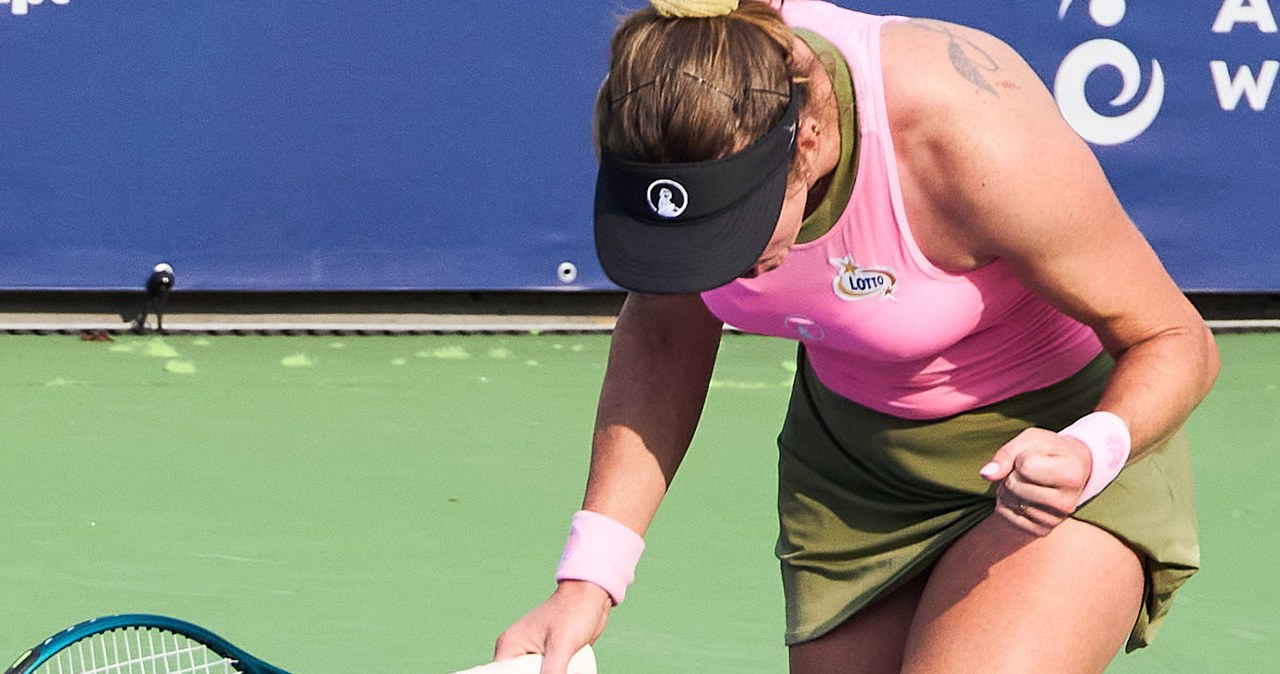
Tactical Analysis: Falkowska’s Three-Hour Comeback Over Noha Akugue
In the round of 16, Poland’s Weronika Falkowska (ranked 333rd) recorded a significant upset over seventh seed Noma Noha Akugue of Germany (ranked 142nd). Noha Akugue established early dominance on the central court at Legia Tenis & Golf, leveraging heavy baseline depth to secure the opening set 6-3.
As atmospheric heat increased over the three-hour contest, Falkowska made crucial tactical adjustments to her court position and service patterns. Despite trailing 3-6, 3-5 and facing a match point on her own serve, the Polish wild card sustained rally tolerance to hold serve, break back for 5-5, and force a tiebreak. In the high-stress tiebreak, Falkowska erased a third match point before taking the set 7-6(6).
Leveraging High-Stress Moments and Final-Set Dynamics
The deciding set hinged on physical conditioning and second-serve efficiency under pressure. After Noha Akugue seized an early 4-2 break lead, Falkowska countered immediately by targeting the German’s second-serve delivery to restore parity at 5-5.
At 5-5, Falkowska created a pivotal break opportunity through aggressive court positioning, subsequently serving out the match to seal a 3-6, 7-6(6), 7-5 victory. Outlets including Z kortu noted the match as a career-defining win for Falkowska, demonstrating how atmospheric factors and mental fortitude can neutralize a nearly 200-spot ranking gap.
Host-Nation Draw Performance and Main-Draw Trends
The 2026 field initially highlighted strong domestic turnout, placing four Polish players in the round of 16: Katarzyna Kawa (seeded 5th), Martyna Kubka, Zuzanna Pawlikowska, and Falkowska. However, conversion rates into the quarterfinal stage remained low across the host delegation.
Fifth seed Kawa suffered an early exit on the central court, while fellow domestic contender Linda Klimovicova failed to convert a match point lead of 6-2, 5-2 in her opening match. Consequently, Falkowska’s comeback leaves her as the sole Polish player remaining in the singles main draw, providing critical continuity for local spectators and broadcasting partners.
Quarterfinal Outlook and Tour Ranking Implications
Falkowska advances to face American Carol Youngsuh Lee in the quarterfinal round. For a player entering at World No. 333, advancing to the final eight of a WTA 125 fixture provides crucial ranking mobility, reducing future reliance on wildcards and improving entry positions for international qualifiers.
Supported by title sponsor T-Mobile at the Legia Tenis & Golf facility, the tournament underscores the sustainable infrastructure required for mid-tier European events. While major stars focus on North American WTA 1000 fixtures, events like the Warsaw Polish Open remain essential engines for athletic advancement and domestic tennis ecosystem viability.