Involvement in Released Justice Department Documentation
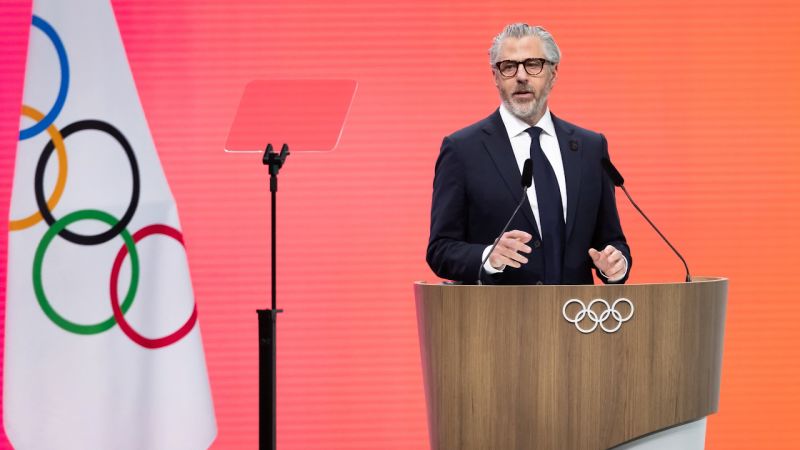
Casey Wasserman, who serves as the chairman for the Los Angeles 2028 Olympic Games, has become a focus of public attention following his naming in a recent tranche of Department of Justice documents.
These documents are associated with the ongoing legal processes concerning convicted sex trafficker Jeffrey Epstein and his associate, Ghislaine Maxwell. The public disclosure of this material has subsequently brought Wasserman’s past communications into sharp relief.
Admission of Past Correspondence
Wasserman has publicly issued a statement acknowledging past interactions with Ghislaine Maxwell. Specifically, he indicated that he “deeply regrets” decades-old correspondence exchanged with her, which he characterized as flirtatious in nature.
This expression of regret directly addresses the content of newly-released emails that have surfaced in connection with the broader legal review of the Epstein network.
Structural Implications for Olympic Governance
The position held by Wasserman is central to the administrative and strategic execution of one of the world’s largest recurring global sporting events. As Chairman of the LA 2028 organizing committee, his role encompasses high-level corporate governance, stakeholder management, and the fiduciary oversight of the massive undertaking required to host the Games.
Scrutiny on Leadership and Institutional Trust
The connection between leadership figures in major international sporting bodies and individuals implicated in serious criminal matters raises significant questions regarding vetting procedures and the maintenance of public and corporate trust. Olympic organizing committees operate under intense global scrutiny, requiring assurances of unimpeachable character from their senior administrators to secure sponsorships, government support, and public buy-in.
The documented existence of extensive prior communication, even if characterized as social or informal, necessitates a structural review of the protocols governing interactions between committee officials and individuals who later become central to major criminal inquiries.
Calls for Resignation and Operational Stability
Following the disclosure of the emails, there have been public calls for Wasserman to step down from his leadership role overseeing the preparation for the L.A. 2028 Games. Such personnel challenges within the leadership structure of a designated host city can introduce operational friction and strategic uncertainty.
The continuity of planning for an event years in the future relies heavily on the stability of its foundational administrative body. Any significant leadership vacuum or prolonged governance crisis can potentially impact complex, long-term logistical and contractual obligations that are already in process.
Context of Document Disclosure and Media Reporting
The current visibility surrounding Wasserman stems directly from the judicial and investigative processes that led to the release of the Department of Justice materials. These disclosures often occur in phases, revealing previously private communications as part of the administrative or judicial processing of evidence related to the primary investigation.
Media reporting on these disclosures focuses on identifying individuals whose documented interactions, regardless of the context ascribed to them at the time, now carry significant reputational weight due to their association with the convicted individuals.
Managing Reputational Risk in Global Sports Administration
For an entity like the LA 2028 organizing committee, reputational risk is intrinsically linked to financial viability and governmental authorization. Major international sporting events depend on securing substantial public funding, significant corporate partnerships, and maintaining positive relations with international governing bodies.
When a top official faces public questioning regarding past associations, the institution must engage in active reputation management to demonstrate that governance integrity remains intact and that operational mandates are not being compromised by ancillary personnel issues. The statement of regret serves as an initial institutional response aimed at mitigating immediate negative impact by acknowledging the seriousness of the association, even if the nature of the past exchanges is attributed to an earlier time period.
The Nature of Administrative Accountability
The situation highlights the evolving standard of accountability placed upon executives holding positions of public trust, particularly in sectors as visible as international sports administration. While past personal associations are distinct from current operational misconduct, the perception of judgment in selecting associations remains a critical component of executive fitness.
The long-term timeline—references suggesting “decades-old” correspondence—introduces complexity regarding the application of contemporary ethical standards to historical interactions. However, the immediate institutional requirement is often to swiftly address the perceived lapse in judgment to shield the overarching organizational mission from undue distraction.
This dynamic creates a tension between acknowledging past conduct and ensuring that the executive’s present capacity to lead a complex, multi-year endeavor is not undermined by sustained public controversy stemming from historical records.