Macro-Strategic Context: Western Conference Standings and Momentum
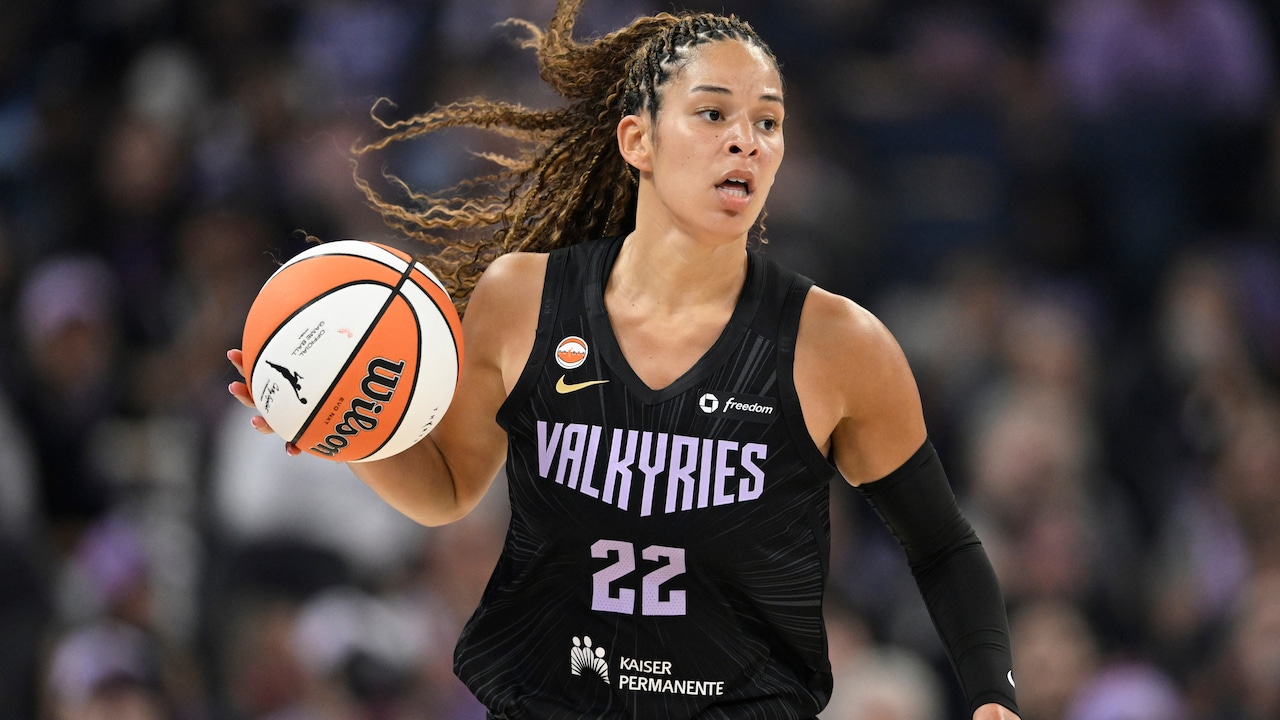
The Golden State Valkyries (19-8) enter the post-All-Star transition at a critical strategic inflection point. Despite their dominant record, a recent 90-82 regression against the Washington Mystics exposed vulnerabilities in defensive rotation and perimeter containment. Their upcoming engagement with the Phoenix Mercury (10-18) serves as a diagnostic for Golden State’s ability to maintain operational consistency against high-usage veteran talent.
Phoenix presents a unique structural challenge. While their sub-.500 record suggests instability, the individual elite performance of Alyssa Thomas and Kahleah Copper provides a localized advantage that can disrupt systemic defenses. This matchup is essentially a conflict between Golden State’s data-driven efficiency and Phoenix’s reliance on veteran stars to compensate for roster depth deficiencies.
Tactical Architecture: Perimeter Volume and Mathematical Leverage
Golden State’s offensive framework is predicated on high-velocity perimeter execution, leading the league with 31 three-point attempts per contest. This strategic commitment forces opposing defenses to over-extend, creating interior lanes for secondary playmakers. Phoenix, by contrast, averages only 24 three-point attempts, creating a mathematical hurdle that the Mercury must overcome through superior two-point conversion rates or aggressive free-throw generation.
The disparity in perimeter volume is a fundamental component of Golden State’s competitive moat. By compelling a veteran-heavy Phoenix roster to defend the full width of the court, the Valkyries intend to induce late-game fatigue, exploiting the diminishing returns of the Mercury’s starting five during high-leverage fourth-quarter minutes.
Operational Stability: The Turnover Margin and Transition Defense
A primary driver of the Valkyries’ 19-8 record is their league-leading ball security, averaging a mere 11.5 turnovers per game. This discipline minimizes transition opportunities for opponents, a critical factor in neutralizing the Mercury’s home-court momentum. For Phoenix to bridge the talent gap, they must implement high-pressure defensive interventions to disrupt the Valkyries’ rhythm and force uncharacteristic errors.
Without these disruptions, the Mercury risk allowing Golden State to dictate tempo through controlled half-court sets. The Valkyries’ ability to protect the ball functions as a defensive stabilizer, preventing the high-variance runs that often fuel upsets in road environments. This operational discipline underpins their -170 favorite status in current betting markets.
Personnel Dynamics: Statistical Hubs and Scoring Depth
Veronica Burton operates as the Valkyries’ primary engine, averaging nearly six assists and 11 points per game. Her facilitation is paramount to maintaining offensive fluidity, particularly in distributing looks to Kaitlyn Chen and Kayla Thornton. Chen’s recent 20-point performance off the bench underscores Golden State’s superior depth—a luxury Phoenix currently lacks.
The Mercury counter with the multi-dimensional Alyssa Thomas, whose recent triple-double (19 points, 11 rebounds, 15 assists) cements her role as the team’s tactical hub. Meanwhile, Kahleah Copper remains the primary scoring threat at 20 points per game. The success of Phoenix is contingent upon Copper’s scoring efficiency and Thomas’s ability to manage the glass against Golden State’s aggressive rebounding units.
Market Implications and Institutional Visibility
The betting market’s -3.5 spread for Golden State reflects confidence in their systemic superiority over Phoenix’s individual brilliance. The Valkyries’ 8-2 record against the spread (ATS) in their last ten games suggests they are operating at peak efficiency. Conversely, the Mercury’s 4-9 ATS home record indicates a persistent failure to meet market expectations, even within their own arena.
From an institutional perspective, the broadcast on USA Network and digital platforms like DIRECTV and Sling highlights the WNBA’s ascending commercial value. These high-visibility matchups are essential for sponsorship valuations and future media rights negotiations, positioning the Valkyries as a premier brand in the Western Conference hierarchy.