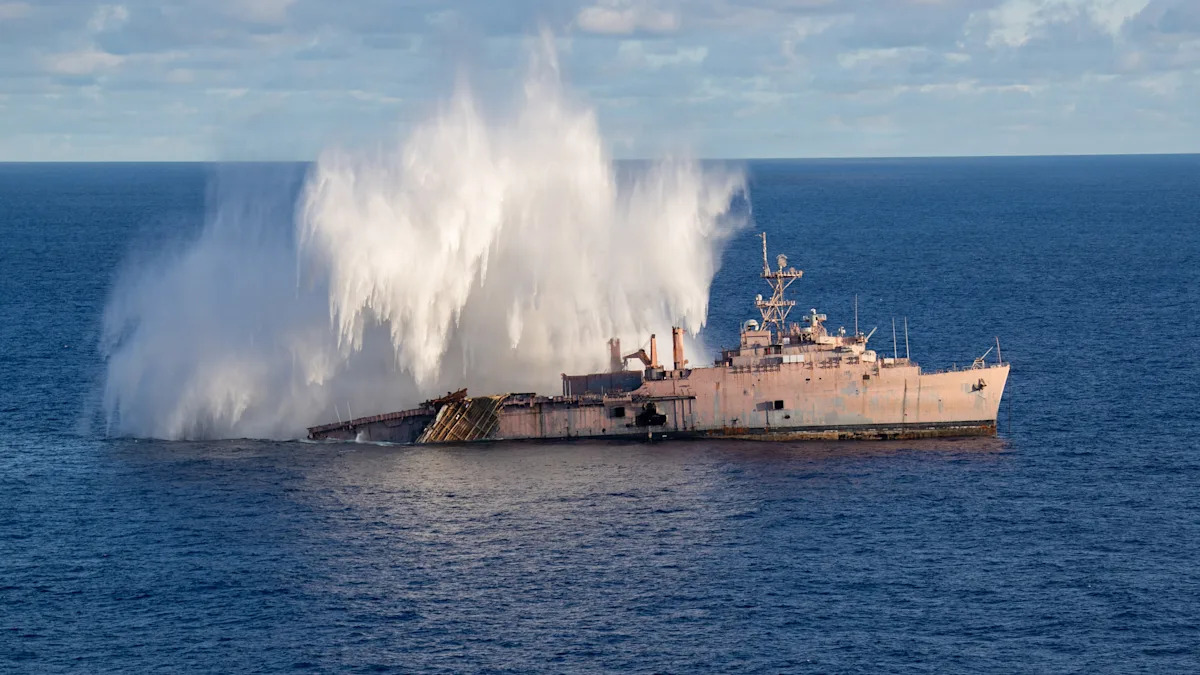
Exercise Valiant Shield 2026 signifies a pivotal evolution in Pacific theater operational strategy, transitioning from bilateral exercises to a deeply integrated, multilateral framework. The sinking of the decommissioned Austin-class amphibious transport dock ship USS Juneau (LPD-10) served as a high-visibility demonstration of joint-domain lethality and allied strike precision. Conducted over 200 nautical miles off the coast within the Mariana Islands Range Complex, this SINKEX underscores the escalating complexity of high-end maritime engagements.
Strategic Significance of the USS Juneau SINKEX
The final destruction of the USS Juneau was achieved via a torpedo strike from a Japan Maritime Self-Defense Force (JMSDF) submarine, a critical indicator of advanced technical and tactical interoperability between U.S. and Japanese naval assets. Repurposing a legacy vessel that served in the Vietnam War and Operation Desert Storm transformed a historical asset into a data-rich platform for testing modern kinetic effects, enabling empirical evaluation of underwater weapon systems against large naval structures.
The JMSDF’s role in the terminal strike highlights a strategic redistribution of offensive capabilities within the Pacific. Rear Adm. Eric Anduze, commander of Carrier Strike Group 5 and Task Force 70, emphasized the exercise’s role in honing lethal precision vital for high-intensity conflict. This coordination rigorously tests the real-world proficiency in detecting, locating, and engaging targets across a multi-domain battlespace encompassing air, sea, space, and cyberspace.
Multilateral Expansion and Joint Force Readiness
Valiant Shield 2026 expanded its coalition to include forces from Australia, Canada, and New Zealand, reflecting a broader institutional drive to synchronize Pacific defense strategies among key regional allies. This five-nation alliance confronts the logistical and operational challenges of sustaining joint forces across vast, contested distances. The exercise acts as a critical stress test for communication protocols and data-sharing networks essential for maintaining a cohesive defense posture against sophisticated adversaries.
The exercise’s emphasis on detecting and tracking units at sea and in space signals a move toward a more transparent battlespace where information superiority is the primary determinant of control. By integrating cross-domain capabilities, participating nations are refining tactics for high-intensity conflict scenarios. The drills’ geographic focus on the Mariana Islands targets critical maritime corridors vital to Pacific security.
Guam Defense System and the Golden Dome Initiative
Concurrently with maritime strike drills, the U.S. Army’s Portfolio Acquisition Executive (PAE) Fires is advancing the Guam Defense System Joint Project Office. This entity oversees anti-missile and combat system evaluations through August, aiming to establish an initial operational capability on Guam to counter a spectrum of ballistic and non-ballistic threats.
Guam is currently serving as a foundational model for the Pentagon’s overarching Golden Dome initiatives, designed to provide comprehensive defensive shields for critical Pacific infrastructure. The island’s rapidly growing military presence mandates a sophisticated defense network capable of mitigating long-range threats, representing a significant strategic and capital investment in its role as a primary node for U.S. INDOPACOM’s regional strategy.
Lockheed Martin Skunk Works and C2 Unification
A core element of the Guam Defense System is the unified command and control (C2) battlespace picture being developed by Lockheed Martin’s Skunk Works. This C2 architecture integrates disparate sensor and shooter platforms into a single, cohesive operational interface, enabling commanders to make more informed, real-time decisions and reducing threat detection-to-engagement latency.
Skunk Works’ involvement highlights the pivot towards software-defined defense solutions adaptable to evolving threats. The C2 system is engineered to bridge the gap between different military branches and their hardware, ensuring seamless data flow across Army, Navy, and Marine Corps assets. This technical integration is paramount for the success of the Golden Dome initiative and the comprehensive defense of the Mariana Islands.
Live-Fire Evaluations: MRIC and Patriot Systems
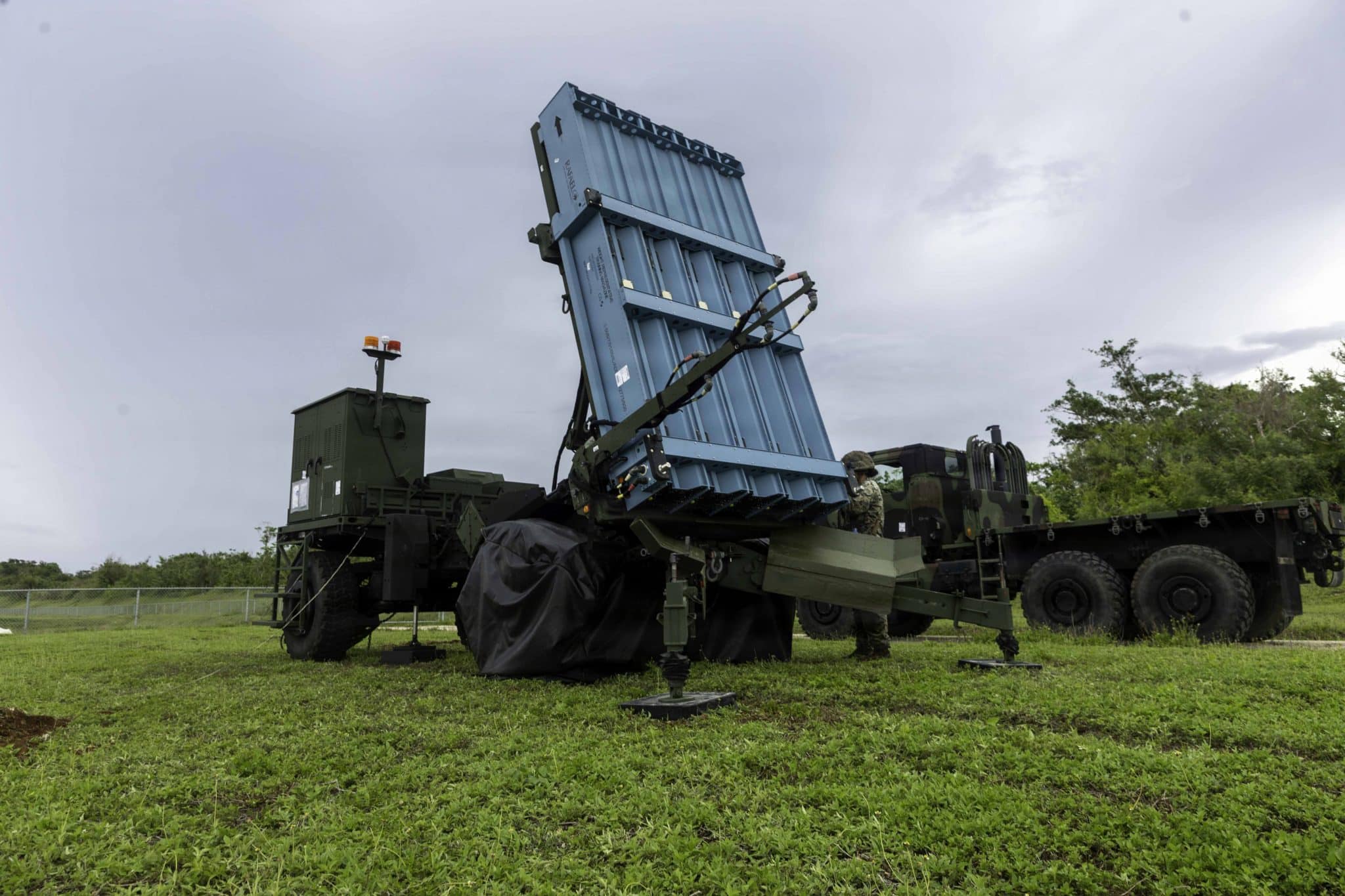
Valiant Shield includes critical live-fire tests of the U.S. Marine Corps’ Medium-Range Intercept Capability (MRIC) and the U.S. Army’s PATRIOT missile system. These tests evaluate the effectiveness of land-based interceptors in a high-intensity maritime setting, assessing their interoperability and performance under a unified C2 framework.
The MRIC and Patriot systems represent distinct layers of the defensive architecture, each optimized for specific threat profiles. Their evaluation within Valiant Shield 2026 provides a realistic scenario against simulated long-range attacks, directly informing the operational deployment of the Guam Defense System and the refinement of the Golden Dome blueprint.
Geographic Expansion to Palau
The defensive evaluations extend to Palau, with additional tests scheduled for late July, several hundred kilometers south. This geographic expansion signifies a regional approach to missile defense, acknowledging Guam’s security is intrinsically linked to the stability of surrounding island chains. Tests in Palau assess the portability and deployment speed of anti-missile systems in diverse environments.
The logistical movement of assets between the Mariana Islands and Palau rigorously tests INDOPACOM’s logistical backbone, ensuring defensive capabilities can be rapidly surged. This regional flexibility is crucial for countering long-range threats from multiple vectors. Palau tests will likely focus on MRIC and Patriot capabilities, further validating the unified C2 architecture across a broader geographic footprint.
Institutional and Operational Consequences
The close coordination between PAE Fires, the Joint Project Office, and private sector partners like Lockheed Martin demonstrates a highly structured approach to military modernization, necessary to overcome integration hurdles. The success of these evaluations will significantly influence future Pacific defense spending and the deployment of advanced interceptor technologies.
The implications of Valiant Shield 2026 are clear: the Pacific theater is undergoing rapid technological and strategic transformation. A unified C2 battlespace picture mitigates operational silos and enhances overall network resilience. As the Golden Dome initiative progresses toward initial operational capability, lessons from the USS Juneau SINKEX and Guam evaluations will underpin regional security for the coming decade.
Strategic Signaling and Deterrence
The public nature of these exercises and the participation of five nations serve as a potent signal of collective resolve and technological capability. The ability to neutralize a large vessel with a single allied submarine-launched torpedo demonstrates formidable lethality. Moreover, the development of a comprehensive anti-missile shield on Guam signals a commitment to a protected and sustained regional presence.
The integration of space and cyberspace into the exercise reflects the evolving nature of warfare, where physical and digital domains are increasingly interdependent. Practicing detection and tracking in these domains prepares forces for conflict environments where traditional boundaries are blurred. This holistic defense approach is the primary driver of the current operational and strategic shifts observed in Valiant Shield 2026.
Conclusion of the Operational Cycle
The conclusion of Valiant Shield and subsequent tests in Palau will yield extensive data for the Joint Project Office and PAE Fires, crucial for refining the C2 architecture and optimizing MRIC and Patriot system deployment. The USS Juneau’s transition from historical vessel to SINKEX target marks the end of its physical lifecycle but the beginning of new analytical insights for naval strike tactics.
As the Guam Defense System advances towards its next milestones, the focus remains on achieving a unified and resilient battlespace picture. Collaboration among international partners and the integration of advanced technologies from Skunk Works are key determinants of this initiative’s success. The Pacific’s strategic landscape continues its evolution, driven by the imperative for precision, coordination, and integrated defense in an increasingly complex global environment.